Telling Clients and Suppliers About a Succession: When and How

Between the day a sale agreement is signed and the day the last supplier hears about it, months typically pass, sometimes over a year if the seller stays active through a handover period. That gap is not administrative slowness. It is a deliberate sequence, stage by stage, that protects the negotiated price, day to day operations, and personal relationships an owner has spent years building with the biggest accounts. Handling this communication in the week after closing, without a plan, almost always means getting the order wrong: a strategic client hears the news through a rumour before hearing it from the owner directly.
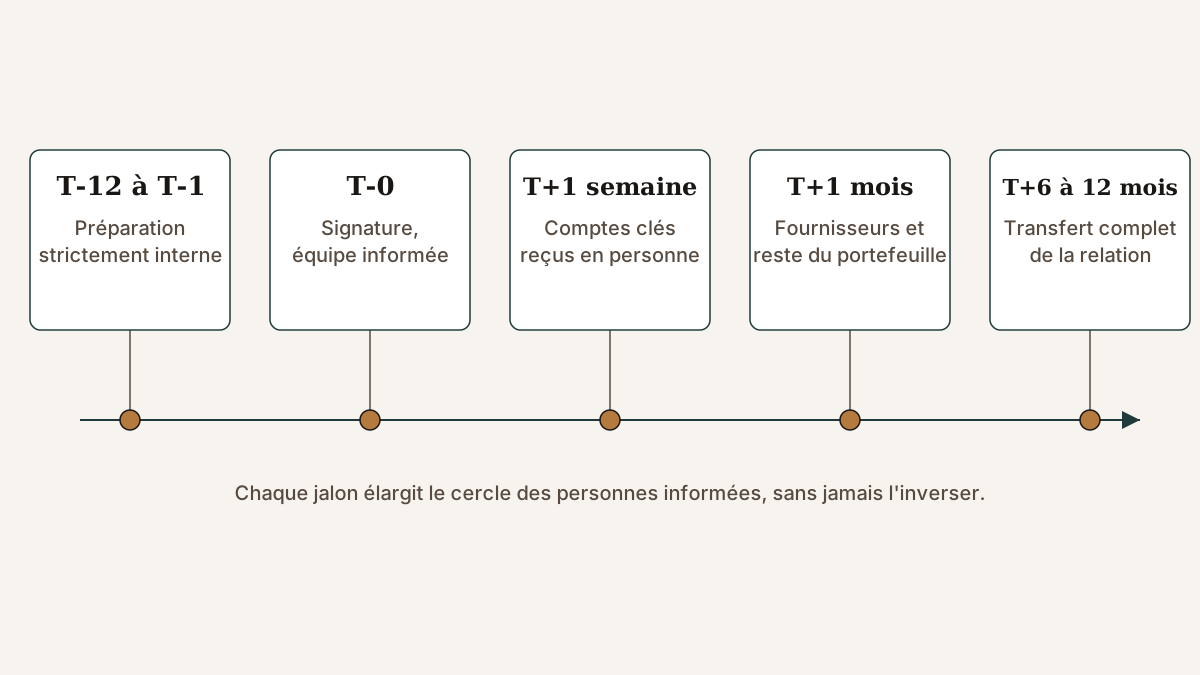
Month minus 12 to minus 1: preparation stays strictly internal
Until the sale is signed, nothing goes outward, not to clients, not to suppliers, not even to most of the team. This period serves a different purpose: mapping, internally and quietly, which accounts carry the most revenue, which relationships depend mostly on the owner as a person, and which suppliers might revisit their terms once ownership changes. That mapping feeds directly into seller-side due diligence: a buyer wants to know, before signing, how much revenue rests on a handful of personal relationships rather than formal contracts.
This is also when the list of people who will need to hear the news first, once signing is done, gets drafted quietly, alongside an honest read of who might walk if the announcement lands badly. Picture a technical distribution business where three clients account for 40% of revenue, each tied to the founder by a fifteen year personal relationship: deciding, at this stage, who will carry that relationship afterward shapes what the business is actually worth on signing day, long before the clients themselves hear a word.
Day zero: signing, and the order that protects the relationship
Signing day triggers the first wave of communication, but it stays internal. Employees come first, because they are the ones fielding client and supplier questions immediately and need to be able to answer without being caught off guard. How they are told, and how much they are drawn into what comes next, shapes their ability to reassure a client who calls the very next day; that is its own subject, covered in our piece on retaining key employees through a transition.
That same day, or the next one at the latest, a short list of truly critical accounts, the ones flagged in the previous stage, gets a personal call from the owner, before any wider written communication goes out. The point of that call is not to announce a financial transaction; it is to reassure on three specific things: the team stays in place, existing commitments hold, and the owner remains reachable through the period ahead. No form letter replaces that call. It is the difference between a client learning news and a client being trusted with it.
Week one: key accounts, met in person
In the days following the initial call, the most important accounts deserve an in person meeting, ideally with seller and buyer together, rather than another phone call. This meeting serves a different purpose than the day zero call: it is no longer just about reassurance, it is the visible start of a transfer of trust, showing the client that the new owner already knows the file, the terms, the history of the relationship.
What gets said in that meeting is worked out in advance with the buyer: who speaks first, which commitments on existing commercial terms can be stated firmly, and which questions will stay open because certain decisions have not been made yet. A client who senses hesitation or disagreement between seller and buyer during that meeting remembers the friction longer than the announcement itself.
Month one: suppliers and the rest of the portfolio
Once the strategic accounts have been met in person, communication can widen to the rest of the client base and to suppliers, through a letter or email signed jointly by seller and buyer. The tone shifts from the direct conversations before it: more factual, centred on operational continuity (same team, same contacts, same commitments in force), without financial detail about the transaction itself.
Strategic suppliers, the ones a supply chain depends on or that hold a bank guarantee tied to an ongoing contract, deserve treatment closer to that of key accounts than to a batch letter: depending on the clauses in force, a change of ownership can trigger a change of control provision that is far better handled with them directly than discovered through their reaction. Timing this stage also ties back to confidentiality during the sale: the whole portfolio hearing the news within a tight window of a few days beats a slow leak over several weeks, which leaves room for the least favourable interpretations.
Months six to twelve: transferring the relationship, not just the news
Telling someone is not the same as transferring a relationship. The months after the announcement are when the relationship actually changes hands, through repeated joint visits, a gradually smaller role for the seller in commercial conversations, and a buyer side contact who becomes, in the client's eyes, the natural point of contact rather than a backup. This stage overlaps directly with what plays out during the post closing transition: how quickly a seller can genuinely step back depends less on the timeline written into the contract than on how solid this relationship transfer is on the ground.
A client who, ten months after the sale, still dials the former owner's personal number instead of the new contact's is a sign this stage never fully happened, whatever the letter sent at the time of the sale promised. That, more often than the quality of the initial announcement, is where the real value of what the buyer paid for gets decided.