What's the Formula for Valuing a Business? Two Assumptions Make Most of the Number

A valuation built on future earnings isn't a measurement. It's two opinions dressed in arithmetic.
The formula fits in one breath. You estimate the profit each coming year should bring, shrink each year by a rate that pays for waiting and for risk (the further away the year, the more it shrinks), add the years up, then add one lump for all the years beyond the forecast. Valuers call that rate the discount rate and the lump the terminal value. Two inputs make most of the number: the rate, and the value given to the distant years. Once you can read those two lines, the appraiser's figure becomes reasoning you can discuss.
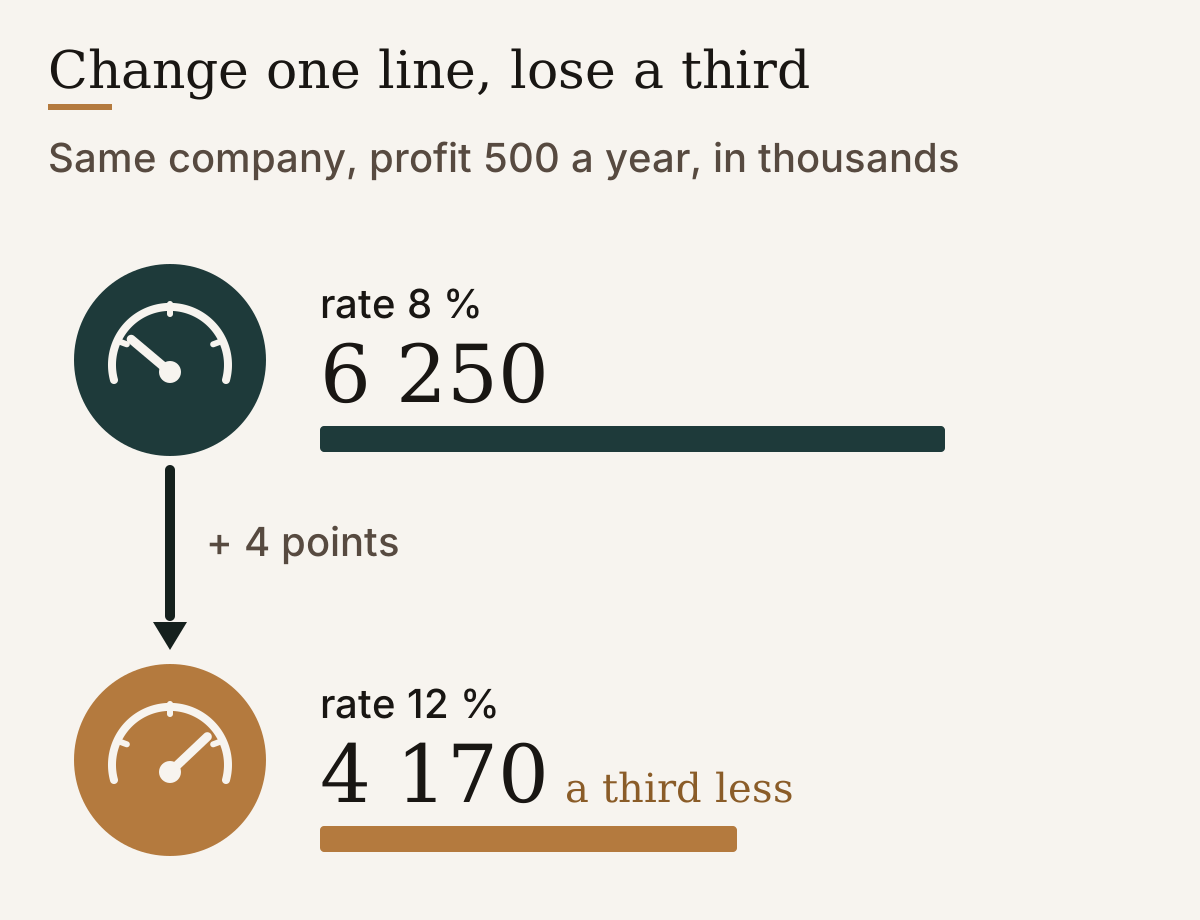
Start with the rate. In its plainest version the formula collapses into a single division: a lasting yearly profit divided by the rate. Take a company I've made up, earning 500,000 a year, steadily, in whatever currency you use. At 8 %, it's worth 6,250,000. At 12 %, about 4,170,000. Four percentage points, and a third of the value has gone without the accounts changing by a cent.
Where does the rate come from? Part of it is what money would earn placed without risk, and an appraiser can look that up. The rest is a premium for the risk of this particular company, and the premium is what makes the gap. It is also open to argument: how much the business depends on its owner, how few customers carry the revenue, how small it is. For the same reasons an owner-led SME, harder to sell than shares in a large listed group, carries a higher rate. Someone always picks the rate. In Germany, for example, tax law has its own simplified method that multiplies the lasting yearly profit by a factor set in the statute, 13.75. That works out at a rate of about 7.3 %. The finance ministry can adjust the factor by decree as interest rates move.
The objection I hear most is that a multiple, a price quoted as so many times the yearly profit, avoids all this. It doesn't. A multiple is the same division turned upside down: dividing by a rate of about 7.3 % or multiplying by 13.75 lands on the same answer. Whoever quotes you a multiple has chosen a rate without writing it down, which is why a single multiple hides more than it shows.
The years beyond the forecast
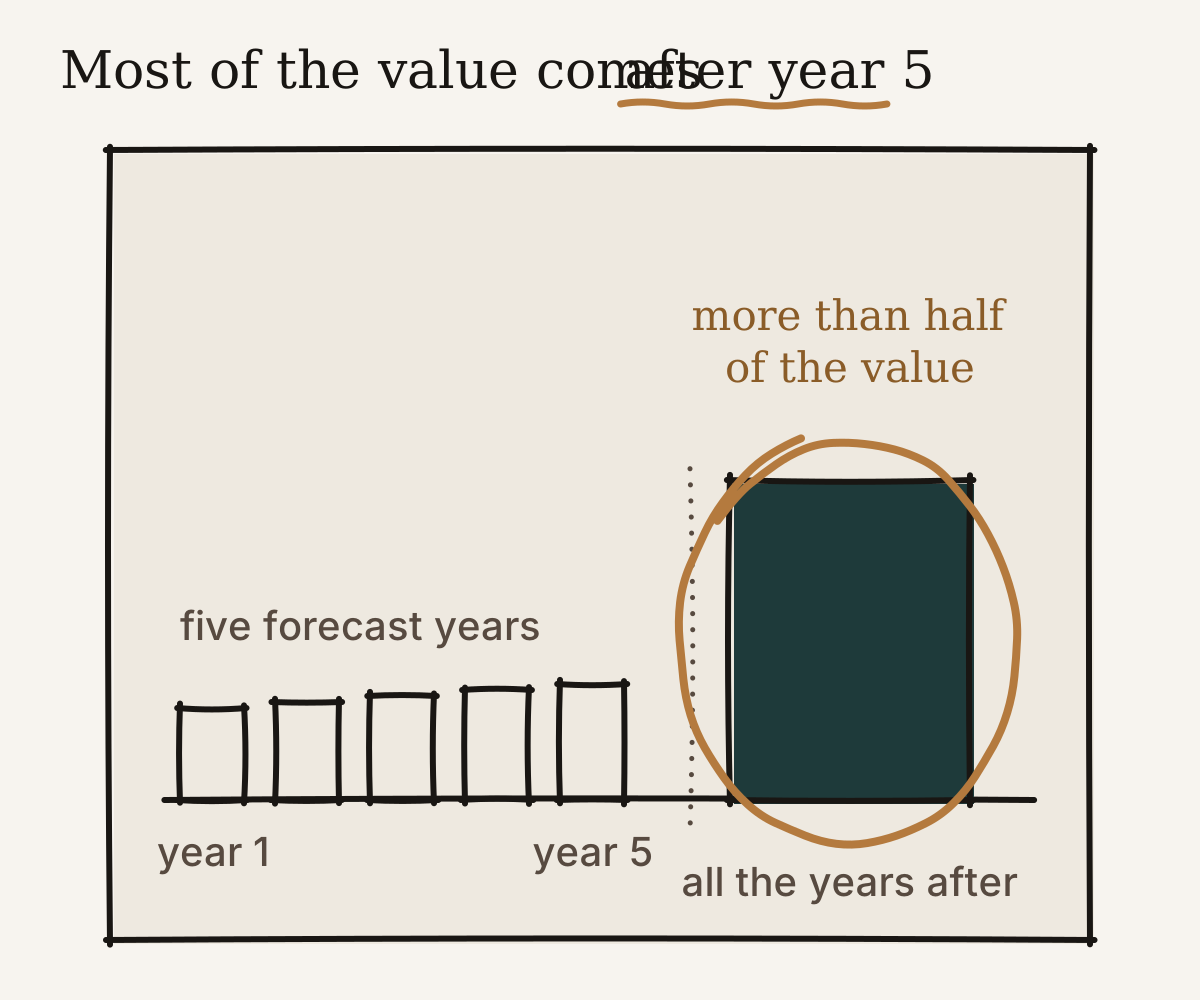
The second opinion is quieter. A typical forecast covers five years, and everything after is folded into the lump. In the valuations I read, that lump often weighs more than half the final figure. Give my made-up company five years of 500,000 at a rate of 10 %. Those five years are worth about 1,900,000 today. The distant years, valued at 500,000 divided by 10 %, come to 5,000,000 at the end of year five, which is about 3,100,000 in today's money. Add the two, 1,900,000 and 3,100,000: the company is worth 5,000,000 today, and some 62 % of that rests on years nobody has forecast.
That lump hangs on a further guess: how fast the profit grows, or doesn't, forever. The formula then divides the profit by the rate minus the growth. Assume 1 % a year instead of none, and the lump goes from 5,000,000 to about 5,556,000, roughly 11 % more for one point of an assumption about eternity. No accounts can prove it.
A fair objection: the appraiser is better placed than you to make these assumptions. True, and you won't redo his work. You only need to see where it bends.
What to ask before you accept a figure
Four questions do most of the job. Ask which rate was used and how it was built, piece by piece. Then ask for the figure at two points of rate above and two below; if the report doesn't show it, that range is the first thing missing. Ask what share of the total comes from the years beyond the forecast, and which growth was assumed for them. Finally, go back to the start, to the profit the whole calculation works on, because the adjustments made to that profit move every line below it.
The buyer will run the same calculation, and so will his bank, each with their own rate and their own view of the distant years. In the sales I conduct, the negotiation turns on those assumptions far more than on the final figure, and that is where an owner still has a hand. The premium a buyer applies follows the risks he sees, and several can be reduced in the two or three years before a sale. A business that keeps running when its owner is away is one. So is a customer base where no single name dominates, and accounts that need no explaining. Preparation works on the rate.
A report that gives one figure, without showing what it becomes two points either side, hides exactly the two lines that decided it. Ask for them before the buyer's version lands on the table, built on his own two assumptions.