Earn-Out Agreement: What Happens to Your Deferred Price If You Leave Before the End?
On signing day you choose between two earn-outs that look identical on paper. Same formula, same target, same three years. One survives your departure from the company. The other dies with your job. Only a few lines about leaving early tell them apart, and they're often missing.
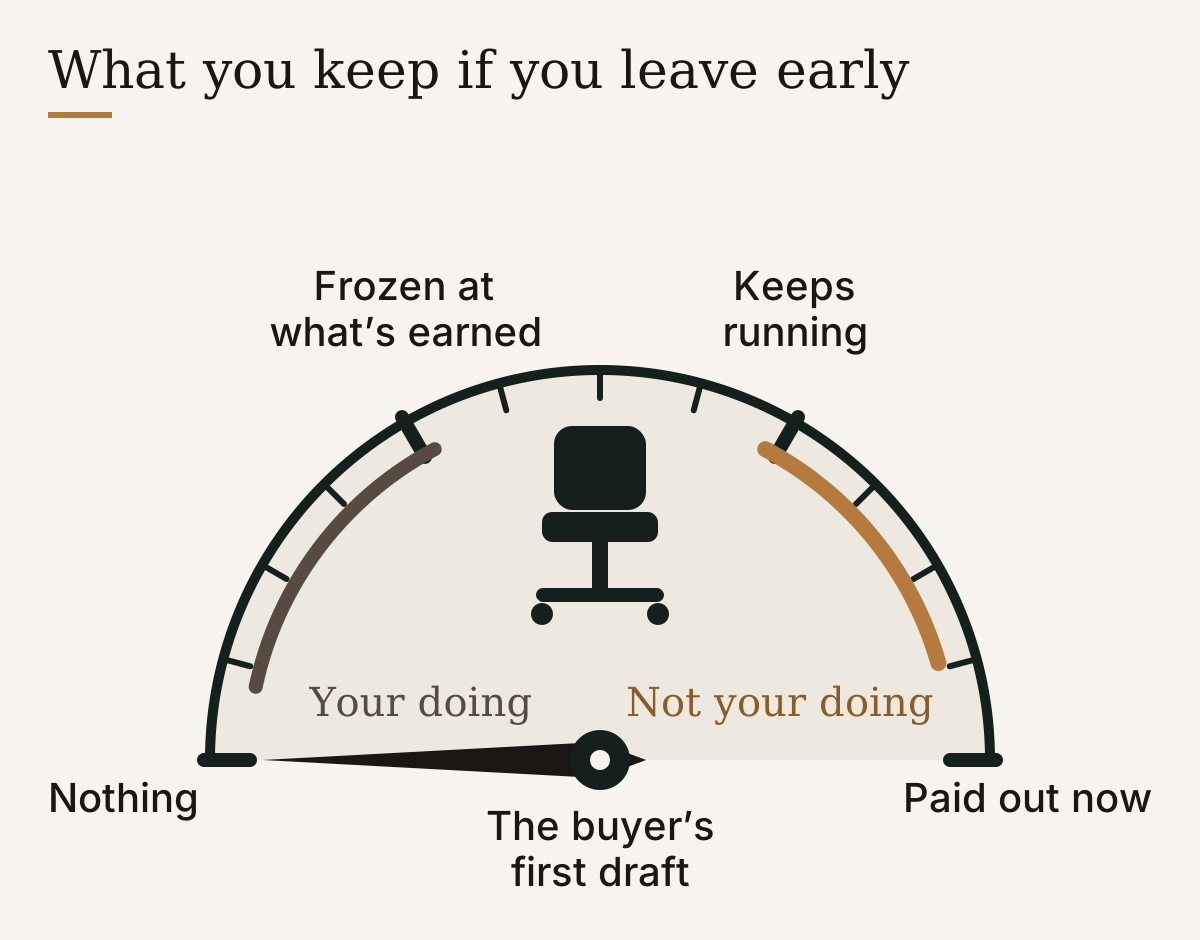
An earn-out is the part of the price paid after closing, once results are in: your deferred price. The clause should say, for each way of leaving, which of three fates it meets. It keeps running as if you had stayed, it's paid out now, or it's frozen at what's been earned so far. The rule to negotiate: if the departure isn't your doing, the deferred price keeps running or is paid out now; if it is your doing, it's frozen. Only a serious breach on your part, a failing so grave the other side can't be expected to carry on with you, can fairly cost you more: frozen as the norm, nothing at the outer limit. Without a written rule, the buyer's usual wording, "payable provided the seller is still employed", lets any departure erase the deferred price, even one the buyer causes.
Three fates for the deferred price
Keeps running. Results are counted and paid on the planned dates, as if you were still at your desk. The catch: you're now waiting on figures you can no longer touch.
Paid out now. An amount fixed in advance, paid when you leave. The clause picks the amount: the part not yet paid, the whole target as if it had been met, or a share pro rata of the time elapsed (in proportion to the months served).
Frozen. The results are counted up to your last day, that part is paid, and the rest is lost. Fair when the choice to go is yours.
The fourth outcome is the one you'll probably read first: nothing. In the contracts I see, the buyer's first draft ties the deferred price to your presence, whatever the reason you're gone. Half a sentence in the payment paragraph, and it outweighs the formula.
Who ends the job, and whose doing it is
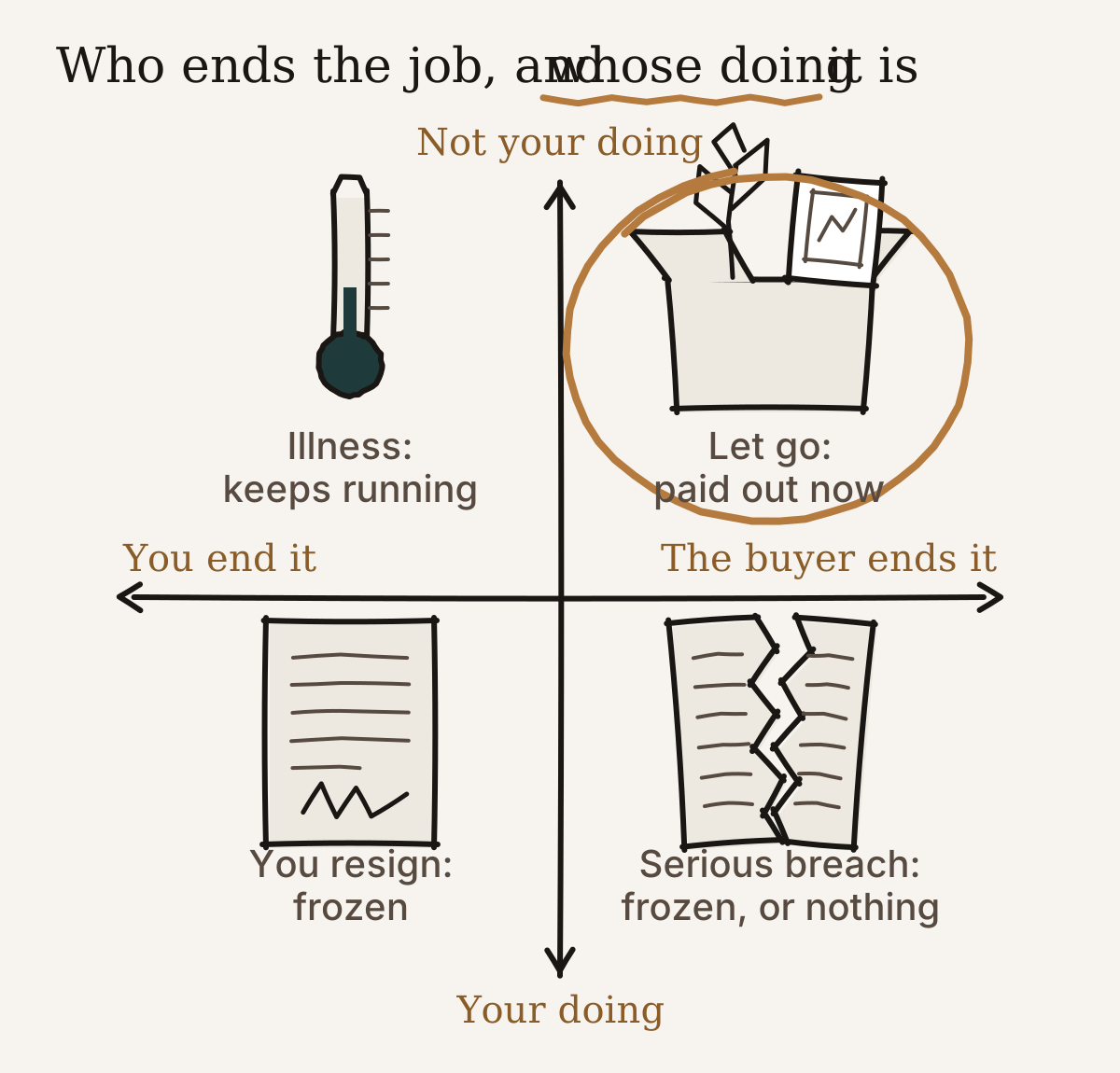
Two questions sort every departure. Who ends the job, you or the buyer? And is it your doing?
You resign: frozen. Illness, accident or death also end it from your side, but they aren't your doing, so the deferred price keeps running. For death, the clause can have it run on for your heirs or paid to them now; without that line, silence decides for them.
The buyer ends the job without serious breach on your part: paid out now. Likewise if he keeps you but empties the role: your title stays, your decisions go.
Serious breach is the fourth case: frozen, nothing at most. The clause should give its own definition of it; what local law calls by that name is a question for your lawyer.
A fifth case sits on the buyer's side: he sells the business on, merges it, or stops measuring the agreed metric (the figure your earn-out is counted on). The calculation becomes impossible. The clause fixes in advance what follows: payment now, or a floor, a minimum you receive whatever happens.
Picture a case I've made up: an engineering firm of 25 people, an owner of 59, a three-year earn-out. At eighteen months the buyer folds the firm into his own. The seller gets new business cards reading "Senior Adviser", and not one client or decision to go with them. He wants out. Under "payable provided the seller is still employed", walking out is a resignation and the deferred price is gone. Under a clause naming the emptied role and the merger, it's paid out now.
The clause, criterion by criterion
| Way of leaving | Whose doing | What to ask for | What must be written down |
|---|---|---|---|
| You resign | Yours | Frozen | The cut-off date, when the earned part is paid |
| Illness, accident or death | Not yours | Keeps running, or paid out now | Your heirs as recipients, the payment dates |
| The buyer ends the job without serious breach | Not yours | Paid out now | The amount or the formula, the date of payment |
| The buyer empties your role | Not yours | Paid out now | What counts as an emptied role: title kept, decisions gone |
| Serious breach on your part | Yours | Frozen; nothing at the outer limit | The clause's own definition, who decides a breach occurred |
| The buyer sells or merges the business | Not yours | Paid out now, or a floor | The floor, also for a metric no longer measured |
Six rows fit on one page, beside the formula and your right to check the buyer's figures, covered in what earn-outs promise and where they fail.
The door that brings you back in
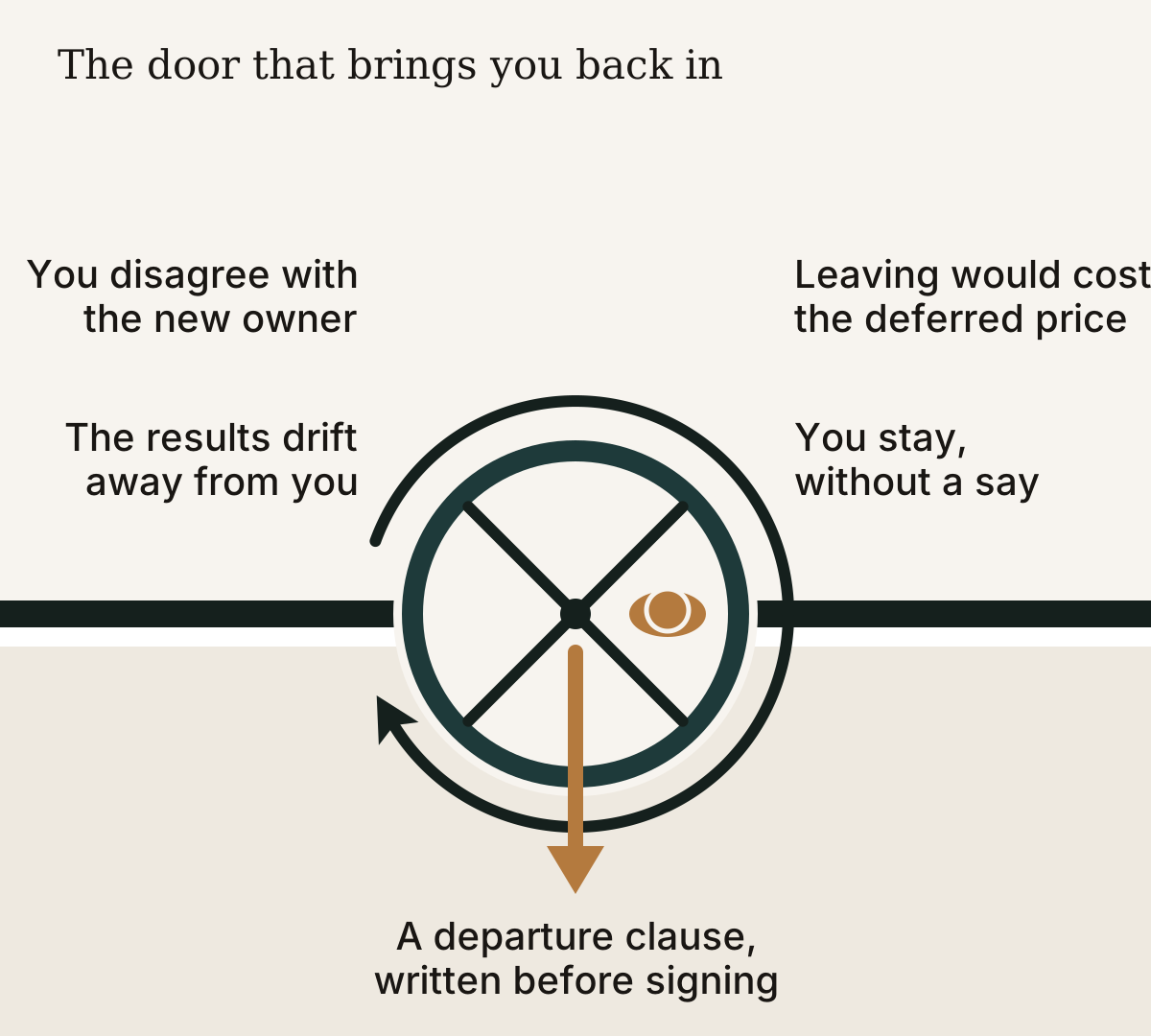
A clause silent on departures works like a revolving door: you push to leave and it brings you back in. You disagree with the new owner. Leaving would cost the deferred price. So you stay, without a say, while the results drift away from you.
The calendars make it worse. Your job is an employment contract, which can end after a notice period, the time between notice and your last day. That period is written in your contract and counted in months; the earn-out runs in years, usually one to three. So the job can end long before the deferred price falls due. In Switzerland, for example, statutory notice on an open-ended contract is one month in the first year of service, two from the second to the ninth, then three. Either side can also end the contract on the spot for a serious cause. Wherever you are, read the notice period in your own contract and ask your lawyer what local law adds.
After a share sale, where the buyer takes over the company itself, the company still employs you, but the buyer owns it, so ending your job is now his decision. If the sale contract is silent on departures, its general wording decides, read by whoever holds the pen after the sale: the buyer. The earn-out disputes I see turn more often on the seller leaving than on the calculation itself.
Which clause suits whom
If the deferred price exists because you and the buyer disagreed on what the company is worth, it's part of the price of the company you built, and it should survive every departure that isn't your doing. If it really pays for your presence, call it a retention bonus, price it separately and accept that it ends with the job. The firm price, the part that doesn't depend on results, must then be the whole price.
The seller who chafes at reporting to someone gains most from a fixed amount paid out now: an exit without argument. Whether to stay on at all is a separate decision. The seller over sixty, or whose health is uncertain, should fight hardest for the illness and death line.
All of this is negotiated with the price, before signing, and from the letter of intent (the first written outline of the deal) onwards if the earn-out already appears there. Once the money is settled, these lines become a favour you ask for. Read them as closely as the warranties you sign.
One question across the table usually tells you which of the two earn-outs you're holding: if you let me go next spring, what do I get?