Earn-out Payments: How Do You Make Sure the Buyer Actually Pays?
An earn-out is the share of your price paid later, if the company hits agreed targets. Treat it as a loan you make to the buyer, with no security, for two or three years. In the sales I run, most sellers never ask for what a bank would demand before lending the same sum.
So how do you make sure the buyer pays? The formula won't guarantee it, nor will the contract alone. Think like a lender. Ask who your debtor is and what it owns, then get three papers before you sign. One: a commitment to pay from someone who exists and owns something, the group behind the buyer or its bank. Two: part of the deferred price held by a third party, which is what escrow is. Three: a clause that makes the whole balance due at once if the buyer resells the company, merges it or stops paying. How the earn-out is calculated is a question of its own; here I only care whether the money arrives.
The first objection: the buyer is a solid group. It may be. Now read the signature page. More often than not, the company that owes you the earn-out is an acquisition holding, set up for the purchase, with no history, whose only asset is the block of shares it has just bought from you. Those shares are pledged, handed over as security, to the bank that financed the deal. The money for your earn-out comes from the company you sold, which passes its profits up to the holding. If the holding can't pay, the bank holding the pledge serves itself first from the shares. You're a creditor with no security, last in line, and you get what's left, if anything is. As for the group, the investors or the person behind the holding: unless they've signed something themselves, don't count on them. The holding has other costs for the seller too.
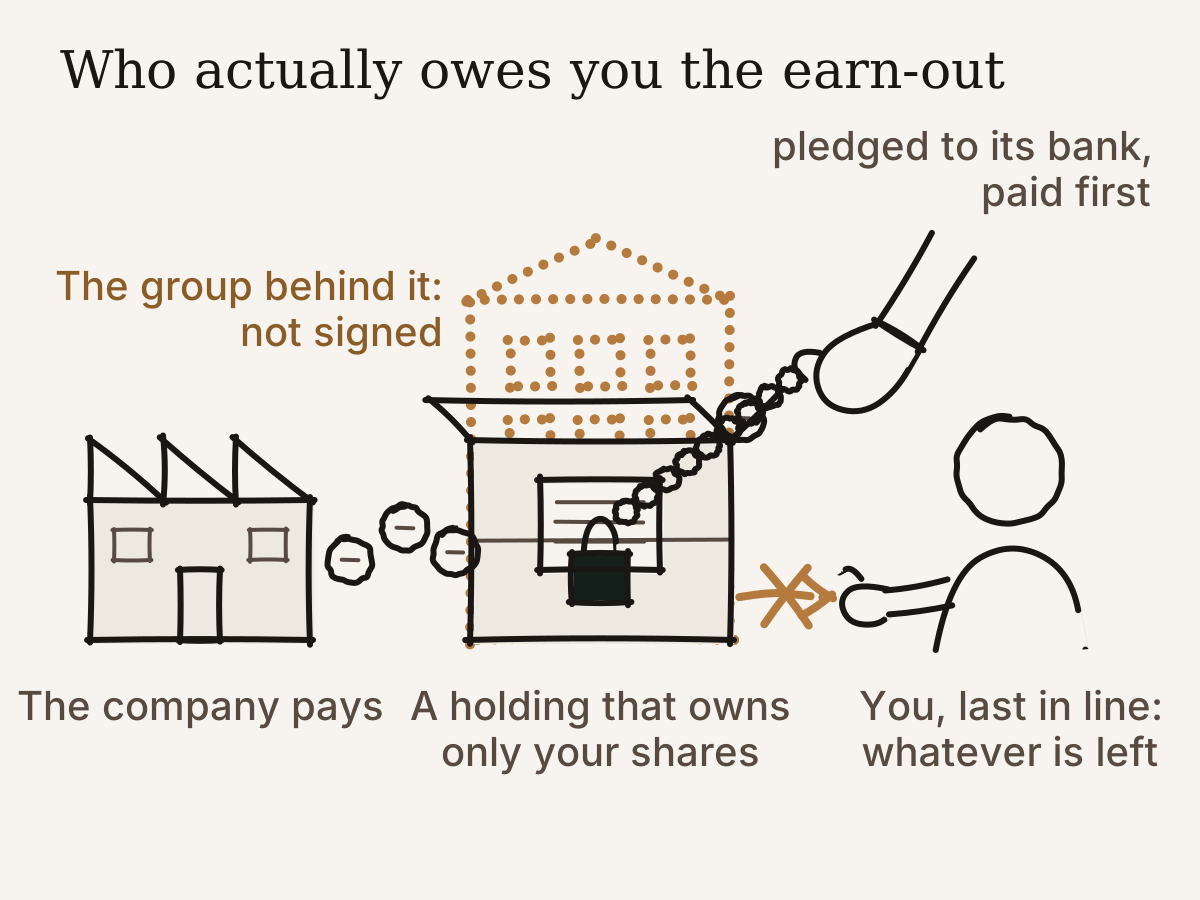
Second objection: the contract says they owe me the money. It does. A contract gives you a claim, and a claim is worth what the debtor can pay on the day it's due. Picture a packaging company with forty staff, a made-up case, not a client. The price is 8 million, of which 1.5 million is deferred over three years and owed by a holding created for the purchase. In year two, the holding's bank tightens its terms and keeps every dividend the company sends up for its own repayments. The targets are met, the earn-out is earned, and the holding has nothing but the shares to pay it with. The contract is perfectly clear. There's simply nobody behind it.
Third, a matter of manners: asking for security will offend the buyer. Their own bank asked for security without blushing, and they signed. A buyer who won't have its parent company sign is telling you what the parent company thinks of the plan.
The first paper, the guarantor who exists, can take two forms. The parent company or the investors behind the holding can promise to pay if the holding doesn't. Or the buyer's bank can issue a bank guarantee, a promise to pay you as soon as you ask, without arguing why, in return for a yearly fee the buyer pays; because it costs the buyer, it often covers only part of the deferred amount. When private individuals are the guarantors, check the form as closely as the promise. In Switzerland, for example, a private person who stands surety, backing someone else's debt, for more than 2,000 francs must sign before a notary. A married surety also needs their spouse's written consent. Miss either, and the commitment isn't valid. Wherever you sell, ask your lawyer what form makes the commitment binding.
The second paper, escrow, meets a fourth objection: it's the buyer's tool. It serves the seller just as well. At signing, part of the deferred price goes to a third party, so you're holding money that already exists instead of a promise, and the third party pays it out when the target is reached. The buyer gives up cash it would rather keep, so escrow usually covers a part, rarely the whole.
The third paper is a clause lawyers call acceleration: the whole balance falls due at once if the buyer resells the company, merges it or misses a payment. After a resale, the figure your earn-out tracks can no longer be measured; after a merger, your old company's numbers dissolve into someone else's.
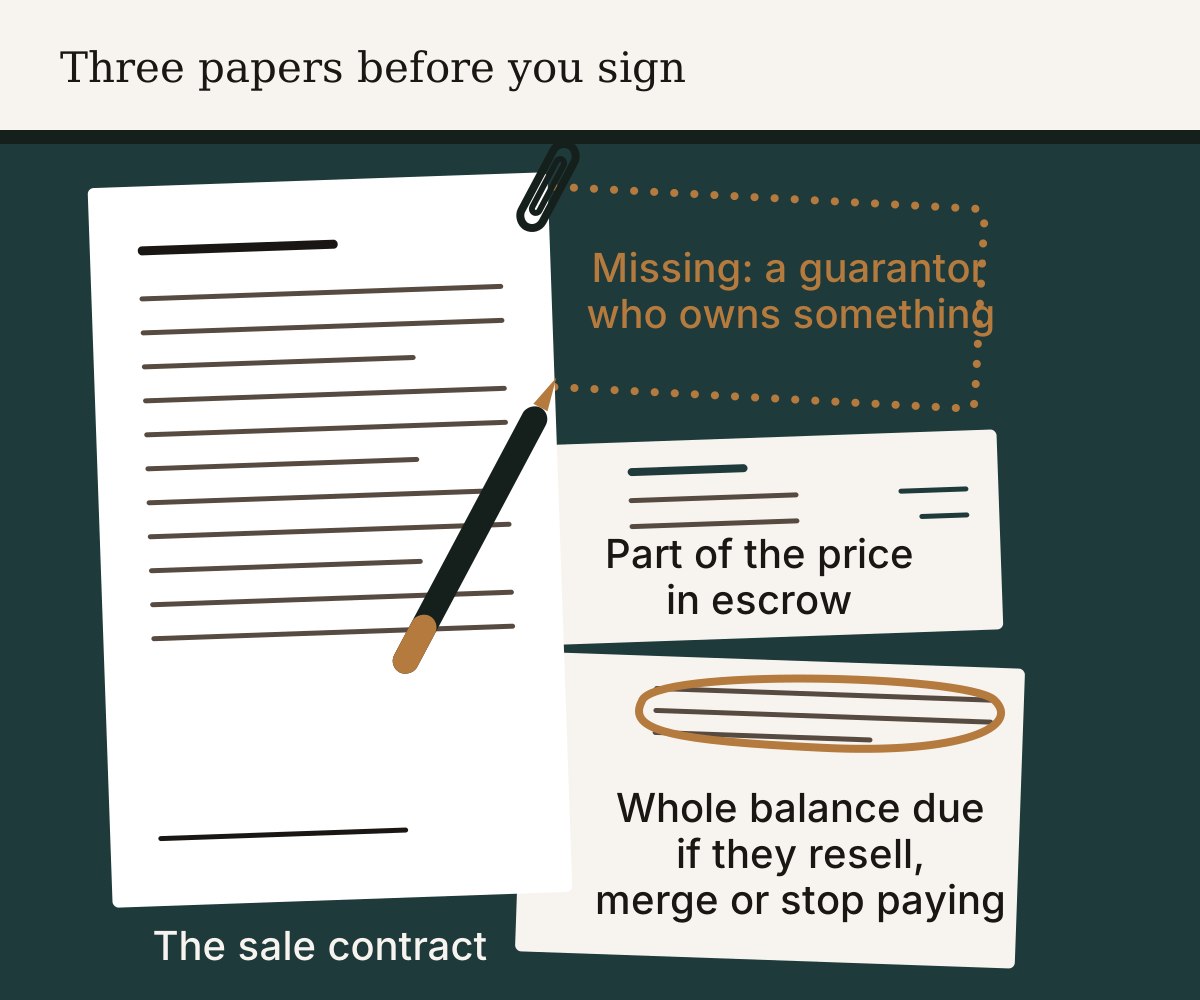
Of the three, the guarantor's letter is the one I most often find missing from the file. One more check before signing. Read what the buyer's bank imposes on the holding: its loan agreement often forbids paying you until the bank is repaid, or puts you behind it. Ask to see the bank's letter, and have your own contract say what comes before you. That reading belongs at the start, before the letter of intent; it's work for a neutral party running the process, who reads the buyer's structure while you can still walk away.
These papers get negotiated before the earn-out amount is fixed, never after. A buyer who can offer no guarantor at all is really asking for a smaller earn-out, or for the price to be paid some other way.
So before asking whether the buyer will pay, ask this: who owes me this money, and what will it own on the day it falls due? If the answer is a holding with no history and no guarantor, your earn-out is a hope. In a price, a hope counts as zero.