Can You Retire From Your Own Business Without Selling It?
Retiring means selling. You hear it from your accountant, from the bank, from the friend who sold his print shop and now sends photos from his boat: stop running the company, and the sensible thing is to sell it.
So can you retire from your own business and keep it? Yes, on two conditions. The company has to pay someone else a market salary to run it, and once that salary, the investments and the reserves are covered, it still has to produce the income you live on. If both hold, your role changes: you govern from the board, you live on a dividend that moves from year to year, you stay out of the daily running, and you decide now who gets the shares later.
"If I stop running it, I'll have to sell it"
The answer is usually in a drawer: the last two or three years of accounts. Start from what the company earns before it pays you anything. Deduct what a manager able to do your job would really cost where you are: salary, bonus, car, pension contributions, and the recruitment fee in year one. Deduct what the machines and the building need each year, and what must be kept back for a bad year. What remains is what the company could pay its owner.
In the handovers I lead, the line that surprises owners most is their own salary. A founder who has worked sixty-hour weeks for what a middle manager earns has been quietly subsidising the company for decades, and nobody sees it until someone is hired at the real price.
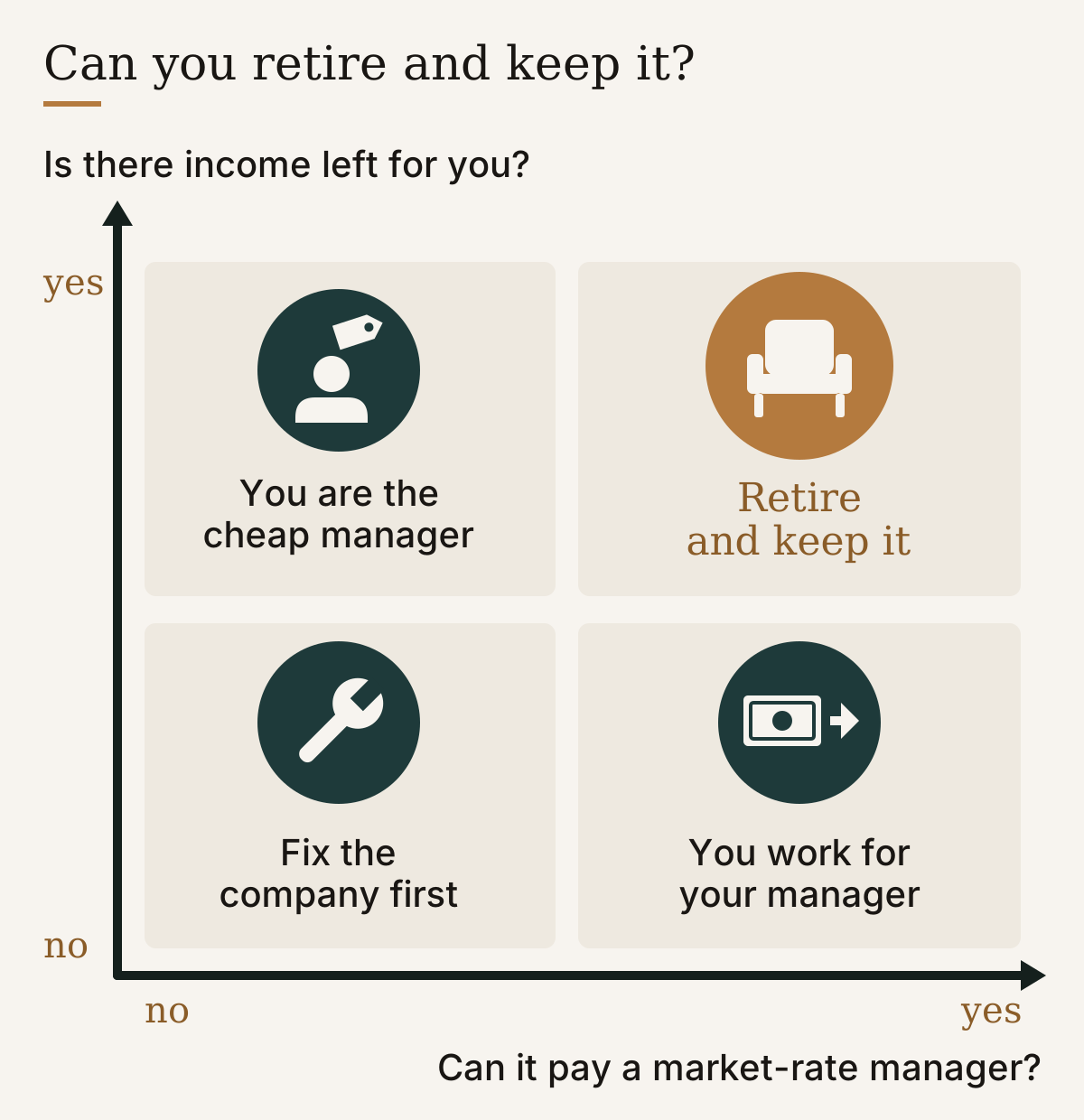
If the numbers only work because you were underpaid, you're the cheap manager, and retiring removes the subsidy. If the manager is affordable but nothing is left for you, you'd be working for your own employee. If neither holds, the work starts with the company: making it run without you is what makes both numbers possible. Hiring that manager and the people around him is a calculation of its own; here the question is whether the company can carry that cost and you.
"My dividend will simply replace my salary"
Your salary arrived on the same day every month, and owners tend to picture the dividend the same way: the old pay under a new name.
A dividend is what's left once everyone else has been paid. The manager's salary comes first, then the suppliers, the bank, and the new press the workshop needs in year three. Then comes the decision, yours as the owner, on how much to pay out and how much stays in the company. In the year a large client leaves, that can be nothing, and the manager's salary is still due at the end of the month.
Take a case I've invented: a joinery with 40 people, owned by a woman of 63, whose plan shows an average-year dividend about half the size of a good year's. Before handing over, she sets aside a year of living costs outside the company, so a thin year never tempts her to squeeze the business she still owns.
Tax changes the numbers again. Depending on the country, tax and social contributions can treat a dividend and a salary differently, and the kind of company you own, its legal form, matters too. Before you count on a figure, ask your accountant or tax adviser two things: what actually reaches you from profit paid out as a dividend, and what you lose in pension or social cover once you stop drawing a salary.
"I'll step back gradually and keep an eye on things"
The plan sounds gentle: you hand over the title, keep your office, and come in on Tuesdays and Thursdays to see how things are going.
Here's what tends to happen. Your manager hesitates over a quote; you happen to be standing there, so you settle it. The next morning the foreman takes his question straight to you. The manager decides a little less each week, which means you need to come in a little more often. Within a year the company has two bosses, and the hired one knows which of them counts.
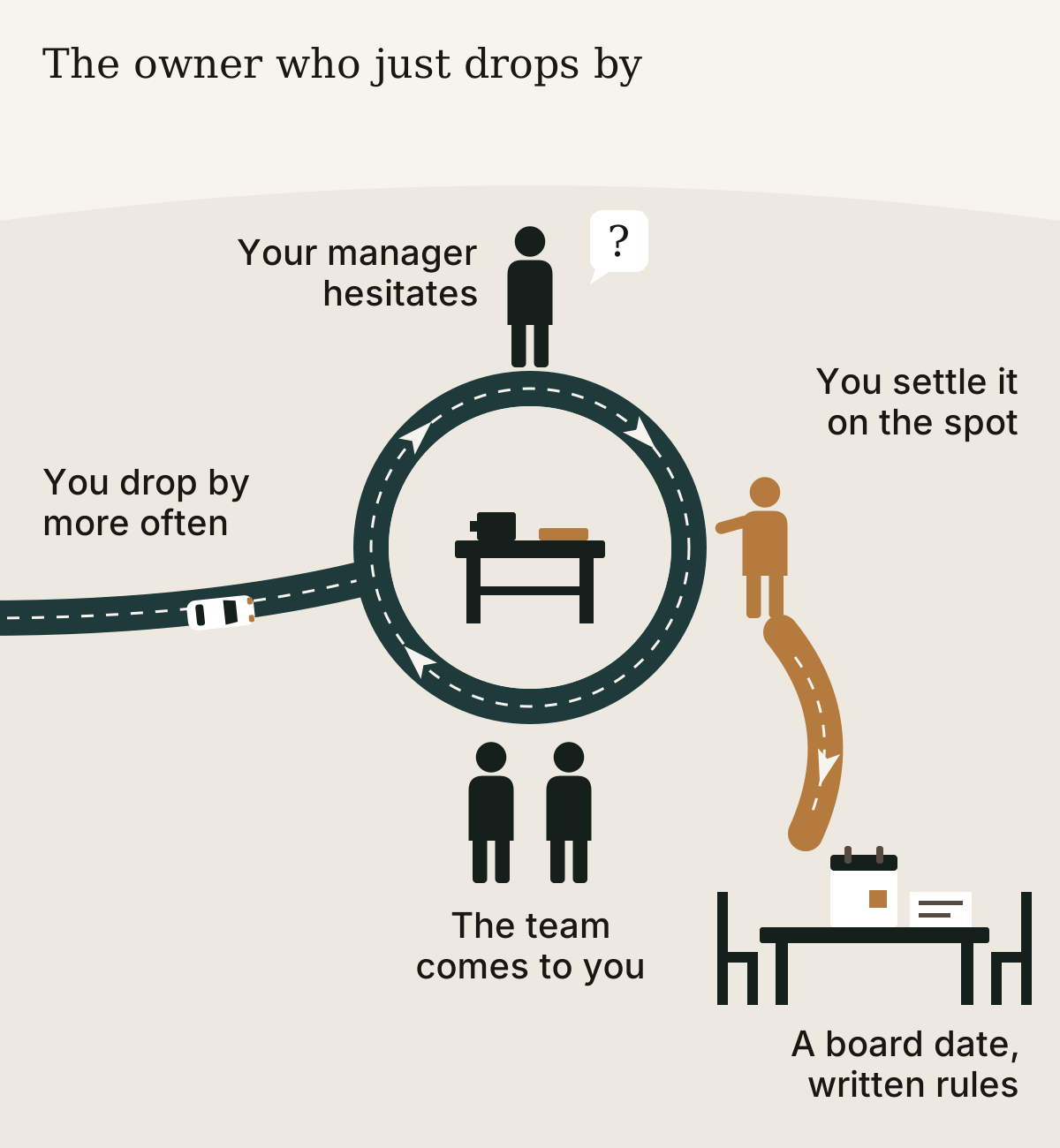
The way out is a different seat. An owner who no longer runs the company governs it from the board: a written rule that says what the manager decides alone and what comes to the board, meetings on dates fixed a year ahead, and the handful of figures you read each month. Between those dates, you stay out of the workshop. A board that does real work is where an owner keeps control without standing at the workbench.
The detail I look for is the office. If the founder's desk is still his, calendar on the wall, coat on the hook, the team keeps bringing him the decisions, whatever the organisation chart says.
"If I keep the shares, the succession question can wait"
Keeping the company feels like taking the succession question off the table: nothing is sold, nobody needs to be told.
In practice it makes the question sharper. You still own something that has to go to someone one day: your children, the manager, a buyer in ten years. And you have to settle what happens if you become unavailable overnight, because the shares are yours and a hired manager has no say over them. What has to exist before that day is the same list, made more urgent once you're out of the building.
There's a quieter benefit. A company that has run for a few years under a hired manager has proved what buyers look for first: it works without its founder. If you or your heirs sell later, that proof tends to show in the price. The decisions stay yours; the process of getting there can be led by someone who is neither family, manager nor buyer. Starting early is how you make sure nobody ever has to sell under pressure.
Which leaves the hardest question, and it has nothing to do with money: on the day your manager and your daughter disagree about where the company should go, who decides, and does that person know it yet?