Business Succession Planning: Who on Your Team Retires When You Do?
If you mean to hand over your company in about five years, you're probably counting those years from your own birthday. Count them from a few other birthdays too. The workshop foreman who started with you, the woman who has run the office since the early days, the salesman whose clients call his mobile: in the owner-led companies I work with, those posts are often held by people who joined in the founder's first years and are within a few years of the founder's age. Their clock has been running next to yours all along.
So business succession planning, for a company like yours, is almost never one succession. The first thing to do takes an evening: write down the key posts, the ones the company couldn't run without, who holds each one, and the year that person was born. If two or three of those years fall within three years of your own, a buyer will read several successions in your organisation chart, and you have roughly five years of work ahead of you before you can sell calmly. What follows is that calendar, one date at a time.
Take a case I've invented. A sheet-metal shop with 25 people, owned by a woman of 60. Her workshop foreman is 59 and joined 28 years ago. The office manager is 61. The best salesman is 57. She thinks she is planning one handover. A buyer will count four successions, not one.
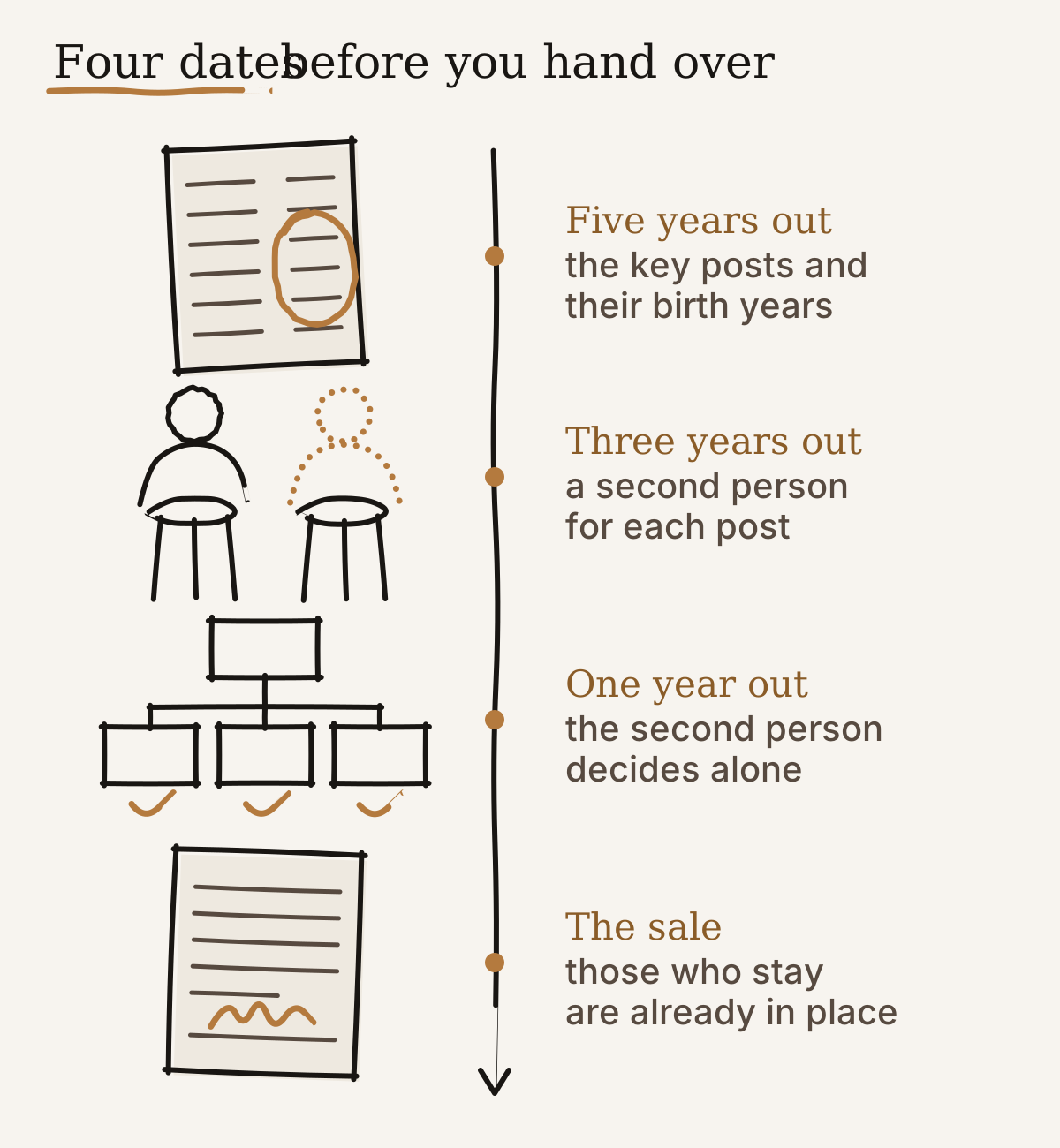
Five years out: the key posts and their birth years
The sheet has four columns: the post, the person, their year of birth, and a fourth that takes longest to write: what only this person knows or holds. Clients, a machine, how prices really get made, passwords, how the bank likes things done.
In my invented shop, the foreman's line says he's the only one who can set up the old press brake when the steel comes in thicker than the order said. The office manager's line holds the payroll passwords and the phone calls with the bank. The salesman's line is simply a list of names. Then comes the test: count the birth years within three years of the owner's. Here, three lines get a circle.
The retirement age is whatever applies in your country, and it tells you less than you'd think. Some people leave earlier, others carry on part time. The real date is a question you ask the person; you can't work it out from a birth year.
That conversation is the one owners put off, afraid of pushing a loyal colleague towards the door or of putting the idea in their head. Often the employee hasn't decided either. Asked five years out, the question reads as respect. Asked a year before a sale, it reads as being moved aside.
Read the sheet again every year, because lines move: someone whose successor has been named may leave sooner than planned, and sometimes the successor is the one who leaves.
Three years out: a second person for each post
Somewhere between four and three years out, each line on the sheet needs a decision, and there are three to choose from. Name an internal successor and prepare them. Hire from outside. Or reshape the post, split between two people and written down, so it stops depending on one person. How to bring an internal candidate up to the job is a subject of its own; here, what matters is that each line gets its decision by this date.
Then comes the pairing. The person who is leaving and the person taking over work side by side. In my practice, a post that carries clients or knowledge of a machine needs twelve to twenty-four months of overlap; an office post usually needs less. In the sheet-metal shop, that means two stools at the press brake where there used to be one.
During that overlap, the post costs a second salary. In the mandates I run, that salary stays small next to what a buyer takes off the price, or pushes into later payments, when the post is empty on the day of the sale. A management team that holds without you has its own price tag, and the same comparison applies.
A successor named three years ahead holds only if the nomination is real: a real post, the salary that goes with it, decisions that are theirs. Keeping key people through a sale starts there.
The last year: the buyer reads the chart
In the final year, the second person decides alone. A quote, an order, a hire. And you don't take it back, even when you'd have priced the job differently. In the invented shop, it's the first quote the new foreman sends out with his own signature on it, and the owner resisting the urge to rework it.
This is the year a buyer will look at. When a buyer checks the company before making an offer, one of the questions is who decides what, and since when. An organisation chart where each key post has had its successor in place for a year needs no explaining.
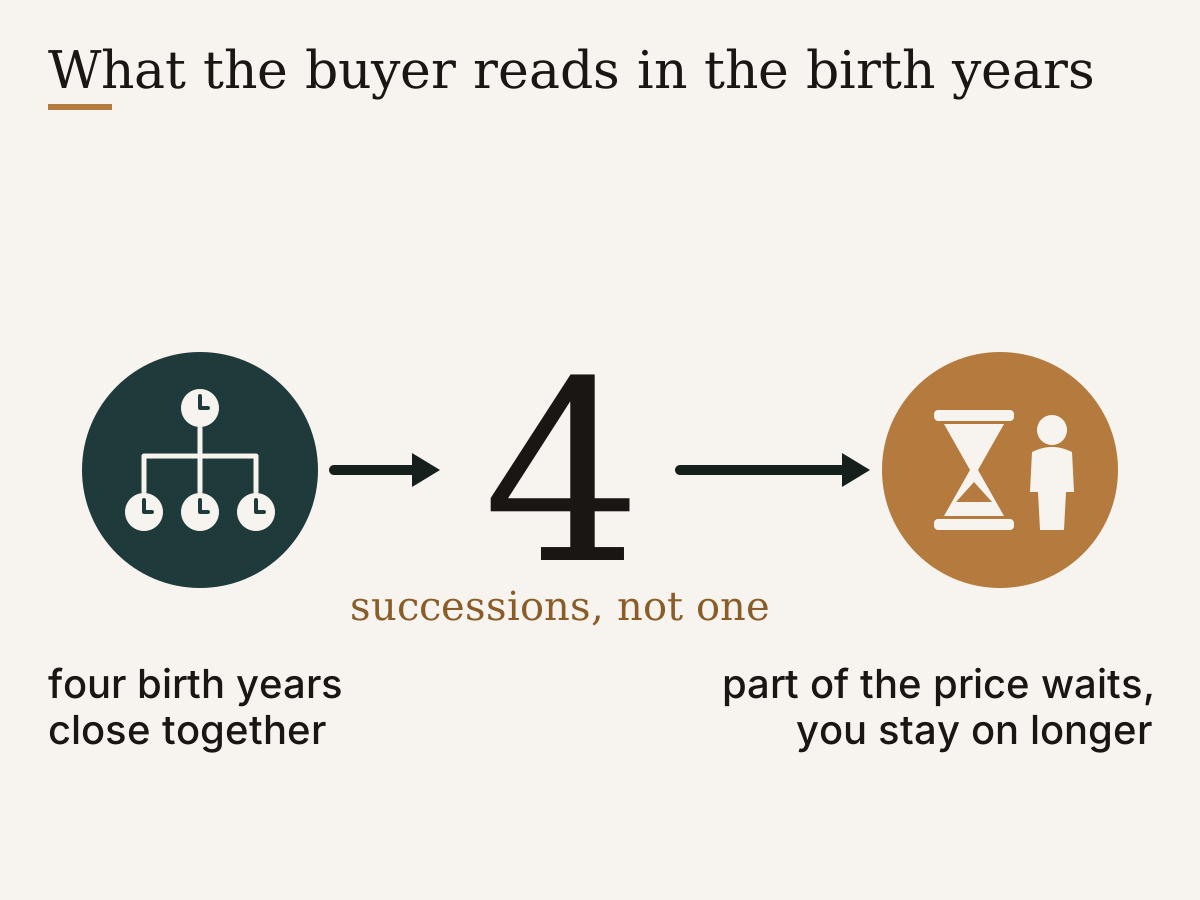
Now read the same chart with the birth years written next to the names: one org chart, four birth years close together. Three or four posts that will empty soon after the sale make the company look less transferable, and that ends up in the offer. In the price, in the part of it that's paid later, in how long you're asked to stay.
The sale: those who stay are already in place
On signing day, someone on your team may still be a year or two from retirement. On paper, that's now the buyer's problem. In practice, the buyer settles it through the deal: part of the price paid later, once the transition has held; a bonus for the employee who agrees to stay through the handover; or you, staying on longer than you'd planned.
The owner of my invented shop has a short answer when the buyer asks about the office manager: her successor has been running payroll for a year, and the bank already knows her voice on the phone.
Who takes over each post, and when, is your decision as the owner. Running the calendar around it is work someone independent can carry for you. Starting early doesn't mean selling early. It means you never have to sell with three empty posts.
After the signature
Say the foreman stays eighteen months after the sale, then retires. If his successor is in place, that's a transition that worked. Picture the farewell in the workshop, with the new foreman doing the talking and the press brake already his. If nobody is in place, the buyer lives through what you would have lived through.
There's very little you can do after the signature that you haven't prepared before it. So take out the sheet one more time and look at the birth years in the third column. Whose retirement party would you be organising in the same year as your own?