Marital Property and Company Shares: What a Marriage Contract Costs, and What Its Absence Costs When You Hand Over
A marriage contract costs between a few thousand and about ten thousand, in francs or euros, plus one notary appointment. Its absence is billed later, if a divorce or a death during the handover forces the couple's assets to be split under your marital property regime, the rules for that split. That bill can hold a money claim on half the company's value, a valuation report, several extra months and, in Germany, sometimes your spouse's consent to sell.
Switzerland: who owns what, with and without a contract
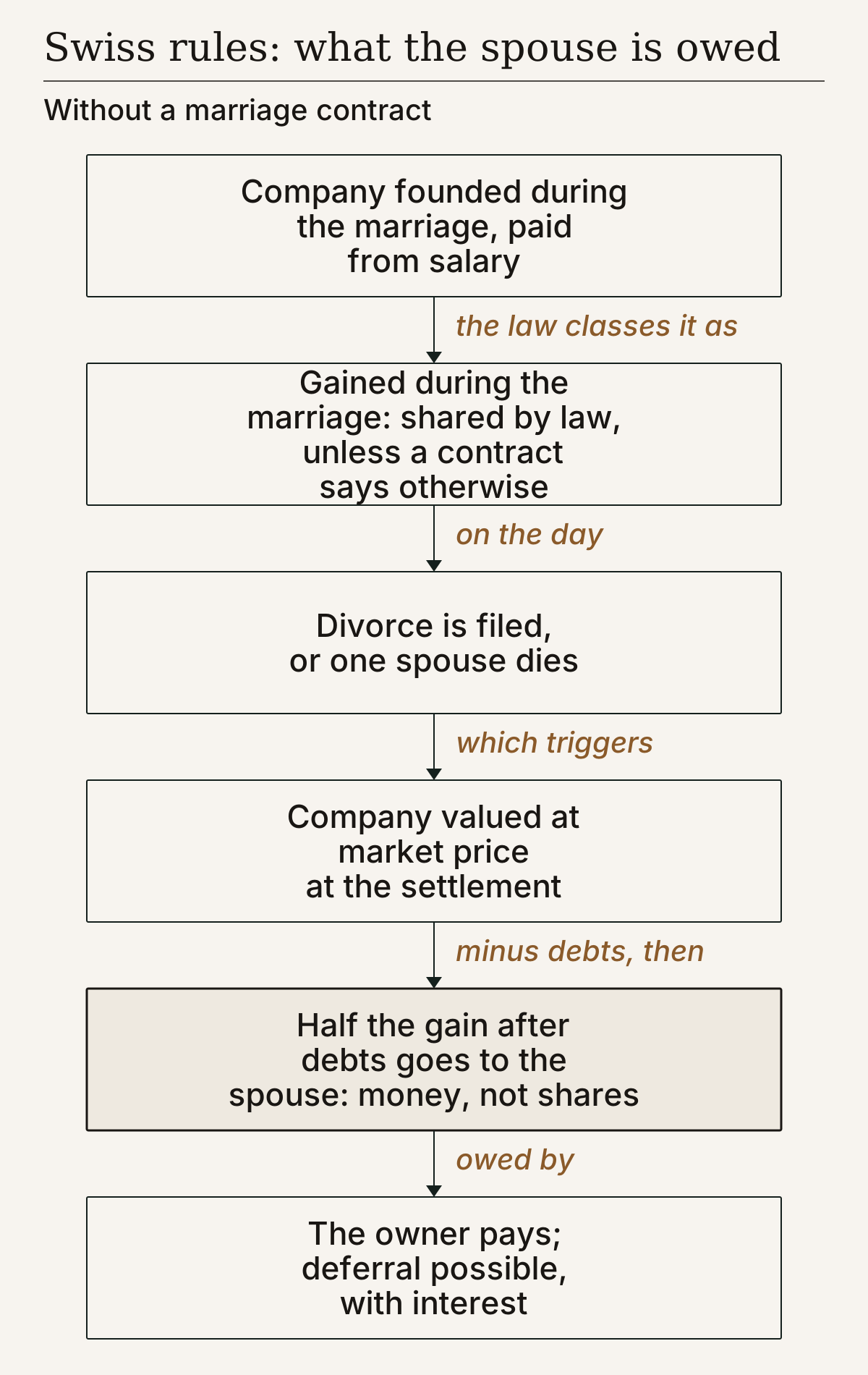
Without a marriage contract, Swiss law places you under participation in acquired property, meaning each shares the other's gains. The law sorts assets into two piles.
Acquisitions, meaning what you earned while married, include your salary and what it bought. Own property, meaning what the marriage didn't produce, covers what you owned at the wedding and what you inherited or received as a gift. So a company founded on your salary during the marriage is an acquisition.
A hypothetical case, not a client. An engineer founds a machining firm five years after her wedding, paid for from her salary. Twenty-two years later it's worth 4 million francs. No marriage contract. On divorce or death, each spouse, or the estate of the one who died, is entitled to half of the other's net gain, meaning acquisitions minus debts. Her husband's claim is in the order of 2 million, before her debts come off and before her own claim on half of his gain is set against it.
He receives money, not shares. The firm is valued at market price when the settlement is made. In a divorce, though, what falls into which pile is fixed on the day the petition was filed: what's in the piles is decided then, what it's worth is decided later. If paying at once would put her in serious difficulty, she can ask for time. Interest then runs from the close of the settlement, unless agreed otherwise.
A contract, signed as a notarial deed before or after the wedding, moves the line between the two piles. Spouses can declare that acquisitions used to run a business are own property; the firm then leaves the gain calculation. They can also agree on another split, for instance the whole gain to the survivor. One limit: children of only one of you keep their reserved share, the minimum the law guarantees an heir, and a whole-gain clause can't cut into it.
On divorce, a clause changing the legal split doesn't apply unless the contract says so expressly. A contract written to protect a widow may do nothing in a divorce.
A company owned before the wedding isn't sealed off either. Say you paid a capital increase from your salary in year ten. The slice of the firm that contribution bought goes into the acquisitions pile, counted at the firm's value on settlement day.
At death, the spouse's claim is settled before the estate is divided. If one child is to take over, the fair split among the heirs is worked out on what's left.
Germany and Austria: the same question, other names
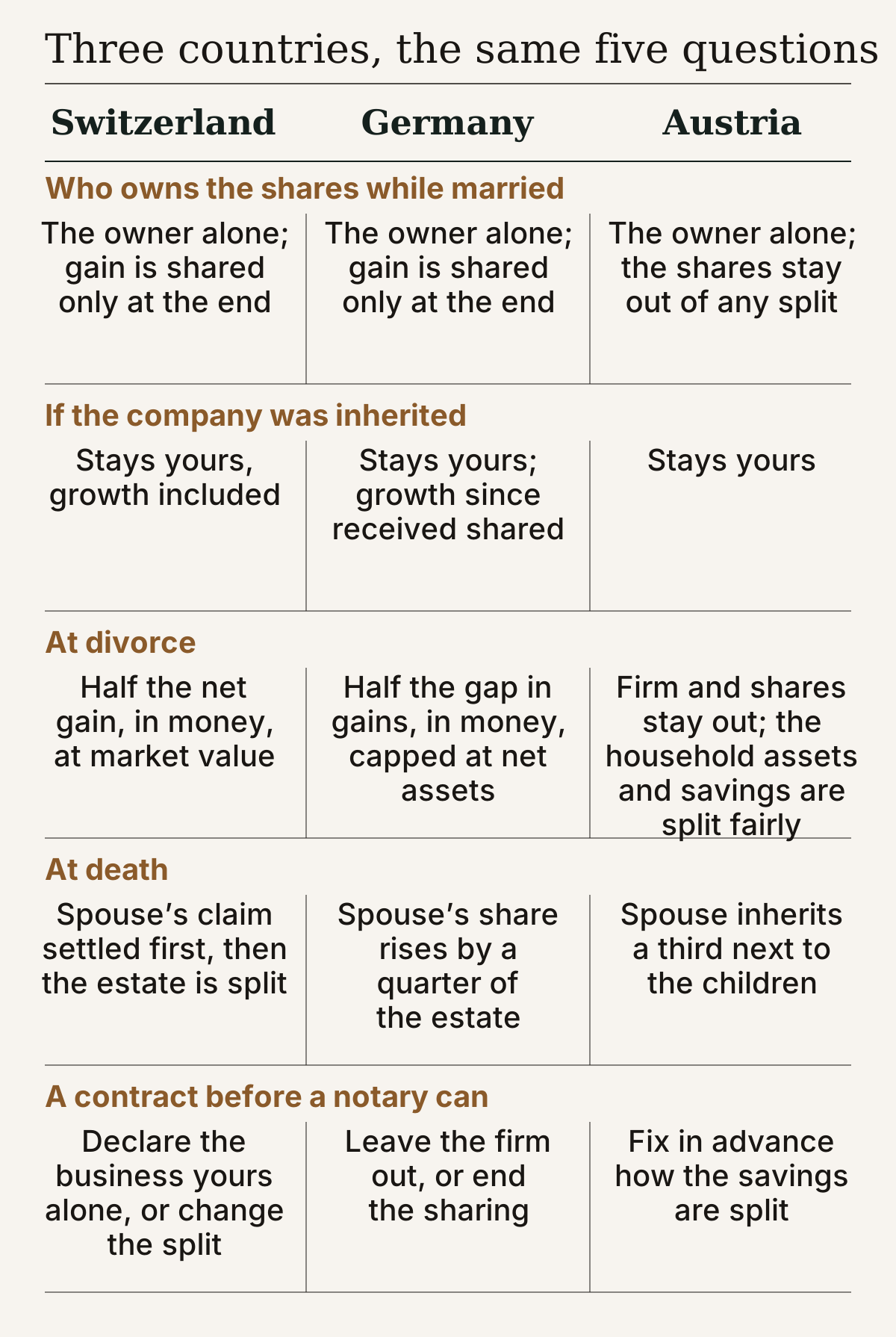
In Germany, the default regime is the Zugewinngemeinschaft, a community of accrued gains: assets stay separate, and the two gains are compared at the end. A gain is what a spouse owns at the end minus what they brought in; an inheritance received during the marriage counts as brought in. An inherited company is therefore frozen at its value on the day you received it, and its growth since then counts, unlike in Switzerland. The spouse with the larger gain owes the other half of the difference, in money, capped at their net assets when the regime ends. At death, instead of this calculation, the spouse's statutory share, inheritance law's default, rises by a quarter of the estate.
A German contract is signed before a notary, both spouses present, and can follow the wedding. It can modify the regime, exclude it, or cover only the company. One rule matters to a seller: a spouse can only commit to selling their assets as a whole with the other's consent. If the company is nearly all you own, ask your lawyer how that applies.
Austria is the odd one out. The statutory regime is separation of property: each spouse keeps what they own and acquire. On divorce, the household assets and the savings are split by what's fair, not by a fixed fraction; the business stays out, and so do its shares unless they're mere investments. A contract needs a notarial deed here too, and it can settle in advance how the savings are split. At death, the spouse inherits a third beside the children, less whatever the marriage contract already gave them.
The cost table, item by item
| Item | Order of magnitude | What rides on it |
|---|---|---|
| Contract, Switzerland | A few thousand francs at most, in the files I see | Business assets made own property |
| Contract, Germany | About 3,500 euros at 1 million of combined net assets, just under 10,000 at 3 million, before VAT and expenses | Charged on the company's value if it covers only the company |
| Valuation report | Tens of thousands of francs for an SME worth a few million, rarely under ten thousand | The market value that sets the claim |
| The claim, hypothetical 4 million firm | In the order of 2 million, in money | Paying at once, or later with interest |
| The calendar | Several months | A second process beside the sale |
| Consent to sell, Germany | One signature | Disposing of your assets as a whole |
The German figure is the notary's fee at the 2.0 rate of the fee scale, on both spouses' assets, debts deducted up to half. The settlement needs its own valuation, where one headline number hides a lot.
When to have the contract re-read
Before the first buyer conversation, above all: the settlement value and, in Germany, the consent question both bear on the sale. Again when a child takes over, since a whole-gain clause for the survivor changes what the other children receive. And after an inheritance, in Germany especially, where the inherited firm's growth counts.
A contract signed at thirty describes the couple you were then, and a company you didn't have yet. Does it still describe the one you're about to sell?