Handing Over a Practice or a Firm When Its Value Sits in People and Licences
This list is for owners of a practice or a firm whose clients come for a person, or whose work depends on a licence issued to someone by name. Both leave with you unless you plan for it.
Before you look for a buyer
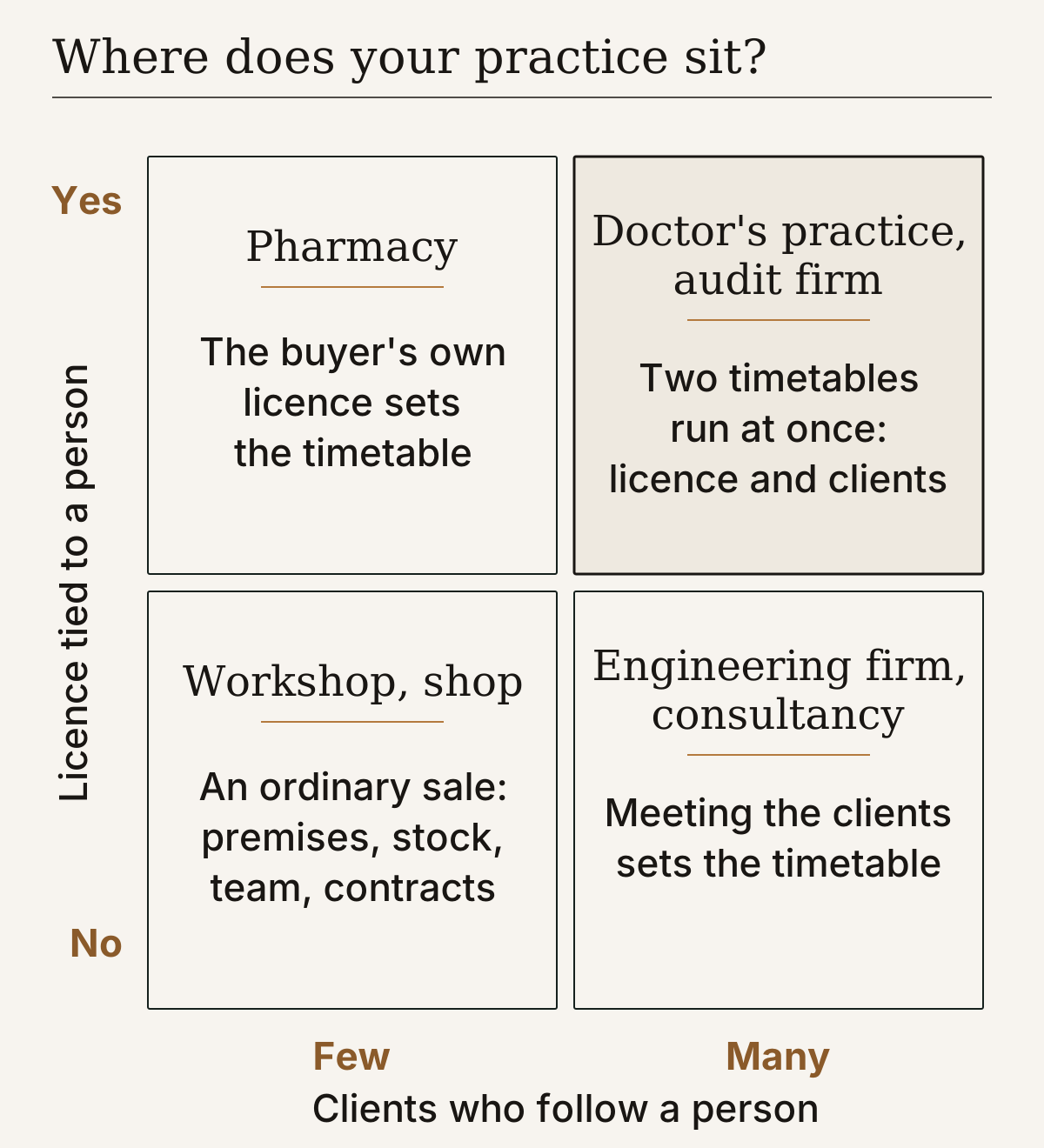
- Answer two questions about your practice. Do clients come for you rather than for the place, and does the work need a licence, meaning the state's permission to practise, in one person's name? An engineering office or a consultancy often needs no licence, so its value sits entirely in people, references and framework contracts; a doctor's practice usually answers yes twice.
-
List every paper that bears your name. Licence to practise, operating licence, admission to bill the basic health insurer, audit licence, registrations: for each, ask whether it's issued to you, to the company or to the premises. Whatever is issued to you personally doesn't pass with the business; the buyer has to apply for their own.
A Swiss doctor or pharmacist practising on their own responsibility needs a licence from the canton, the regional state where they work. It's granted to a person on personal conditions: a federal diploma and postgraduate title, good standing, command of one of the canton's official languages.
-
Check who else in the firm holds a licence. In Switzerland, an audit firm is approved only if most of its management, and everyone who leads audit engagements, is personally approved. If you're the only approved auditor, ask what becomes of the firm's approval the day you leave.
In Germany, tax advice is reserved to qualified professions, and a tax firm acts through partners or representatives who meet the conditions themselves. A buyer who isn't qualified needs people who are.
-
Find out whether the number of practices in your area is capped.
In Switzerland, cantons cap the number of doctors who bill the basic insurance, by specialty or region. A new doctor is admitted only while the cap isn't reached, so your admission isn't something you can sell.
In Germany, panel doctors are those admitted to bill the public health insurer. Where their admissions are restricted, the regional association of panel doctors advertises the seat, the right to practise there. A committee then picks the successor on criteria such as aptitude, years in practice, or being the owner's spouse, child, employed doctor or partner. Your financial interest counts only up to the practice's market value: a higher offer buys nothing with the committee.
-
Screen buyers on their qualification before anything else. Negotiating with someone who can never hold the licence wastes months.
In Germany, a pharmacy's operating licence goes only to a pharmacist with the German Approbation, the state's licence to practise pharmacy. That person must run the pharmacy personally, and the authority is shown the purchase contract. A group of investors can't buy one.
In Austria, the pharmacy concession, the operating right, is personal and can't be passed on. A buyer needs their own, which requires five years of prior work in a pharmacy. After the holder's death, a spouse or registered partner may continue for five years at most; for children, age limits apply instead.
With the buyer
-
Start the buyer's licence application before you fix a signing date. In the files I see, these procedures take months. A date picked first and a licence hoped for leaves someone signing for a practice they may not be allowed to run.
-
Introduce your successor while you're still there. Clients follow a person, not a company name, and some won't follow the buyer however well you prepare. A stretch of working side by side does more than any letter, and when you tell clients matters as much as how.
-
Plan the consent letters for the files. Professional secrecy, the duty to keep confidences, means a patient or client file doesn't move with the sale contract alone. Each client opens that door, which takes a letter, a signature and time.
In Switzerland, the criminal code punishes doctors, pharmacists, lawyers and auditors who reveal a confidence; disclosure with the person's consent isn't punishable.
Germany's criminal code, § 203, sets the same duty for doctors, pharmacists, lawyers, auditors and tax advisers.
-
Keep the team: they're part of what's being bought. Under Swiss law, employment contracts pass to the buyer with the business, unless an employee refuses. In a pharmacy, the assistants are also the faces clients recognise at the counter.
Last: price and paperwork
-
Tie part of the price to the clients who stay. An earn-out, meaning a price paid later on results, can follow who's still a client after a year or two. When the buyer is a young professional, a seller loan, part of the price you lend them, is common.
-
Write your non-compete around what you'll still do. If you plan to teach, cover holidays or keep a few advisory days, say so in the clause; its scope and duration decide what stays open to you.
-
Let your answer to item 2 choose between a share deal and an asset deal. In a share deal, the buyer takes the company's shares, so what belongs to the company or the premises can stay; in an asset deal, the buyer takes the business piece by piece. What belongs to you has to be applied for again either way. Tax comes after that question; here's how the two structures compare.
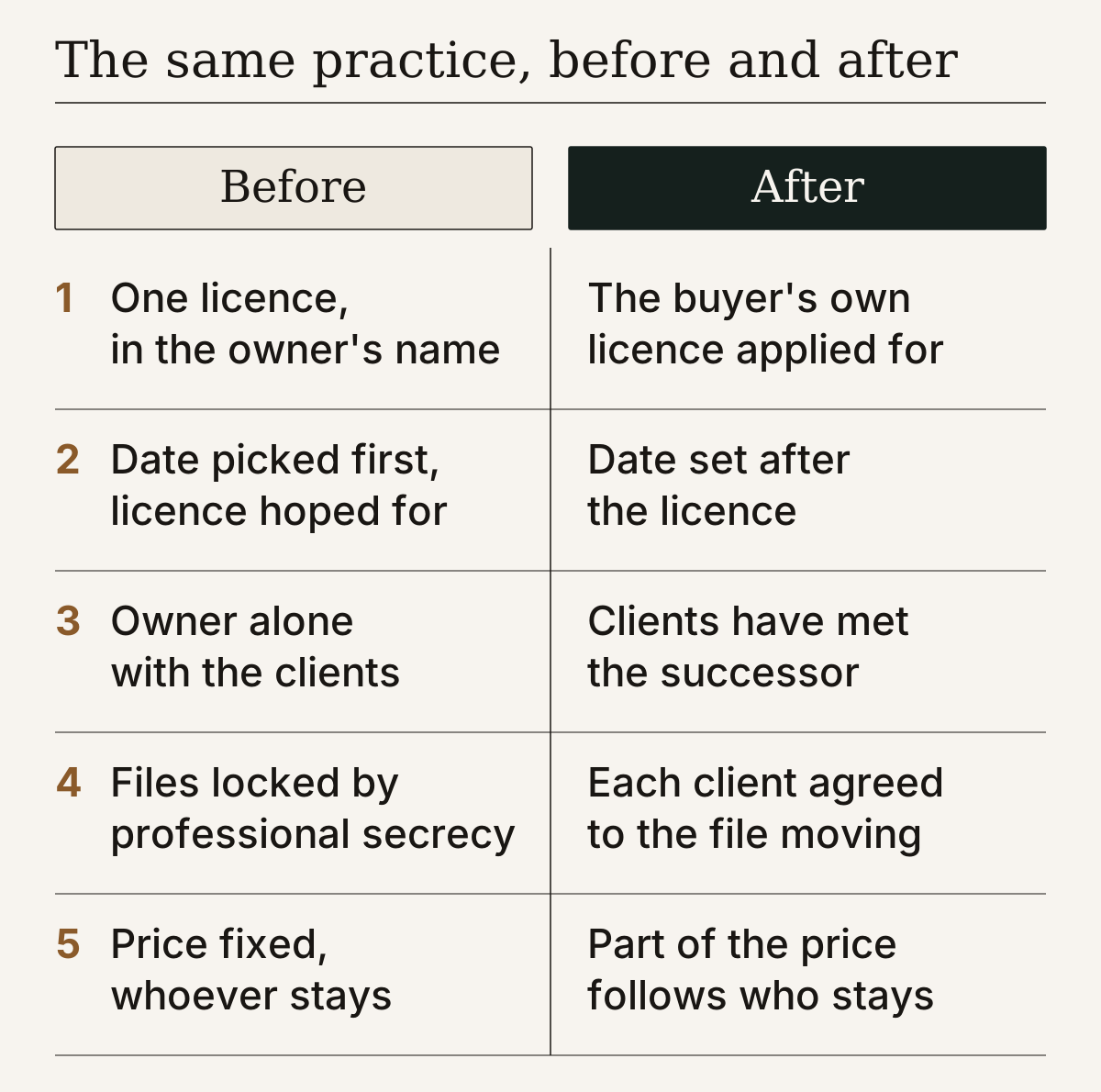
A hypothetical case, not a client: a pharmacy whose owner is 61 and the only responsible pharmacist, with two assistants and a lease that has four years to run. Run her through the list: her licence leaves with her, and what she can hand over is a lease, two familiar faces and patient files that need consent to move. So what is her buyer really paying for: the shop, or the months she spends making herself unnecessary?