Apprentices When the Business Changes Hands: What the Buyer Takes Over, What the Authority Requires

In many trades an apprenticeship runs three or four years. If you plan to sell within the next two, an apprentice you sign this summer will most likely sit the final exam under a new owner, in a workshop you no longer run. The contract will outlive your ownership. Whether the company may still train once you've gone is a separate question, and it has its own calendar.
Three parties sit around an apprenticeship contract: the apprentice, the company and the authority that approves or registers it. In Switzerland that's the canton. In Germany it's the chamber, and in Austria the Lehrlingsstelle, the apprenticeship office of the regional economic chamber. Each wants to know where the training happens and who does it. A buyer takes over the contracts; the authority wants those conditions to hold after you've left.
Take a joinery workshop with 14 people and three apprentices, a hypothetical case and not a client. The owner is 61 and the only person in the building with the trainer qualification. On paper, the workshop trains. In practice, he does.
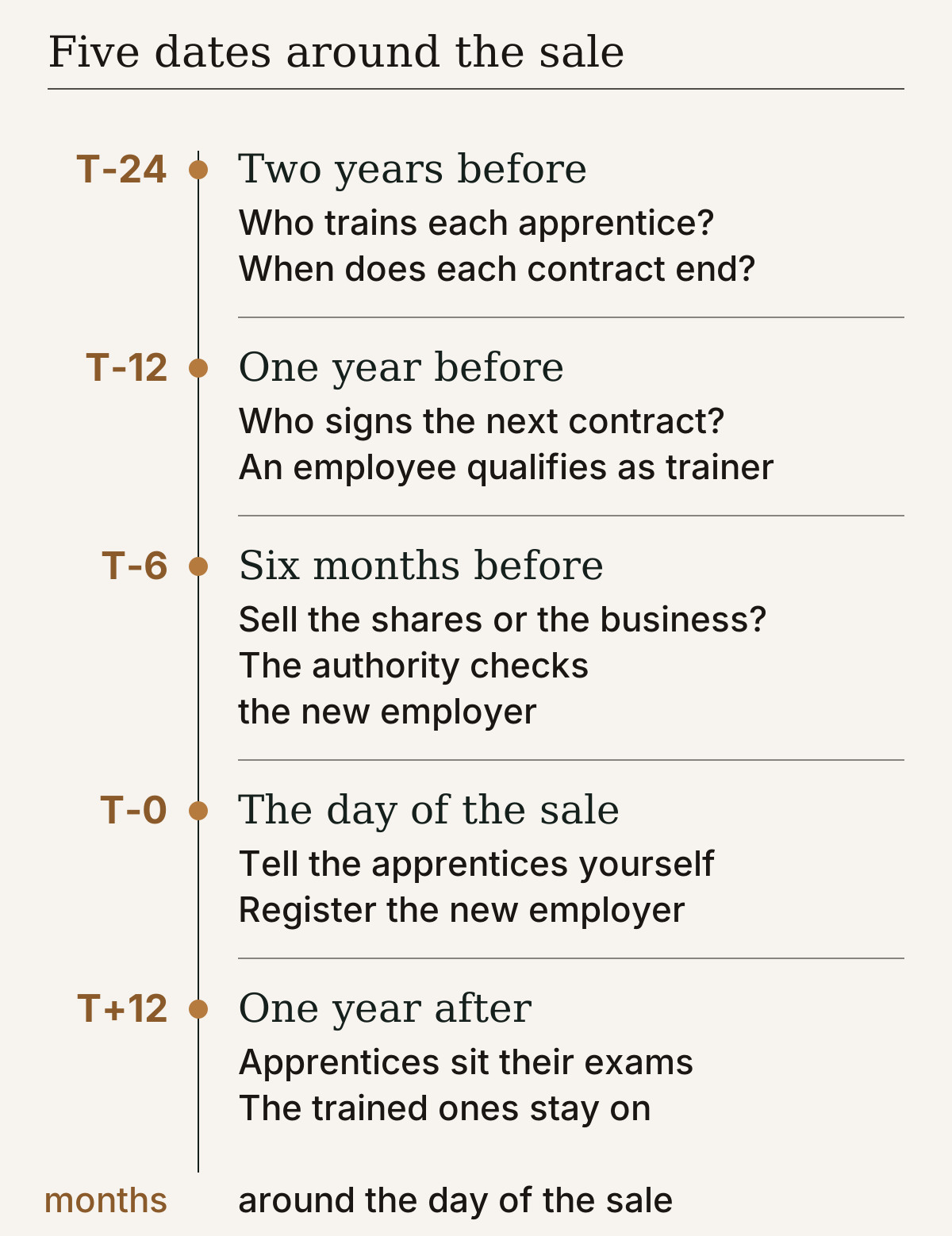
T-24 months: count what you have
Start with three columns on one sheet: who trains each apprentice, which papers carry the company's name and which carry yours, and when each contract ends. The first column is the one that changes the plan.
In Switzerland, the canton approves each apprenticeship contract, and the training company must hold the canton's authorisation to train. The law then asks for something personal: training under a person of the trade with the necessary skills and qualities. The canton can refuse or withdraw the authorisation if the trainers don't, or no longer, meet the legal requirements.
In Germany, the chamber keeps a register of training contracts: the crafts chamber or the chamber of commerce, depending on the trade. Each entry names the training company, the training site, and the trainer with their qualification. In a craft that needs a licence, that qualification rests on the master craftsman's exam, or on registration in the craft plus a trainer exam.
In Austria, the business must be licensed, under trade law, for the activity it trains in. The owner, or an appointed trainer, must have passed the trainer exam or taken the trainer course.
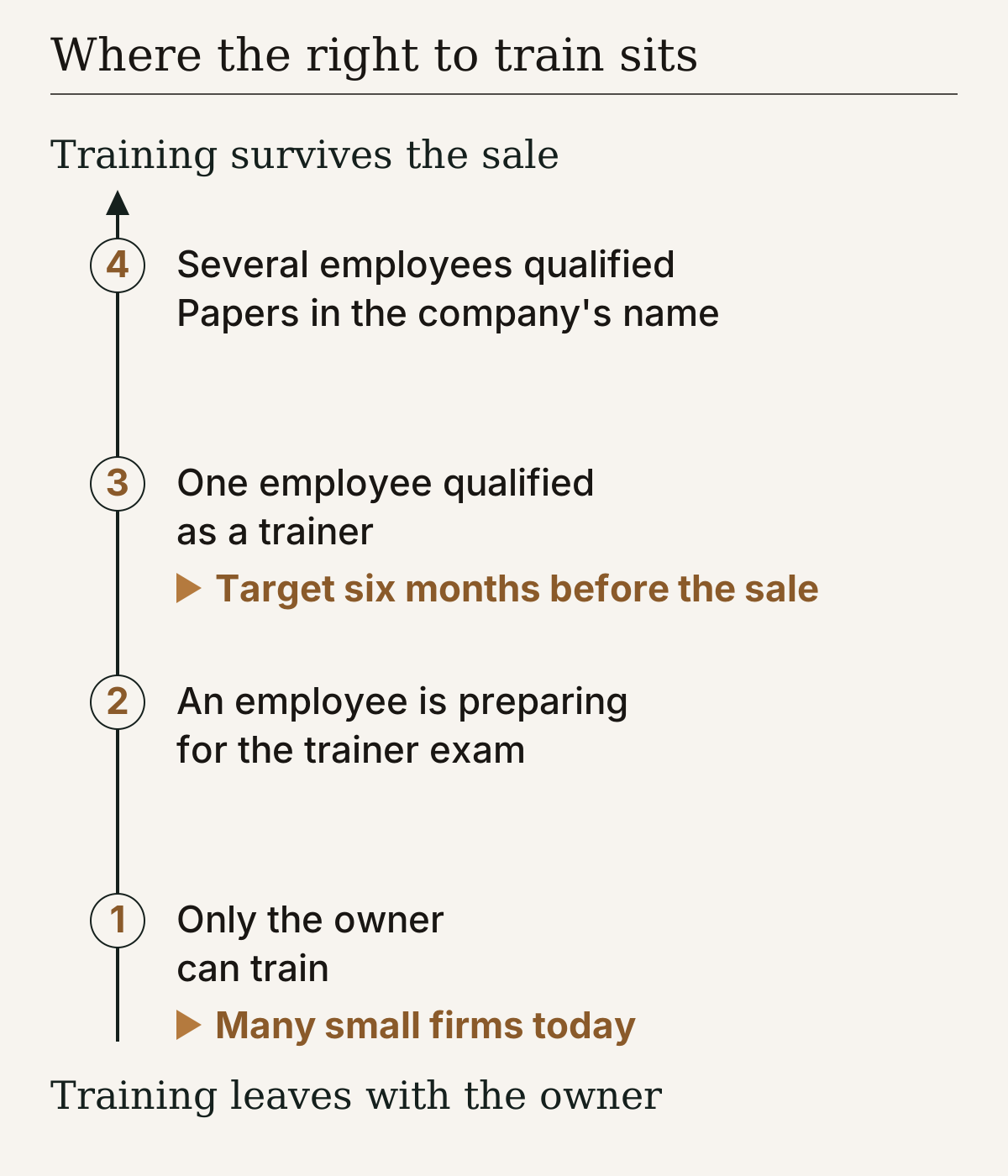
In many small firms, the trainer qualification sits with the owner personally. That's the line on your sheet that matters.
T-12 months: move the right to train
A year out, make two decisions. Who signs the next apprenticeship contract, and who is named to the authority as its trainer? And which employee takes the trainer qualification, so that it stops depending on you? In the joinery, that means the foreman gets the trainer qualification this year, while the owner is still there to cover.
German law already separates the two roles. An owner who isn't qualified to train appoints a trainer, who teaches directly, on their own responsibility and to a substantial extent. The chamber also wants the number of apprentices in proportion to the qualified staff.
Austria has a rule for the trainer who leaves unexpectedly. The business may hand training to a suitable person already on staff who hasn't yet passed the trainer exam. It must name a proper trainer within 18 months; otherwise it keeps its apprentices but can't take new ones.
In Switzerland, the risk sits in the contract. After the trial period, an apprenticeship can be ended only for just cause, meaning a serious, recognised reason. A trainer who lacks the skills is one such cause; training that can only be completed on essentially different terms is another. Sell as the only qualified trainer, with nobody to take over, and every contract is open to both.
This is the same work as reducing what depends on you anywhere else in the business, applied to a paper the authority reads.
T-6 months: choose the structure, and have the buyer checked
In a share deal, buying the company's shares, the employer doesn't change. The contracts and the Swiss authorisation to train stay in the same company's name. What does change is the person who trains, if that person was you. In the joinery, that's the whole change, and the one the authority reads.
In an asset deal, buying the business piece by piece, the employment contracts move to the buyer. Apprenticeship contracts are employment contracts of a particular kind and follow the same rule in principle.
In Switzerland, employment relationships pass to the buyer on the transfer date, with all rights and obligations, unless the employee refuses. You inform staff in good time about the reason and the consequences. The canton approved each contract with your company's name on it: ask how it wants the new employer recorded.
In Germany, the new owner steps into the existing employment relationships. A dismissal because of the transfer is void. Staff are informed beforehand, in text form, and have a month to object in writing. A new training company changes the registered contract, so the chamber must be asked without delay. It registers the change only if the new owner, the trainer and the site are suitable.
In Austria, the new operator becomes the employer, with all rights and obligations. A workshop that keeps its identity and already trained isn't treated as a first-time training site. The successor must meet the same conditions as any trade holder who trains, and the existing approval of the workshop applies to them as well.
So the buyer's suitability is part of the deal, wherever you are. Weigh it with the other trade-offs between the two structures.
Six months out is also when the hiring freeze tends to set in. "We're selling soon, let's not take anyone on this year."
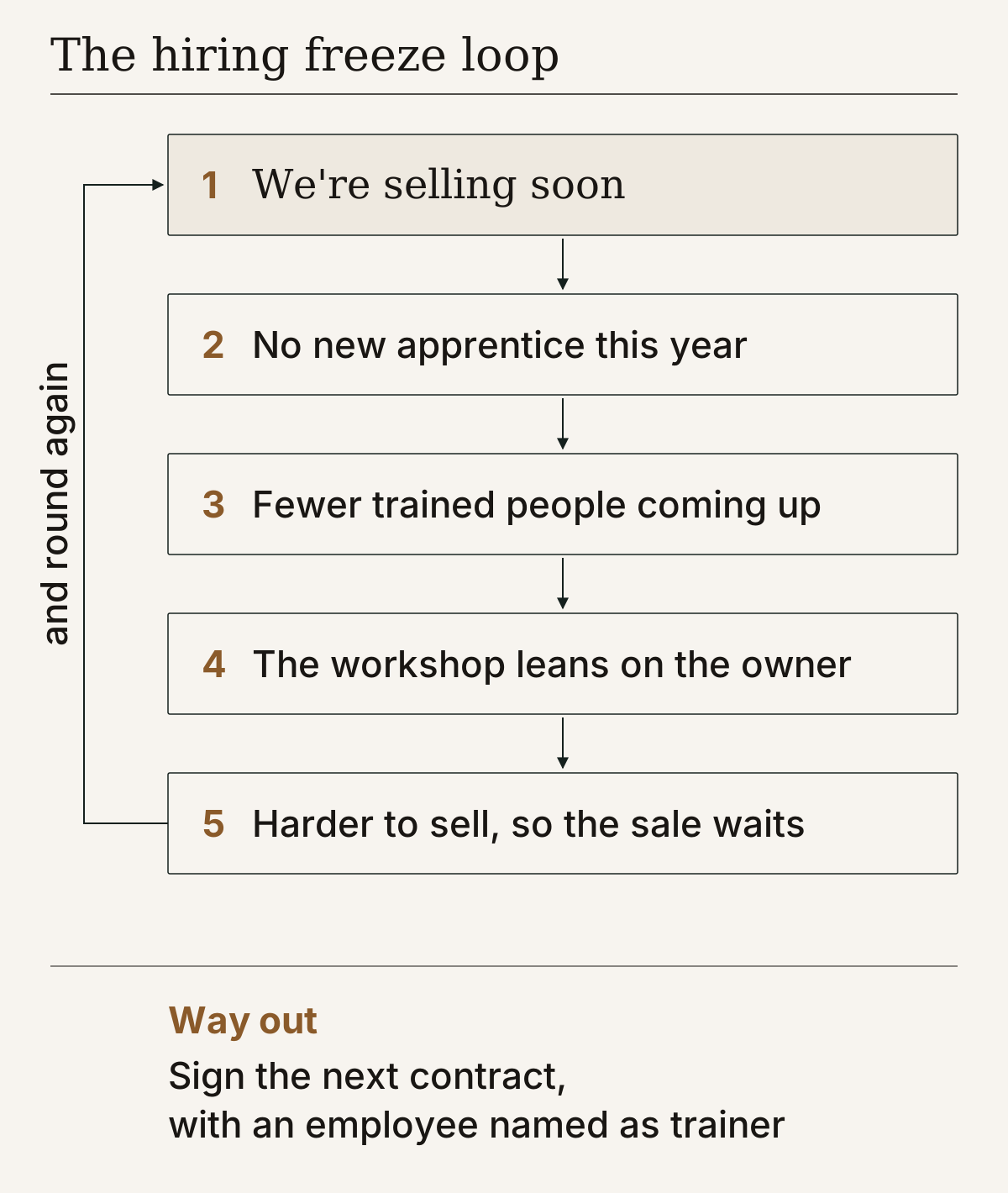
Each year without a new apprentice leaves fewer trained hands, more weight on the owner, and a business that's harder to sell. The way out is unspectacular: sign the next contract, with an employee named as trainer.
An owner who keeps postponing the sale should know one Austrian rule. If the owner trains in his own name and dies with no trainer in place, the apprenticeship ends early, unless a trainer is appointed without delay. It also ends if the business loses its licence for the trade.
T-0: the day ownership passes
Tell the apprentices yourself, before any letter reaches them. They're usually the youngest in the building and the most tied to one person. Then think about the order in which everyone else hears.
In Germany, the change of training company goes to the chamber's register without delay; in Austria, a change to a registered contract goes to the Lehrlingsstelle under the same rules as the first registration, which is due within three weeks of the start.
In Switzerland, if an apprenticeship contract is ended along the way, the company tells the canton immediately. If the business closes or no longer trains as the law requires, the canton makes sure the training can, as far as possible, be finished normally.
T+12 months: exams, and who stays
The apprentice signed at T-12 is well into training. In Switzerland, the buyer has also taken on the duty to free time for classes and the exam, and to issue the apprenticeship certificate at the end. In Germany, an apprentice who keeps working after the training ends, without an express agreement, is deemed to have an open-ended employment contract.
In the sale files I read, apprentices appear as a line in the payroll. The authorisation to train, the trainer's qualification and the trained apprentices who stay appear nowhere. Yet the buyer gets people who already know how this workshop works, which is what keeping key people through a sale is about.
Back in the joinery, one question decides whether that value survives. On the day the buyer walks in, who in the building can be named as trainer on the fourth apprentice's contract?