Should I Sell My Business? What a Sale Costs, and What It Costs to Fix the Fatigue Instead

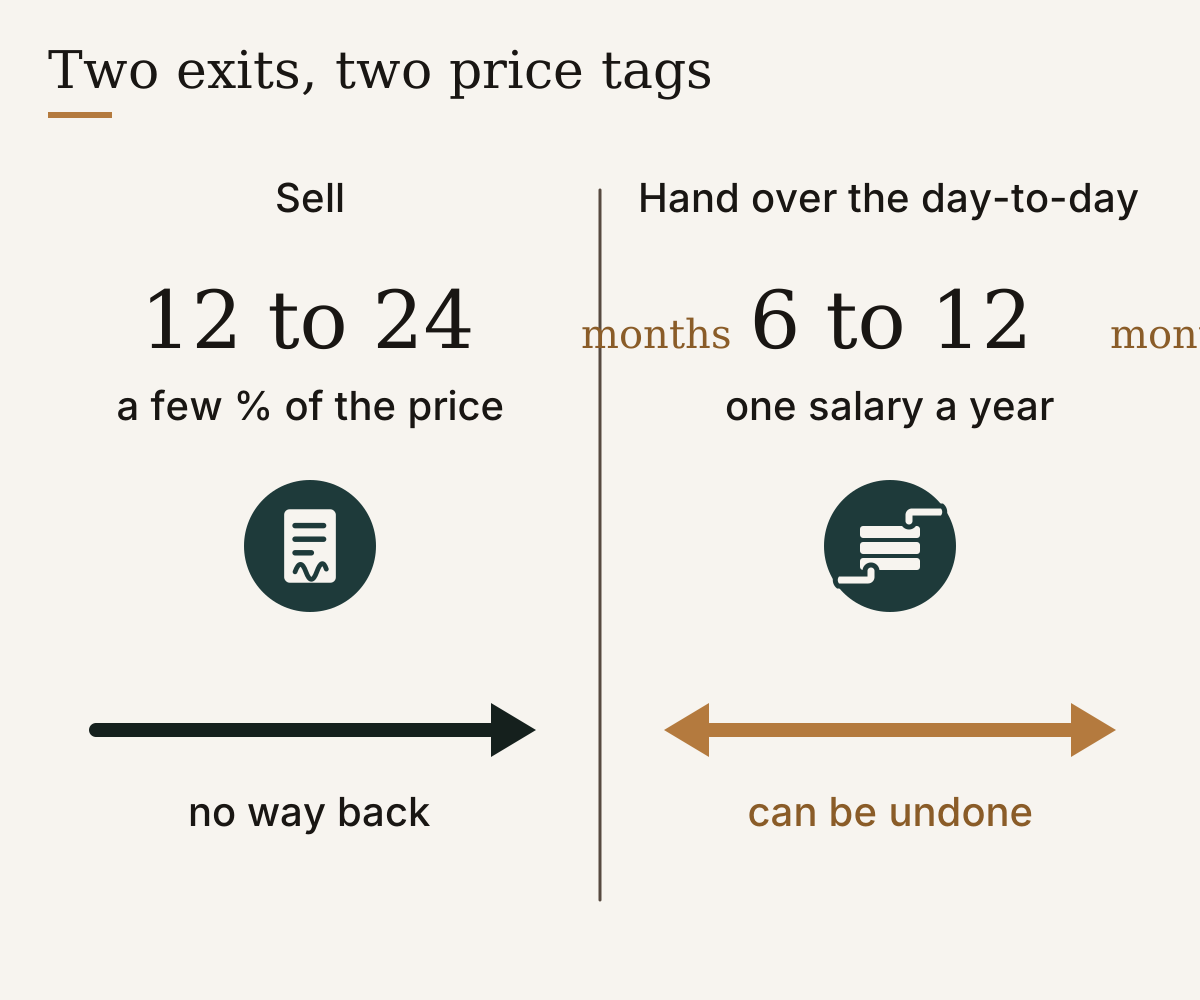
Twelve to twenty-four months of your life, a few percent of the price in fees, a tax bill someone has to work out for you, and no way back. In the sales I conduct, that's the order of magnitude of selling an owner-led company. Fixing the fatigue instead costs roughly one manager's salary a year and six to twelve months before you feel the difference. And it can be undone.
So, should you sell? Sell if you'd still want to leave once the load that's wearing you down has been taken off you. If what you're really after is relief, buy the relief first. It works sooner, and you can reverse it if you were wrong.
Take an invented company. A machining shop with 30 people and around 6 million in revenue, in euros, say. The owner is 58. It's been a bad year: her workshop foreman left in the spring, and a dispute with a client has dragged on ever since. Late one evening, after the last car has left the yard, she types the question.
What the sale costs
Her company might fetch around 3 million. Here is that bill.
| Item | Money | Time |
|---|---|---|
| From decision to final signature | Nothing beyond the rows below | 12 to 24 months |
| Fees: the adviser running the sale, the lawyer, the accountant | A few percent of the price; in her case, 100,000 to 200,000 | Billed across those months |
| Tax on the gain | Depends on the country, on what you sell and on how you hold the company | To be worked out before you decide |
| Your own time | Not invoiced, paid in attention | Weeks of working time, spread over a year or more |
| Handover after signing | Your presence, on the buyer's calendar | 6 to 12 months, sometimes more |
| Changing your mind | Not possible | Never |
The adviser who conducts a sale is paid mostly on success, as a percentage of the price; the lawyer and the accountant bill their hours. For a small company, the whole lot comes to a few percent of the price.
What the tax authority takes depends on the country, on whether you sell the shares or the business itself, and on how you hold the company. Ask your accountant to put a figure on it before any decision. In Switzerland, for example, someone who sells shares held as private assets pays, as a rule, no income tax on the gain; there are exceptions, and your accountant knows them.
Then there's your own time. Preparing information, answering the buyer's questions, meetings, negotiation: weeks of your working time, on top of running the shop. After signing, the buyer usually wants you there for the handover: six to twelve months, longer when part of the price depends on results still to come.
One cost appears in no row. Selling worn out means negotiating worn out. In the mandates I run, the seller who is in a hurry to leave accepts the first offer faster and gives more ground on the part of the price paid later and on the promises made to the buyer about the company. A sale already tires you in ways you don't expect; fatigue brought into the room adds to it.
What the relief costs
Now the other bill: take the day-to-day off her desk and see what's left.
| Item | Money | Time |
|---|---|---|
| A deputy or operations manager who takes the day-to-day | One manager's salary a year, at your market's level; in her case, around 120,000 including social charges | 3 to 6 months to recruit, 6 to 12 months in all before the load is really carried |
| Writing down what's in your head and handing over decisions | Nothing invoiced | A few months of your evenings |
| Three weeks away without a phone | A little of that month's profit, perhaps | Three weeks |
| An outside view: an advisory board member or a peer, paid by the day | A few days' fees | A few days a year |
| Changing your mind | Possible | Whenever you decide |
The evenings go on things that only exist in her head: who decides what, how a price gets set for a new part, who calls which client when a delivery slips. The three weeks away are a test as much as a rest. Whatever breaks while she's gone shows what her role really carries. Whatever runs without her can be handed over the following Monday.
There's a side effect. A company that no longer depends on its owner sells better and more easily. Serious buyers spot that dependence, and they either walk away or lower the price. So the relief bill is also, in part, work on the company's value, whatever she decides afterwards.
Fatigue, or the wish to leave?
The urge to sell has a pattern. It peaks just after a blow: a bad year, a key person leaving, a conflict, an illness in the family. A few months later it usually falls back. That's how you tell them apart. Fatigue belongs to the role, so it fades when the role gets lighter. The wish to leave survives the relief.
Three questions sort one from the other. Would I still want to leave after three weeks away with no phone? After six months with a deputy carrying the day-to-day? Once this year's problem is solved? Three yes, and the wish is real: sell, and start preparing. One no, and you're looking at fatigue: fix the load first, then ask again.
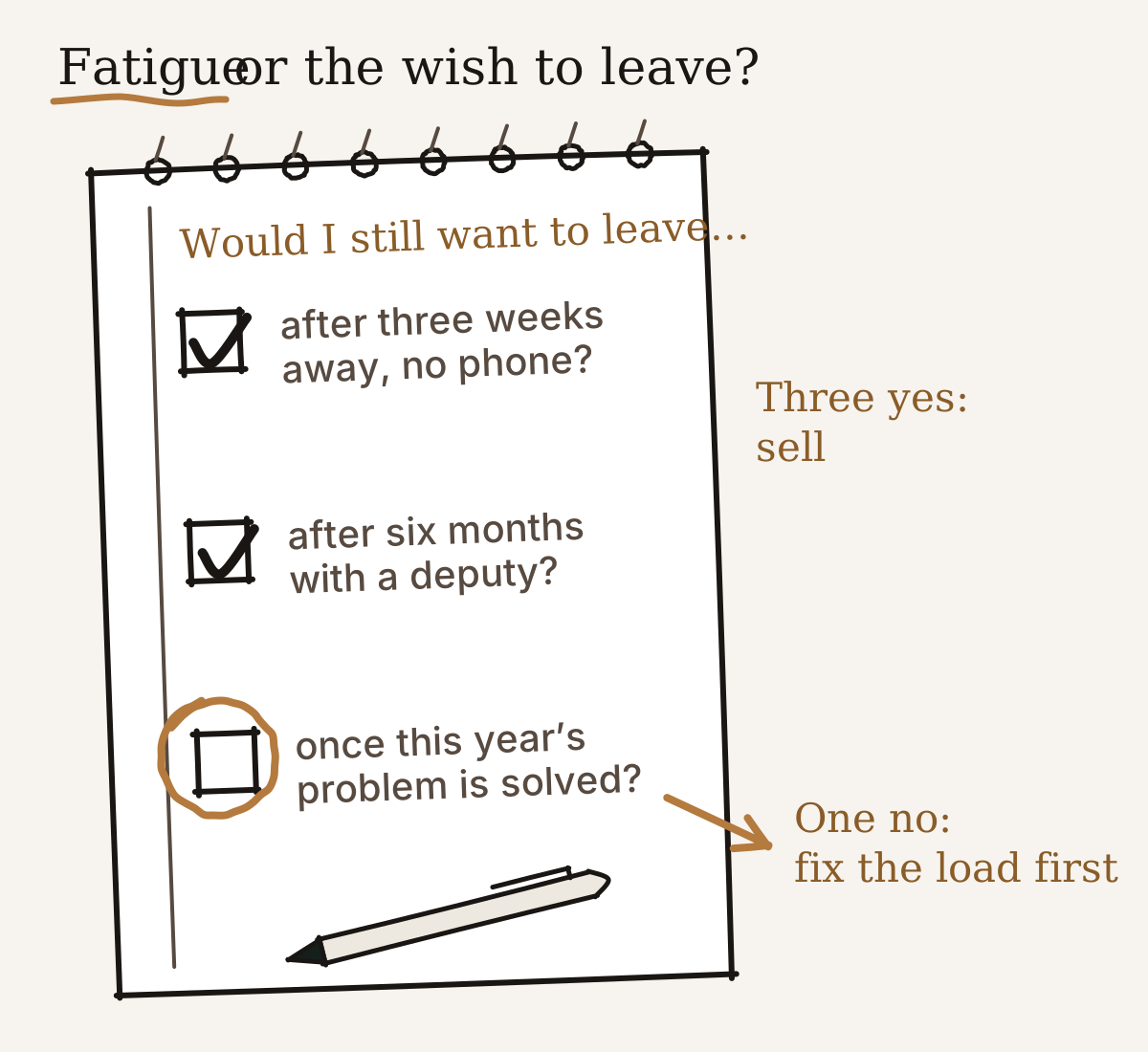
Run my invented owner through it. She'd still want to go after three weeks, she thinks, and after six months with a deputy. The third box is the hard one. With a new foreman in place and the client dispute settled, would she still be typing that question at night? If she can't tick it, a sale would be her answer to one bad year.
The reverse case, the owner who can't let go, has its own questions. Here the risk is letting go for a reason that will pass.
The same first step
Both paths start with the same move: getting out of the day-to-day. A seller needs it to hand over the company; an owner who stays needs it to breathe. The difference is what you do once you can breathe.
While you hold the whole shop together, you're judging your exhaustion from inside it. Once someone else carries the day-to-day, the decision is yours again. And if you do sell, someone else can run the sale while you keep the decisions.
So before you price the company, book the three weeks and ask a smaller question. What would you do with the first free Monday morning you've had in years?