How Do You Pass Your Business to Your Children? First Make Sure Their Yes Could Have Been a No

This list is for the parent who wants to hand the company to a son or daughter and needs to know whether the yes they'll hear is a wish or a debt. That is all motivation means here: a yes that could not have been a no measures nothing.
The short answer: you pass the business to a child once their yes could have been a no without costing them anything, not their share of the inheritance, not their place in the family, not their income. Until a no is possible, what you're holding is loyalty. And loyalty gives way later, not on the day of the signature.
In the family handovers I follow, it rarely breaks with a bang. It gives way quietly, often after three or four years, when the child stops making decisions without ever leaving. Take a case I've made up: a heating and plumbing firm with 18 people, a father of 63, and a daughter of 31 who works as an engineer for a bigger company two hours' drive away. The question lands at a family dinner, somewhere between the roast and the coffee. Here's what he could do instead.
Eleven steps, from before the question to the handover
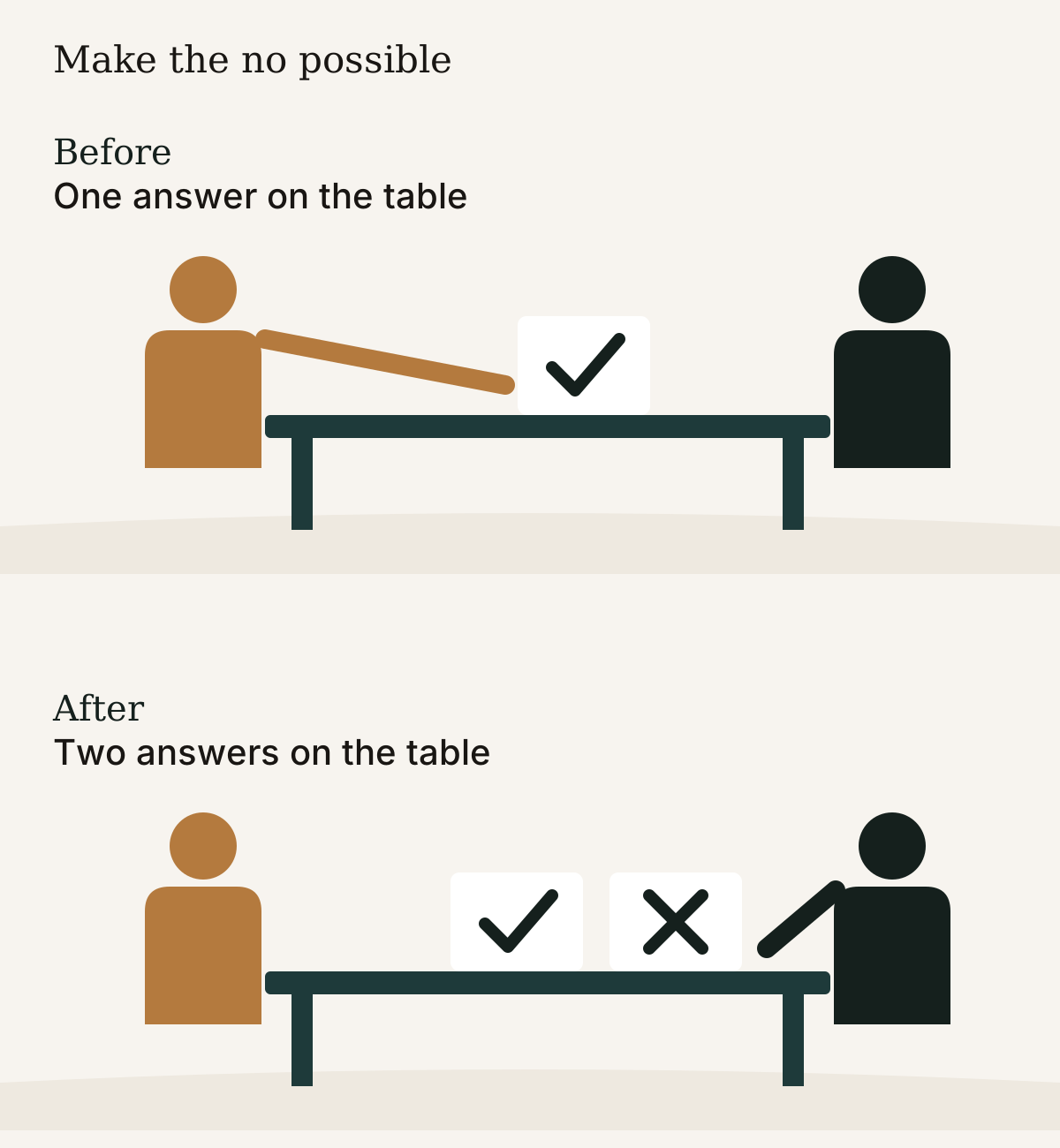
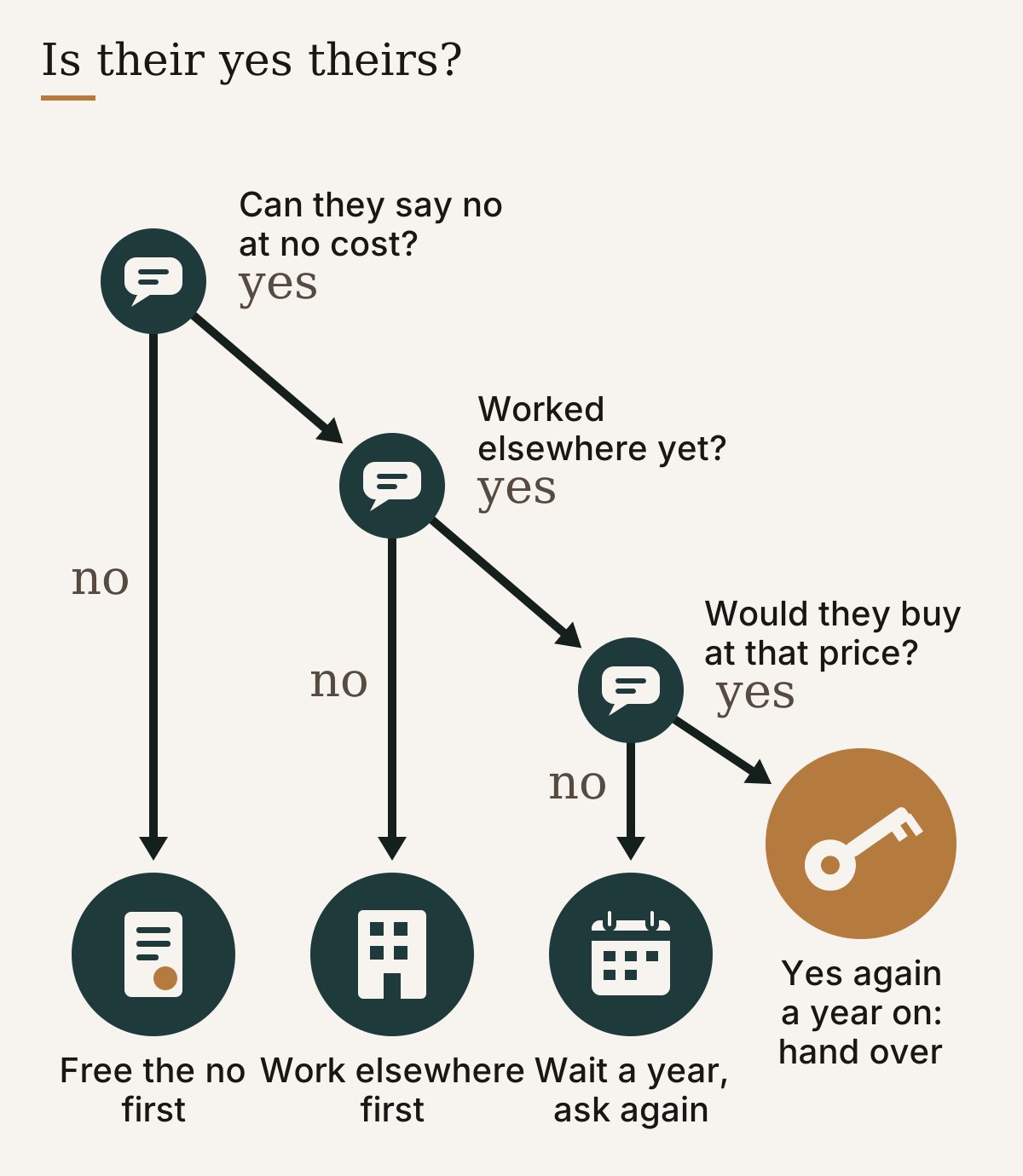
- Make a no cost nothing. A no can cost a child one of three things, and you already know them: the inheritance, the family, the income. As long as one of the three is at stake, a yes tells you nothing about what they actually want.
-
Find out what a child who says no still inherits, then tell them. That depends on the law where you live and on what you put in writing: ask your notary or your adviser, then tell your child in one sentence before you ask anything. In Switzerland, for example, the law guarantees each child half of what they'd inherit without a will, whatever the will says. There, what a parent gives the child who takes over while still alive, the company for instance, is counted as part of that child's share when the heirs divide the estate, unless the parent has expressly said otherwise. Keeping things fair between the one who takes over and the others starts here.
-
Pay at least the market salary. The child who takes over should earn at least what they'd earn elsewhere for the same job. A yes that costs an income isn't a free yes.
-
Tell every child the same thing, on the same day. A no is far easier to say when the brothers and sisters won't hear it as "she refused, so now we have to sell." If two of them want the company, the same rule holds, with more at stake.
-
Ask on a set date, with notice. Announce the question ahead of time, and agree on the day the answer is due. A question raised over every family meal turns into pressure, however gently it's asked.
-
Send them to work elsewhere first. Two or three years in another company, with a boss who isn't you, before you ask. Their yes then comes with a comparison. The daughter in my example already has one: she knows what an engineering office two hours away feels like on a Monday morning.
-
Separate what you're handing over. The top job, the ownership and the family name are three different things, four if there's a house next to the workshop. Ask about each one on its own. Plenty of yeses are given to the name painted on the vans. Running the company before owning it is one way to pull them apart.
-
Put the price on the table, and make it a sale. Tell them the price and how it would be financed before you ask: a yes given to "the company" without a price is a yes given to a word. In the handovers I follow, the child often learns the price only after saying yes. A child willing to borrow from the bank to buy the company at a fair price wants it; a child who'd only take it as a gift is telling you something too.
-
Write the exit before the entry. Agree on a trial period in a real job, with an end date and a decision on that day. Leaving then becomes a decision rather than a betrayal. How to make that job count is a question of its own.
-
Listen to their words, and watch what they do when you're out. "I can't let you down" and "after everything you've built" are loyalty talking. "I'd change the way we set our prices" is wanting talking. And when you're away, do they call the accountant with questions, visit a client on their own, read the monthly figures?
-
Ask again a year later. A yes that comes twice, a year apart, with the price known and the years elsewhere behind them, is a yes that has been built. Only then do you hand over.
Who takes over is your decision as the owner. Making the no free is part of preparing that decision, and someone outside the family can run these eleven steps while you keep the decision itself.
So picture the next family dinner. If your child said no over coffee, what would actually change for them the following morning?