How Do Business Owners Retire? Free to Say No to an Offer

There's a moment I keep seeing, one handover after another. The offer is on the table, the owner has read it twice, and before we say a word about the buyer, he asks me something else entirely: "If I turn this down, what do I live on?"
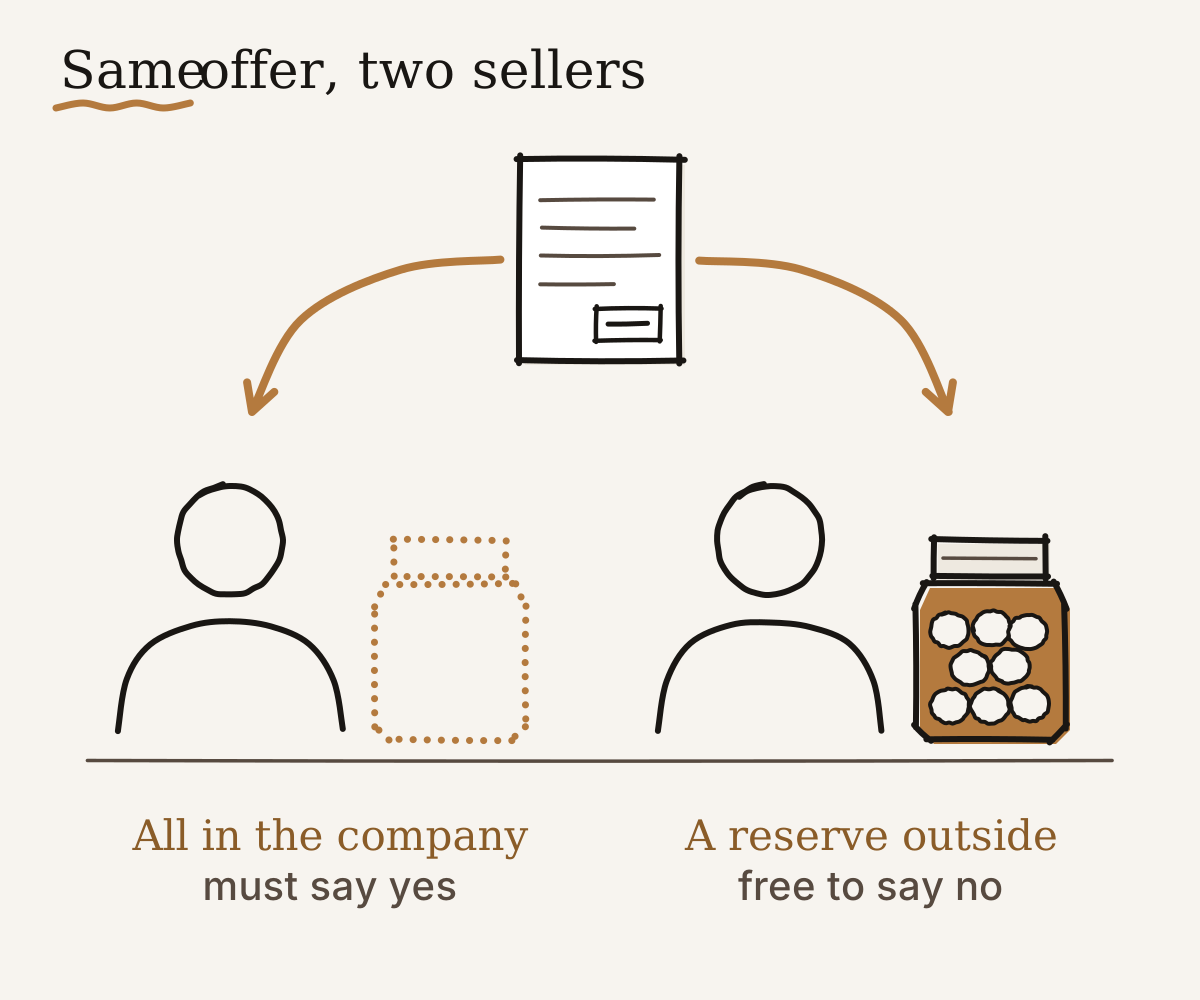
That question holds most of the answer to how business owners retire. The majority sell the company or hand it over, to a buyer, a manager or their children. The ones who do it well decided years earlier what the price would have to pay for in their retirement, and then built savings outside the company so the price wouldn't have to pay for all of it. That's what leaves them free to say no to a weak offer. And a seller who can say no rarely has to.
The owner who asks me that question has usually done something admirable for thirty years. Whenever money was left at the end of the year, it went back in: a second press, then the extension to the hall. His employees paid into their pensions every month. He paid into the company. So his retirement is the building, the machines and the order book, and on the day an offer arrives, the price has to pay for everything. He knows it before he's finished reading.
Buyers know it too. A careful buyer doesn't need to see your bank statements to guess. It shows in small things: the owner who asks about the closing date before the price, who rings back the same evening, who wants to know how much is paid at signing and how much comes later. I've watched buyers notice this and quietly slow down. There's nothing hostile in it. They simply stop improving the offer, because they can see you won't get up from the table.
The number below which you don't sell
What changes this is unglamorous, and it works best five to ten years before any sale. Take a sheet of paper and write three lines. First, what your retirement will cost each year, honestly, including the house and the help you may need later on. Second, what the pensions you already have will pay: the state one, any company or professional scheme, your private savings. Third, the gap between the two, multiplied by the years you expect to need it. That last figure is what the price has to cover.
I call it your floor price, the one below which you don't sell. Keep it well apart from what the company is worth. The value is what a buyer could reasonably pay. The floor is what you need. When the floor sits above the value, every offer is too low and you'll still have to accept one. The work of the next few years is to bring the floor down, well below the value, and the gap between the two is your room to say no.
Count the price after tax, too, because that's what reaches you. In Germany, for example, the seller's age can change the bill: an owner aged 55 or over can apply once in a lifetime for a lower tax rate on the gain from a sale, for a business owned in your own name or a whole stake in a partnership, not for shares in a limited company. Wherever you are, ask your tax adviser what the price would leave you at the age you plan to sell.
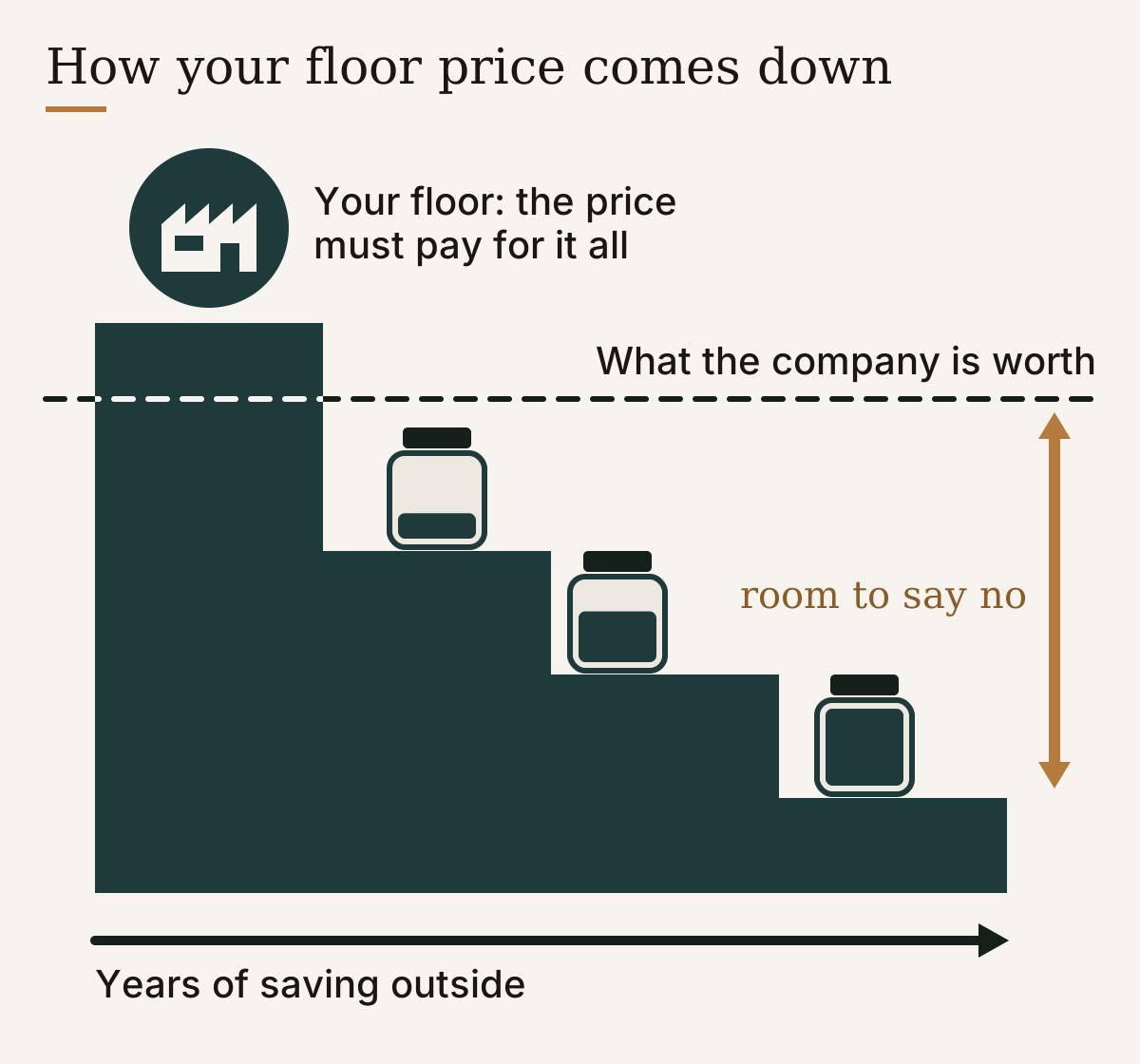
Then comes the reserve, and it has to sit outside the company. It starts with paying yourself a real salary, the one you'd pay a manager to do your job, rather than the modest one that left more in the business. It continues with part of the dividends set aside instead of reinvested. And it includes pension savings, wherever the tax rules reward them. In Switzerland, for example, what an owner pays into a pension fund, top-ups for missing years included, is deducted from taxable income. Money from such a top-up can't be drawn as a lump sum for three years, though, so it has to come early.
Take an invented case: a 57-year-old printer whose sheet says the price must cover twenty-two years of the gap. Six years later, with a proper salary paid and part of the dividends set aside, the reserve covers eight of them. Her floor has dropped by more than a third, and the company's value hasn't moved at all.
None of this means selling sooner. Starting early is what spares you from ever having to sell under pressure: you can sell at 60 or at 70, as long as you pick the day and you're able to turn an offer down. Nor does the age on your birth certificate set that day; I've written about why sixty-five isn't a sale date. The decision stays yours from start to finish. What helps is someone who isn't a party to the deal, keeping the sheet up to date and your advisers pulling the same way, year after year.
I'd much rather hear "what do I live on if I say no?" ten years before the offer than the evening after it. Which of the three lines on your sheet could you fill in today?