How to Find a Buyer for Your Small Business: Start With Those Who Already Know It
To find a buyer, you have to put the business on the market: hire a broker, list it on a platform, run a discreet advert, then wait for the phone to ring.
That's the picture many owners start from, and it usually puts the search in the wrong order. In the sales I conduct, a good share of the plausible buyers already orbit the business: a client who depends on what you make, a supplier who'd like to lock in a customer, a competitor working the territory next to yours, a manager who has run the floor for years, the firm down the road in a related trade. Draw up the list of the people and firms who already know your business; you can do it yourself in an afternoon, with no intermediary. Rank every name by real interest and by leak risk. That ranking tells you whom to approach first, who must hear nothing until the deal is signed, and which kind of buyer you'll have to look for further afield. The broker and the platform come after, with a sharper brief.
"The one who's most interested is the best buyer"
Nearly every owner has one of these in mind: the competitor who said at three trade fairs in a row, "If you ever sell, call me." The client who jokes that he'd buy the place tomorrow.
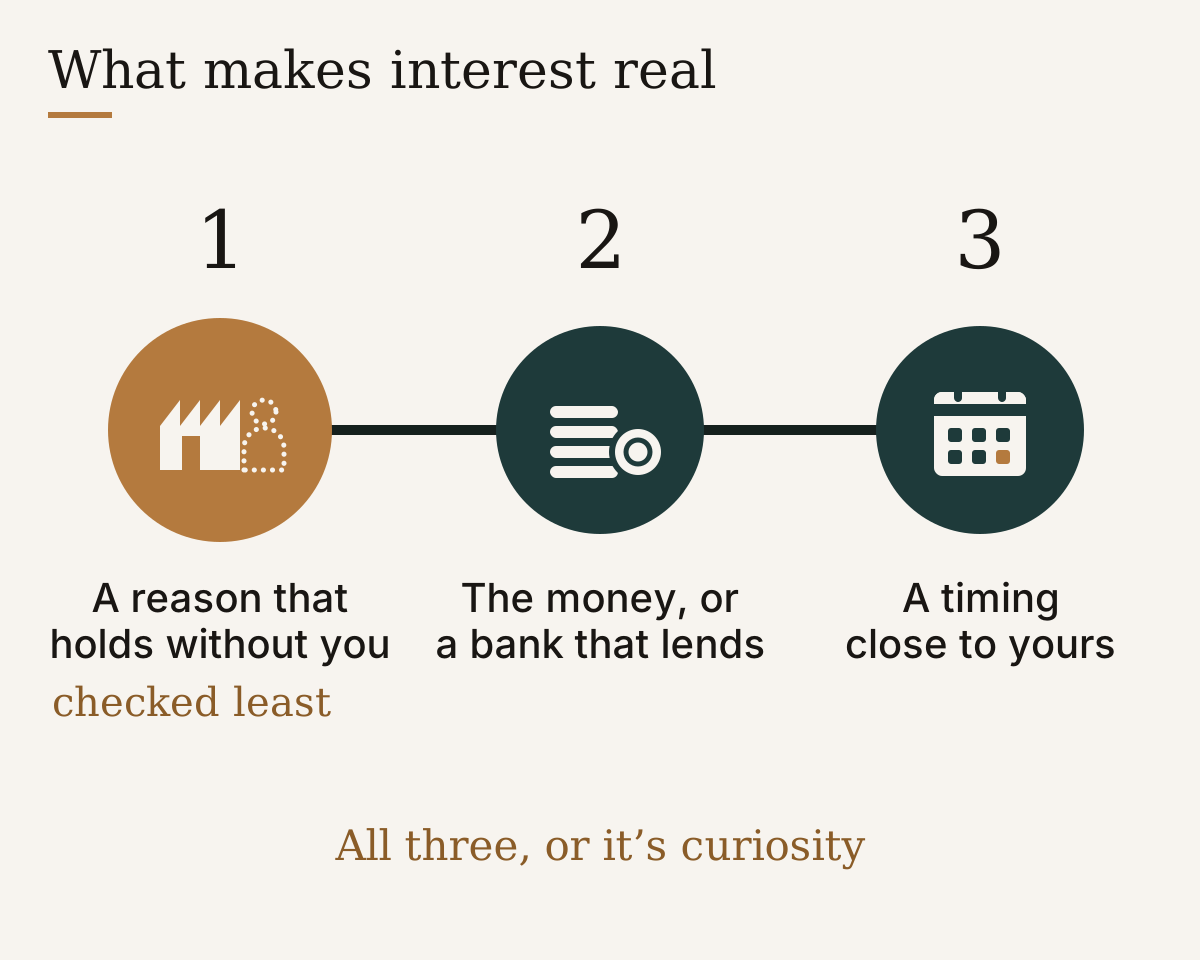
What really happens is that expressed interest costs nothing, and it rarely survives the first serious conversation. Real interest shows in three things. The first is a reason that still holds once you've gone: securing a supply, a customer, a territory, a team or a skill they can't build themselves. Ask what your business gives them on the day you're no longer in it. The second is money: their own funds, or a bank that's ready to lend to them. The third is a timing close to yours, because a buyer who's thinking five years out is of little use if you want to hand over in two. A name with all three is strong interest; anything less is weak.
The first of the three is the one owners check least. Quite often the warmest name on the list is a client who enjoys working with you personally, and his reason leaves the building with you.
"The people closest to the business are the safest to talk to"
They know you, they know the trade, they'll be discreet.
In practice, closeness cuts both ways. A competitor who learns you're selling can use it with your clients, simply by asking them who'll be delivering next year. A key client who hears it may quietly start qualifying a second supplier. An employee who catches wind of it updates a CV. A supplier may shorten your payment terms. None of that helps your sale.
So every name gets a second score, for leak risk, next to the first. Put the two together and four outcomes appear. Strong interest and low risk: you approach them first, yourself. Strong interest and high risk: later, through a go-between, and without naming the business until they've signed a confidentiality agreement, which reduces the risk without making it disappear. Weak interest and high risk: they hear nothing until the signing. Weak interest and low risk: you leave them aside. If one of your strongest names is a competitor, the order in which you show them things matters a great deal; I've written about what to reveal to a competitor, and when, and about keeping a sale quiet while it's under way.
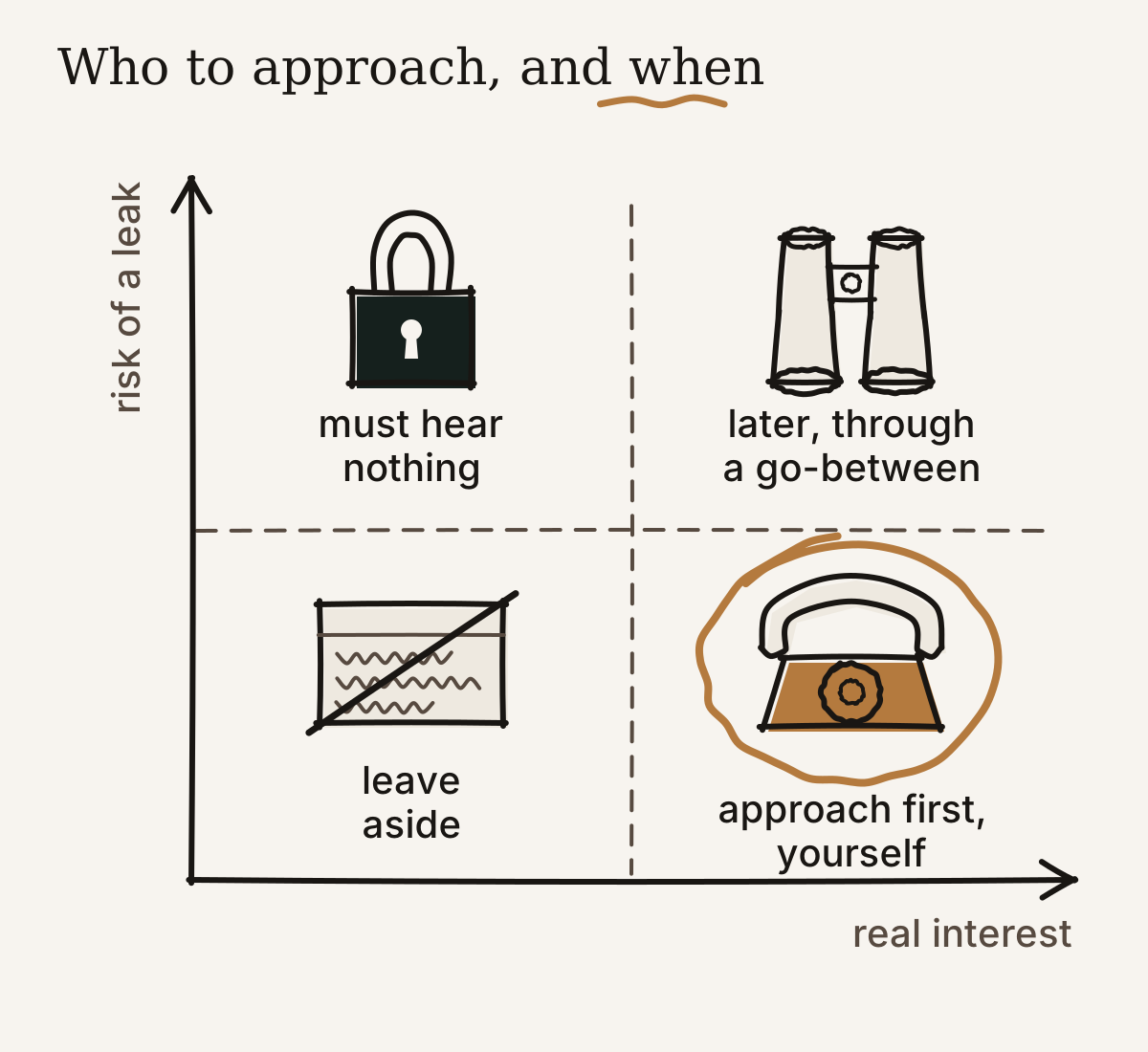
Take a case I've made up for illustration: a maker of metal enclosures with 25 people, whose owner writes twelve names on the back of a delivery note. Three clients, two suppliers, two competitors, two managers, a distributor, the painting workshop next door and a former foreman who now runs his own workshop. Once he has scored them, three land in the corner of the chart to call himself and three in the corner for later, through someone else. Four must hear nothing. Two he sets aside. Half the list is kept in the dark or dropped, which is a normal result.
"If nobody on my list wants it, the business can't be sold"
That thought usually comes after a disappointing afternoon: twelve names, none with the reason, the money and the timing together.
A list like that says something more useful. It shows you which profile is missing. Perhaps no one nearby has a reason to buy, and the buyer is a firm from a neighbouring trade. Perhaps the reason is there but the money isn't, which points to an individual buyer backed by a bank, or to an investor. The three kinds of outside buyer want very different things, and knowing which one you're after is what makes a search further afield work. That's where an intermediary earns their fee. Ask your chamber of commerce, or your country's public business portal if there is one, whether it runs a succession exchange where businesses for sale and buyers meet.
Two warnings before you pick up the phone. The first concerns your managers. Approach one before he has the means or a real wish to buy, and you've created an extra problem: he knows, he waits, and he may leave. A manager who takes over is someone you prepare, well ahead of time. The second concerns the business itself. If clients, prices and key decisions still run through you, solid buyers notice within a meeting or two, and they either walk away or lower their offer. It pays to make the business less dependent on you before anyone on the list hears a word.
When owners show me their list, the name they circled first is seldom the one that ends up in the corner marked "approach first." Which name on yours did you circle before you'd asked a single question about it?