Paid in the Buyer's Shares: The Part of Your Price That Is Really an Investment
Shares in the buyer are not a way of paying you. They're a second transaction, and in it you're the buyer: you put part of your price into someone else's company, at a price someone else sets, with an exit someone else controls.
A hypothetical case: a packaging business with forty-five people, a sixty-three-year-old owner, and a group owned by an investment fund that wants it. The offer: ten million (francs or euros), seven in cash, three in the group's shares. The owner spends four months arguing whether the company is worth 6.0 or 6.1 times annual profit. The three million in shares gets an afternoon.
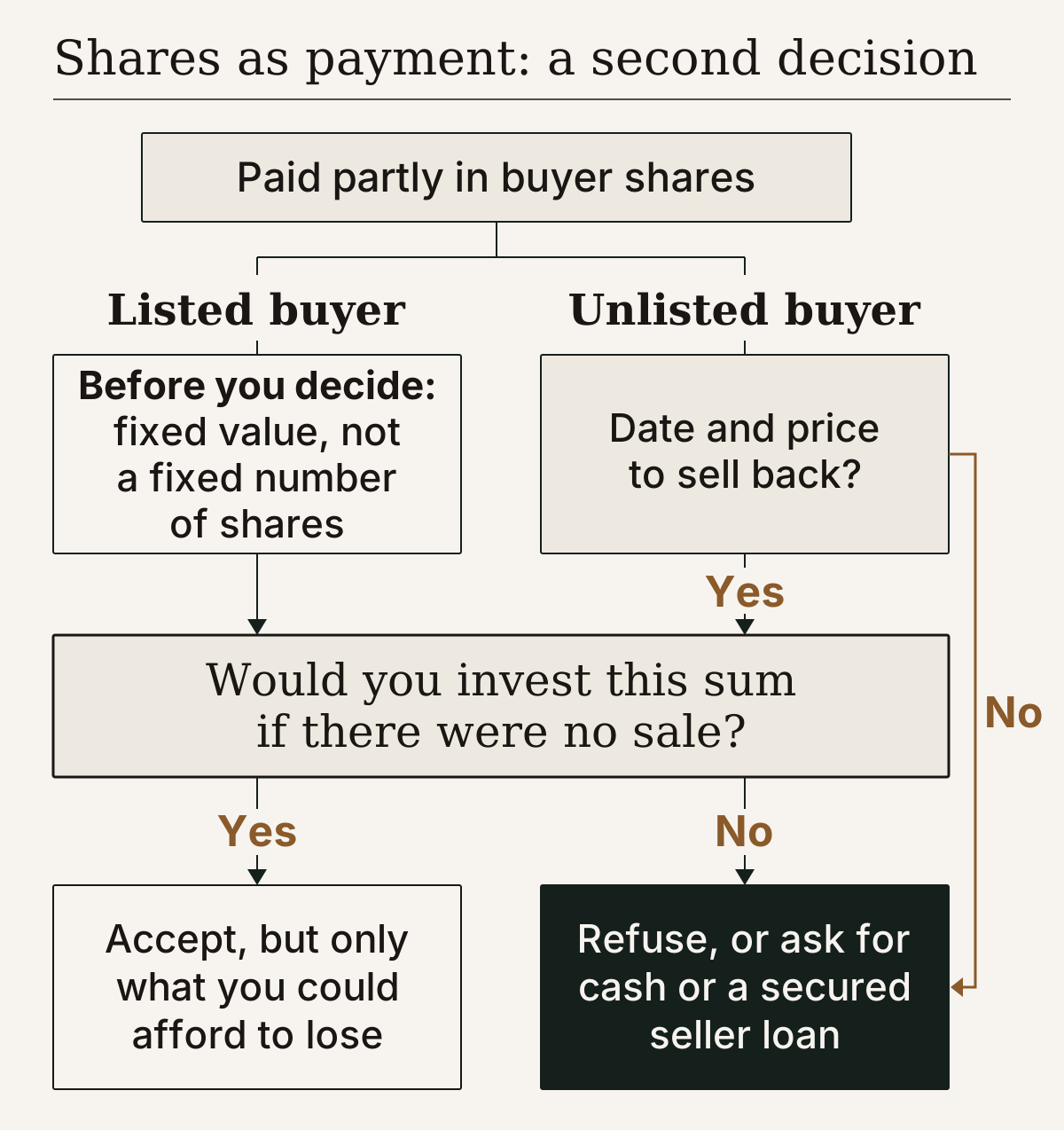
The usual reply: a listed buyer's shares, traded on an exchange, are as good as cash. Nearly. A lock-up often bars you from selling for a while, and nobody knows the price when it ends. The price also moves before closing, when shares and money change hands, often months after signing; fix the number of shares and that movement, up or down, is yours. Fix the value and the buyer often adds a collar: your value is guaranteed only within a range of share prices, say ten percent either way; beyond it, if the price falls further before closing, the shortfall is yours.
Unlisted shares are harder. With no market, they're worth what the buyer's spreadsheet says. To sell, you need a buyer for a minority in a private group, and often the company's approval, which Swiss and German law let its articles of association require. Without a dated exit (the right to sell your shares back to the buyer or its owners on a set date) and a price formula agreed now, say the multiple it paid for your company, a minority stake is worth what the majority decides.
For listed shares, I ask for a fixed value with the widest band of guaranteed value you can get, not a fixed number of shares, and a lock-up you can live with. For unlisted shares: the dated exit and formula, and the company's consent to your future sale, given now. From a German buyer, either way: a written commitment to seek the tax deferral described below. As a minority holder: yearly access to the accounts; a rule if you leave early or are pushed out; protection when new shares are issued, so your stake isn't shrunk at a price you never agreed to; and the right to sell alongside the majority, on its terms.
The tax keeps you tied to the buyer
Then comes the tax argument: a share exchange is tax-neutral. It can be, but only on conditions that tie you to the buyer for years.
In Switzerland, with seven of ten in cash, more than half the price, the opening example is a purchase for tax purposes, not a share exchange: if, within five years, the buyer pays itself back from reserves your company had already built up, the tax office can treat that part of your price as a dividend to you (the indirect partial liquidation rules). The alternative is a quasi-merger, the tax term for a share exchange in which the buyer takes control without merging the two companies, where a private person's gains on shares held as private wealth normally stay tax-free. The administration recognises one when the buyer ends up with at least half the votes, pays you in newly issued shares, and hands you no more than half the value in any other form, whether cash or a loan you grant it (a seller loan). The seven-three offer fails that test. Even in a quasi-merger, if the buyer absorbs your former company within five years of its offer, the cash part of the price can be taxed as income.
In Germany, for shares held personally, the exchange counts as a sale at market value: the tax on the whole gain is due at once, in cash, although part of your price arrived as paper. It can be deferred on application (with a German buyer, the buyer files it): your new shares then take over the old ones' original cost, and nothing is taxed at the exchange. That needs a buyer based and managed in the EU or the European Economic Area, newly issued shares, a direct majority of votes in your company, and any cash or loan alongside capped by law, never above what your shares originally cost you. A Swiss, British or American parent doesn't qualify. For a founder, whose shares cost only the capital paid in, the opening example's seven million in cash is far beyond that cap: it is taxed like any sale, and at best only the gain on the three million received in shares is deferred. If the buyer sells your former company within seven years, the deferred gain is taxed retroactively in your hands, less a seventh per full year.
Elsewhere in Europe the rules differ, and the tie can be just as long. Wherever you are, get a written ruling from the tax office before you sign, where possible.
Why not cash?
The last argument flatters: paying in shares shows belief in the combination. It may. Ask why it isn't paying cash. Often its bank won't lend more; sometimes it overrates its shares, which you test against what its last investors paid. Say it prices itself at twelve times profit and you at six: if its shares are really worth eight times, your three million of paper is worth two, and the gap comes out of your price unless its business justifies twelve.
My rule, when unlisted shares come with no dated exit and no price formula: refuse, or ask for cash or a seller loan secured on the shares you sold or backed by a bank guarantee. Otherwise, one question. If the buyer asked you, with no sale on the table, to invest three million in it on these terms, would you write the cheque? If yes, the shares may belong in the deal, for no more than you'd invest anyway and no more than you could afford to lose. If no, it's a discount on your price, paid in a currency the buyer prints itself.