Selling a business and capital gains tax: Decide what the money will do first
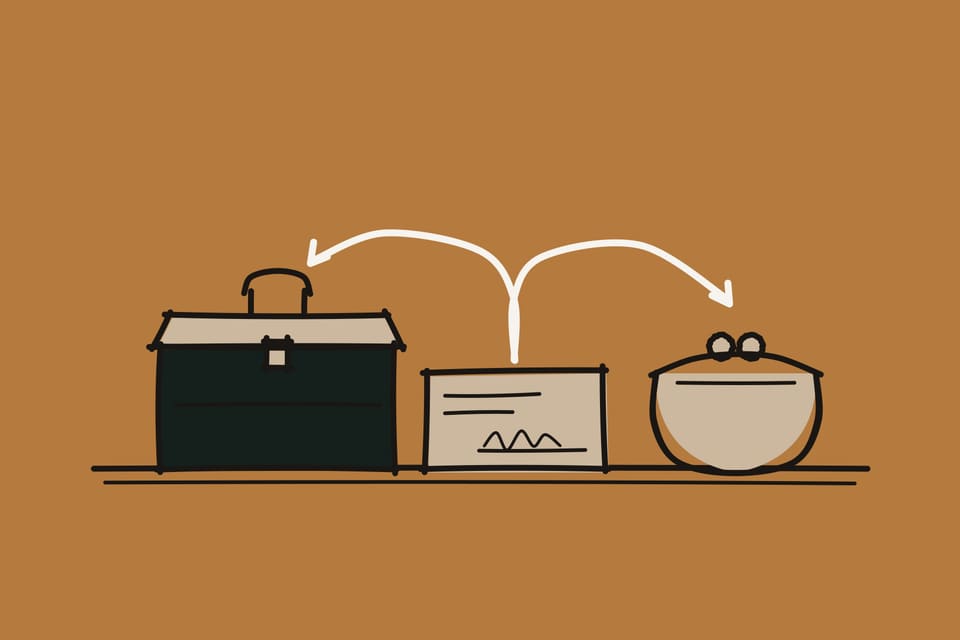
Sometimes. It depends on where the price goes: into a company you own, or onto your own account. The exit from the company is where the tax question sits.
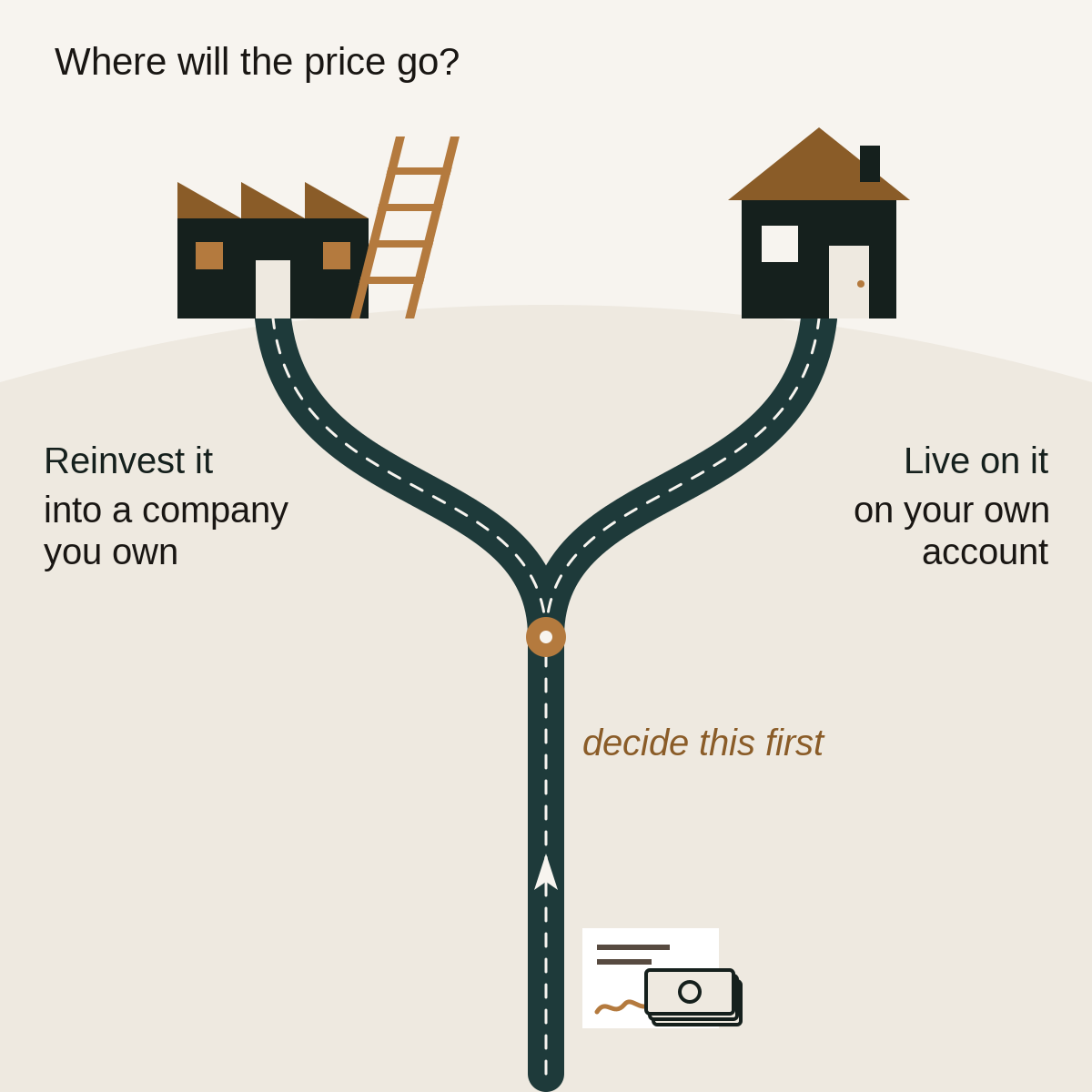
Before you ask what the sale will cost you in tax, there’s a fork to settle. Will the price go back to work in a new venture, or will you live on it? Same buyer, same figure on the contract: two different sales.
So can you sell your business without paying capital gains tax, the tax on the profit you make selling? Sometimes, and it depends less on your country than on where the price is meant to end up. If you reinvest, the price can stay in a company you own, and the first figure to ask for is what that company pays on the gain while the money stays there. If you need to live on it, the money has to leave that company one day and reach your own account, and that exit is where the second figure sits. The company hasn’t cancelled the bill. It has postponed it, and sometimes made it bigger.
Your rate is your tax adviser’s to give, once you can say where the price should end up. That plan, decided years before signing, shapes the whole sale.
Your company and you pay tax separately
A company and its owner are two taxpayers. When a company you own sells, the price passes two doors. Through the first, the buyer’s payment enters the company’s account, where it belongs to the company. Through the second, it reaches you: a salary, a dividend (profit paid out to owners) or what’s left when the company is wound up. That second door is where to look for the tax. In Switzerland and Austria, for example, the law counts dividends and what’s left after a winding-up as taxable income; elsewhere, ask your tax adviser what rate applies.
There are two ways to hold the shares you’ll sell. You can own them personally: you sell, and the price lands on your own account. Or you own them through a holding, a company whose only job is owning shares: the holding sells, and the price lands there, one door short of you.
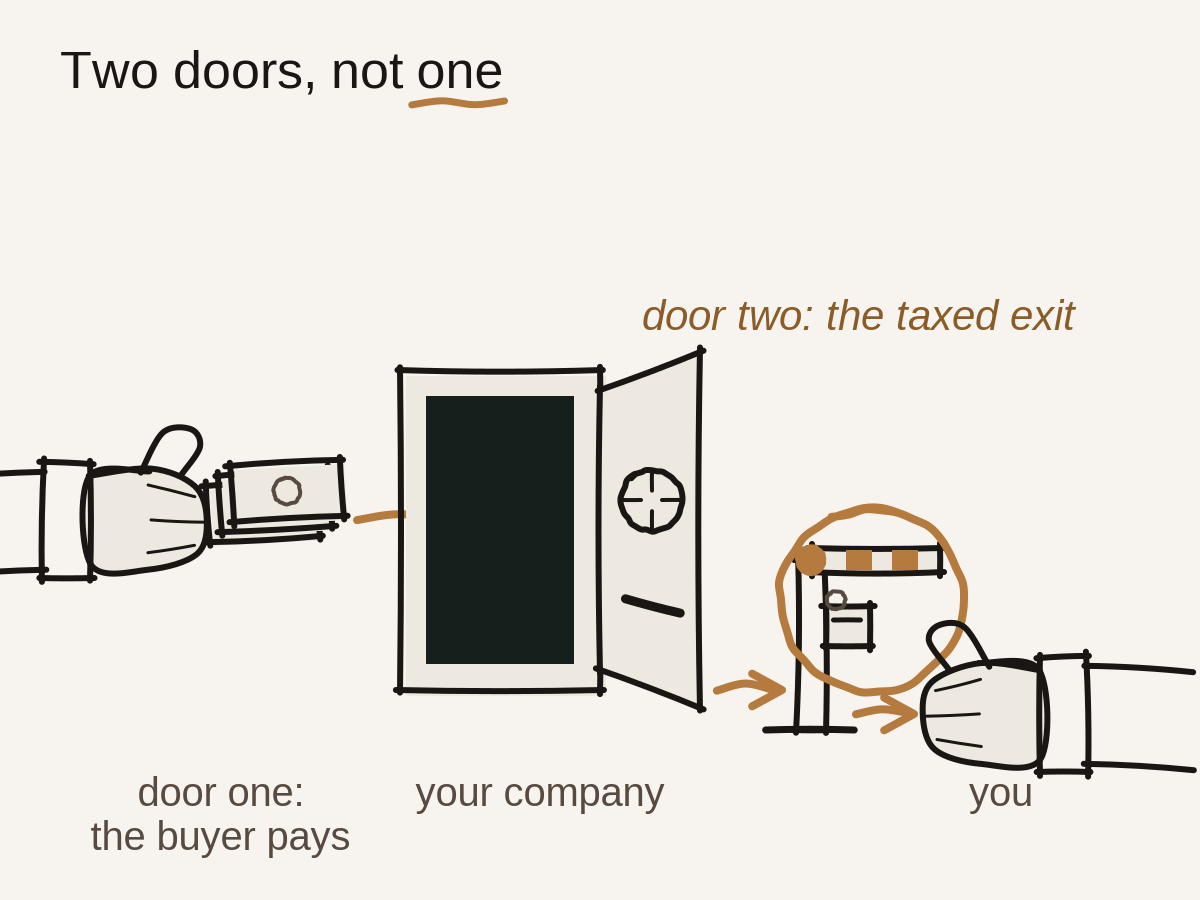
Which of the two costs less depends on whether the money must eventually come through that second door. In Switzerland, for example, a person’s gain on selling shares held in their own name is in principle untaxed; a holding that has owned at least 10% of them for a year pays little or none on the gain. But what the holding later pays its owner is a dividend, and the dividend is taxed as income. There, the holding costs more for someone who’ll live on the price, and keeps the whole price working for someone who reinvests.
Four questions that point you down one road
In the mandates I lead, the tax question almost always turns up too late, with an offer on the table and the way the shares are held fixed twenty years ago. And it nearly always arrives as “how do I pay less?”, when the useful version is “where does the money need to arrive?” The table breaks that second question into four.
| The question | Leans towards keeping the price in a company | Leans towards receiving it personally |
|---|---|---|
| What the price will do in ten years | Fund a new venture, an acquisition, a stake | Pay for your life, your home, help for your children |
| How you hold the shares today | Through a holding, set up long ago | Directly, in your own name |
| When you’ll need the money on your account | Not for many years | Within a few years |
| How the buyer plans to pay | Over several years, which suits a price you don’t need yet | In full at signing, from the buyer’s own funds, not the cash of the company you sell |
Imagine an owner of 58 with an electrical installation firm of forty people; a made-up case, not a client. Plan one: buy a neighbouring firm with two partners in three years. Plan two: stop, live on the proceeds, help her children. Same company, same price, and the table gives two different right answers.
The first row weighs most, and it’s the one owners leave blank longest. Plan one puts her in the left column, plan two in the right. That’s why it pays to know early what the price has to pay for.
The second row doesn’t settle it either: a holding isn’t a shelter by default. In Austria, for example, a person selling shares pays a special rate of 27.5% on the gain. A company selling the shares of an Austrian company it owns includes that gain in its taxable profit, and what it then pays its owner is taxed again at the special rate. There, a holding can tax the same gain twice.
So you can’t read your own rules off a neighbour’s. The question that works anywhere: if I want this money on my account in five years, how much is left by this road, and how much by that one? Take it to your tax adviser with your plan on one page.
The third row is about time, and time cuts both ways: when you’ll need the money, and when the holding was set up. Setting up a holding and moving your shares into it is done years before a sale, never in the months just before. Anti-abuse rules can look at what happened around the sale, in Switzerland for instance, as the example below shows; ask your adviser which period counts where you live.
When the buyer’s money changes your tax
The fourth row surprises most: how the buyer finances the deal can change your tax after you’ve signed. In Switzerland, for example, take a sale of at least 20% of the shares to a buyer who holds them through a company. If, within five years and to your knowledge, the buyer’s company pays for the purchase out of cash sitting in the business you sold, cash it didn’t need to run, your untaxed gain becomes taxable income.
Whether your country has rules like these, and what it calls them, is a question for your adviser; the reflex doesn’t depend on the answer. Ask every buyer: what are you paying with, and do you plan to draw on the company’s cash after the sale? Then ask your adviser whether any rule where you live looks at the years after signing. If the company holds cash it doesn’t need, taking that cash out before the sale is a decision of its own, and where the amounts justify it, ask whether the tax treatment can be confirmed in advance.
Which road suits whom
Keeping the price in a company suits the owner who’ll reinvest, already holds the shares through a company and won’t need the money for a long time. Receiving it personally suits the owner who wants to live on it, holds the shares directly, or will need the money within a few years. Between the two, a sale in two parts is possible, with some of the price kept at work and some brought home, but it’s prepared years ahead.
Starting early doesn’t mean selling early; it means you choose the shape of the sale at your own pace. The plan for afterwards is your decision. Someone neutral can keep the timetable between your tax adviser, accountant and lawyer without deciding for you. Once the money reaches you, managing wealth after the sale is another job.
If a buyer called tomorrow, which column would you tick today?
Sources
- Swiss Federal Act on Direct Federal Tax (DBG), Art. 16, 20, 20a, 69 and 70SwitzerlandFedlex (opens in a new tab)
- Austrian Income Tax Act (Einkommensteuergesetz 1988), § 27 and § 27aAustriaRIS (opens in a new tab)
- Austrian Corporate Income Tax Act (Körperschaftsteuergesetz 1988), § 10AustriaRIS (opens in a new tab)
End of the article.