Succession planning for business owners: How to choose your successor
Choose your successor on the two or three challenges your company faces in the next ten years. A guide, milestone by milestone, from three years out.
Give yourself about three years. That’s roughly how long it takes, in the handovers I lead, to get from the first page you write about your successor to the morning you stop running the company. The page comes first, and on the day you write it, it carries no names at all.
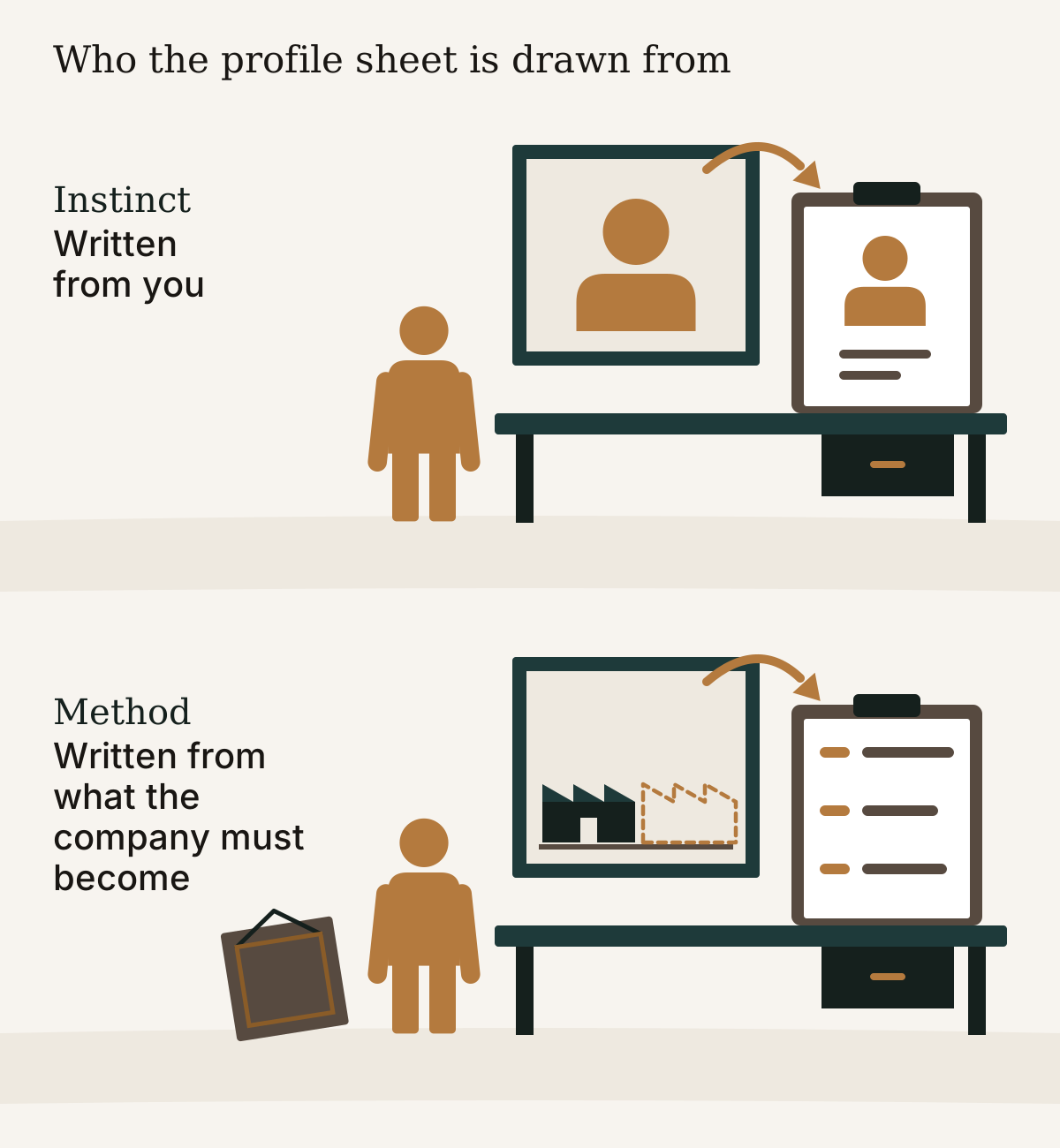
So how do you choose who takes over from you? On the two or three challenges your company will have to meet over the next ten years, rather than on how much a candidate resembles you or how well the two of you get along. Write those challenges down first, on one page. Turn them into a profile: what the successor must already have done. Only then look at the candidates, and judge each one against that profile. The order matters because of a habit I run into again and again: the founder who built the company goes looking for another builder, when the company, now built, more often needs an organiser, someone who can make it run without a hero.
About three years out: a page with no names on it
Sit down with the people who’ll still be around in ten years: a key manager, a board member or an outside adviser if you have one. Together, write down what the company will have to get through in that decade. Plain words, one page, and nobody mentions a candidate until it’s finished. Once a name is in the room, the page starts bending towards that person.
The challenges differ from one business to the next. A shift in the trade, such as a new technology or customers who buy differently. A step in size, from one site to two, or from twenty people to fifty. A dependency to undo, on one customer or on you. A generation of managers who’ll retire when you do. Yours will look different. Most companies have two or three that really count, and the work is deciding which.
Take an invented example: a precision-machining workshop of thirty-five people. The founder is 60 and built the place by winning one hard customer after another. His page, once written, says three things. The company needs a second site. His foremen will retire around the same time he does. And one customer brings in forty percent of sales.
Thirty months out: the profile the page asks for
Now turn each challenge into something the person must already have done, once, somewhere. Leave “leadership” off the sheet; every candidate will claim it. For the workshop, that gives three lines: has run a second shift or a second site; has hired and trained supervisors, and kept them; has won customers the company didn’t have before.
Then write your own profile in a column beside it, honestly, and look at where the two columns part. The founder’s column reads: wins hard customers, decides fast, carries the place on his back. Those qualities built the company. Two of the three challenges call for something else: setting up routines, training people, making a second site run while nobody’s watching. That’s the distance between the builder he’d instinctively look for and the organiser the company needs.
Two years out: the candidates, measured against the page
Candidates come from three places: the family, the team and outside. The method is the same for all three. A daughter in the business or a long-serving manager is measured against the same page as a stranger. If your candidate is already on the payroll, there’s more on growing an internal successor; here the only question is whether they fit what lies ahead.
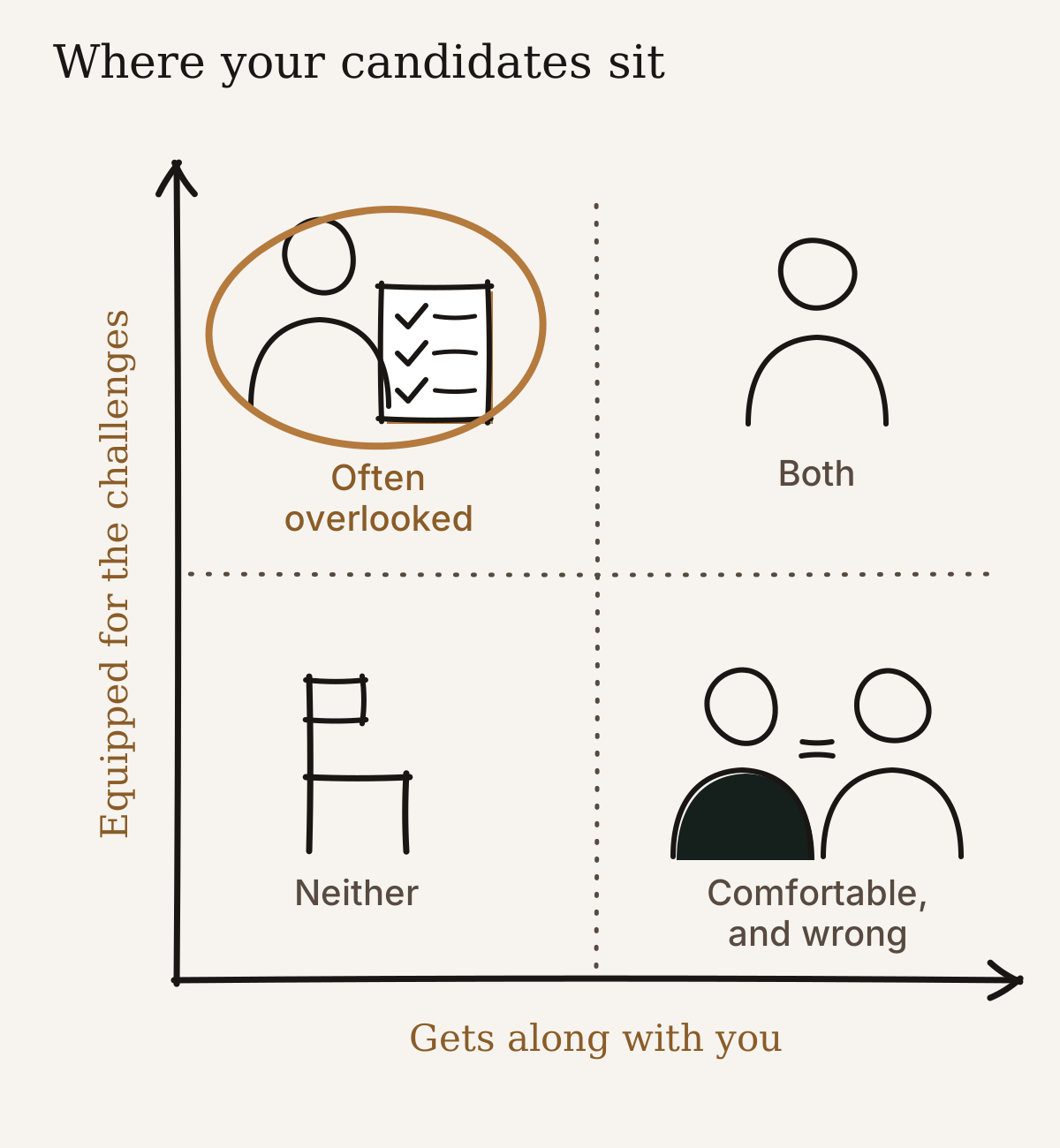
This is where affinity creeps in. What I’ve watched more than anything else is a candidate chosen because they get along with the owner, which tells you very little about what they’ll do with the challenges. The comfortable mistake is the person you like who isn’t equipped. The one you tend to overlook is equipped and less close to you.
In the workshop, the founder likes a salesman who reminds him of himself at thirty. Against the page, the salesman covers the customer challenge, and only that one. The production manager, quieter and easier to miss, has already run the second shift alone. Two of the three challenges lean her way.
Then test the leading candidate on a real piece of one challenge. Set the criteria before the test starts. Give it long enough to show a result; a year is a good measure. And make sure something is at stake, because a test with nothing riding on it proves nothing, which is also why a trial in the family business only counts if the job is real. For the production manager, the piece could be the second site itself: find the premises, hire its first foreman, keep to the first year’s budget. You’d write those three markers down before she starts.
A year out: the name, and the date that goes with it
Before you announce anyone, four things should be true. The candidate has carried a piece of a challenge from start to finish. They’ve contradicted you at least once and turned out to be right. The team follows them when you’re away. And your advisers, the firm that keeps your books, your bank, your lawyer, have met them.
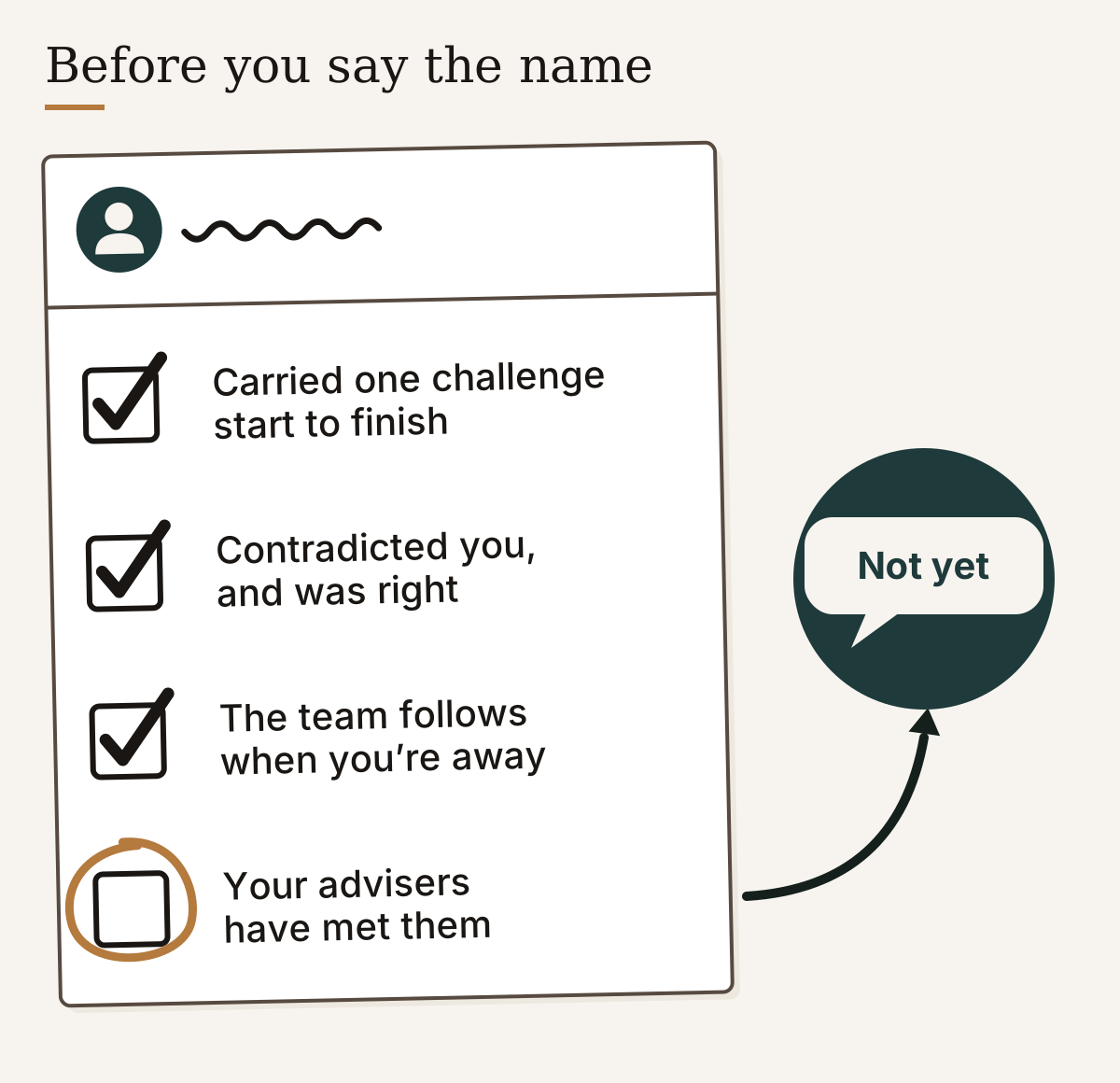
If one box is still empty, wait. A successor announced and then withdrawn costs you the trust of the whole team, and the passed-over candidate is only the first to notice.
When you do say the name, say your own date in the same breath. A name without a date leaves everyone waiting, the successor most of all, and setting and announcing your retirement date is a piece of work in its own right. Keep one question apart while you’re at it: who will own the company. The successor might buy it, inherit it, or run it for an owner. That’s a separate decision; this guide is about who runs it.
The day you hand over
On the day itself, the successor’s answer to the three challenges won’t be yours. The second site may end up somewhere you’d never have picked. The new foremen may be trained in a way you’d have found slow. The page you wrote three years earlier described the challenges and said nothing about solutions, and that’s exactly what allows you to step back: you chose a person for the problems, so the answers belong to them. What that looks like over the following years is the subject of letting a successor change what you built.
Hand them the page, creased by now. Whatever they write on the back of it is no longer yours to correct.
End of the article.