How do I retire from work when I run the business? Set your leaving date, and say it

Like an employee, with a last day, except nobody sets it for you: choose the day you stop running the company, write it down, then tell people in order.
This list says how to set the day you stop running your company, and whom to tell, in what order.
How do you retire from work when you run the business? Much as an employee does: with a last day. The difference is that nobody will fix it for you. An employee’s final day is set by the employer and the contract; yours stays open until you choose it and say it. So pick the day you stop running the company, write it down, tell the right people in the right order, and the rest of the succession starts to move. Until you say it, everyone who could prepare what comes next is waiting for you.
In the handovers I lead, what I see most often is that each of those people has quietly settled on a date of their own, and the dates don’t match. Imagine a joinery workshop of eighteen people (a made-up case, not a client). The owner is 61 and has answered “a few more years” for six years. His wife has made no plans of her own. The foreman, 40, has had an offer from elsewhere. And every year the bank’s account manager asks who comes next. That’s four calendars, and not one of them is pinned to the workshop wall.
Set the date
- Separate three days. The day you stop running the company, the day you stop owning it and the day your pension starts can fall years apart. This list is about the first one; you can hand over the running and keep the shares, as owners do when they retire without selling.
- Take the day from the company’s calendar. The end of a financial year, the week after the busy season: those are days the business can absorb. Your birthday belongs to your calendar, and I’ve explained elsewhere why a retirement age makes a poor anchor.
- Count backwards. Write down what must be true the day before you go: a successor who has run a full year without you, numbers a stranger can read, three weeks of holiday during which nobody called you. If getting there takes four years, your date is four years away, whatever you’d hoped.
- Write it down. A date that lives in your head slides back every time a big order lands. Put it on the first page of next year’s diary and it starts to argue with you, which is the point.
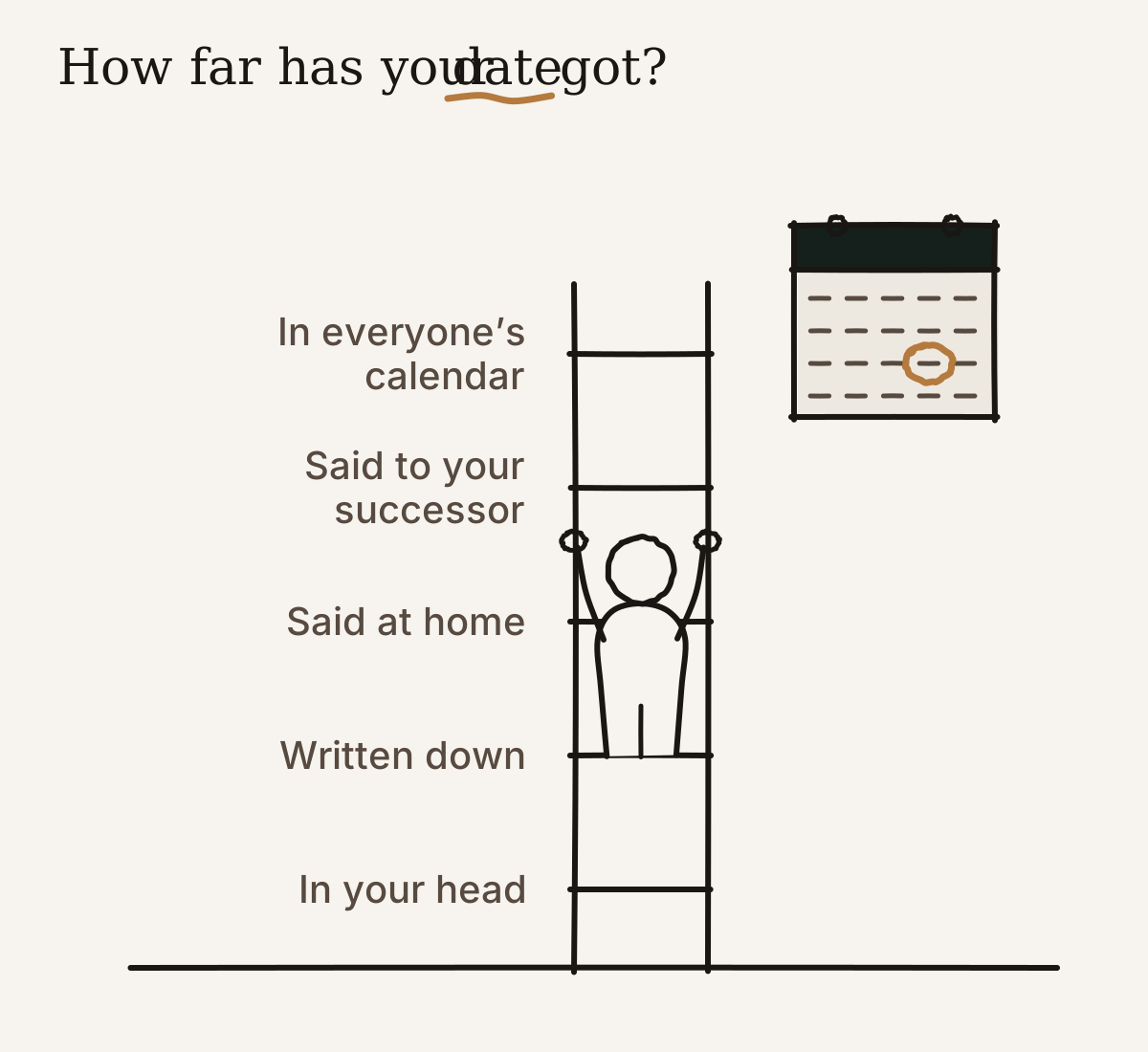
Writing it down gets you onto the second rung. The next two are climbed by talking; the top one waits until the end of this list.
Say it, in this order
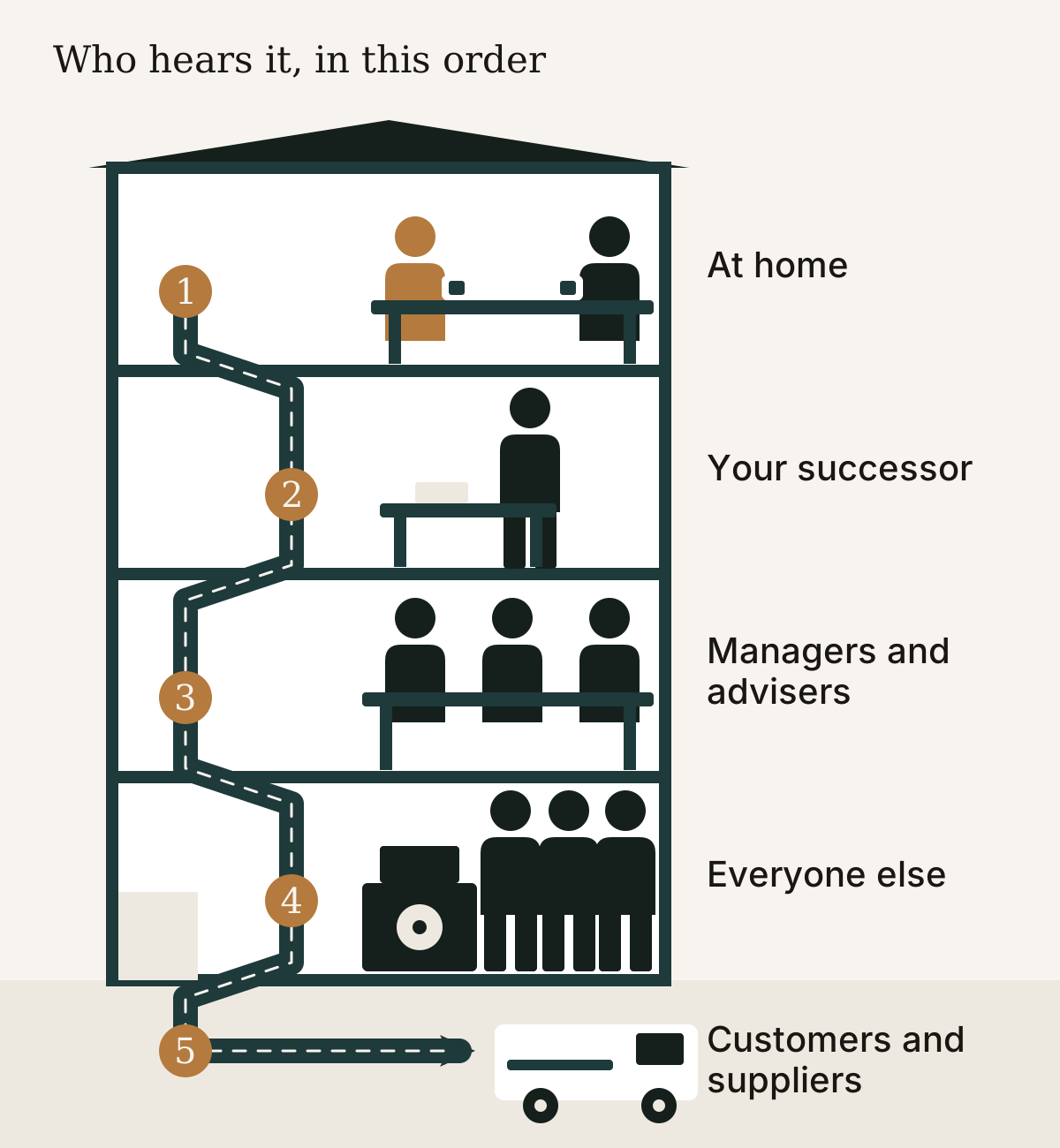
- Be only as precise as each listener needs. The first people you tell can live with a season and a year. Everyone else gets a day.
- Tell your spouse or partner first. Before anyone at the company. Their own plans have been waiting on yours, and they’re the one who’ll hear about every setback afterwards, usually over dinner.
- Then your co-owners or board, if you have them. Reread what your agreement with them says about one of you leaving. Then tell them in writing.
- Then the person you hope will take over, as a question. Your successor, meaning whoever would run the company after you, should hear an offer to weigh rather than a decision already made. A no at this stage is good news, because you still have time; here’s what to do when the internal candidate isn’t ready.
- Then your key managers, all in one room. These are the few people the place leans on day to day. Tell two of them separately and the third hears it at the coffee machine. Say what changes for them this year, which is usually nothing except who they’ll report to later.
- Then your bank, your trustee and your lawyer. By trustee I mean the firm that keeps your books. Give them the date and their advice stops being general. Ask the bank plainly what your leaving changes in how it looks at the company: in the owner-run firms I see, it has often lent to the owner as much as to the business.
- Then everyone else, once the successor is named. Not before. A date without a name gives the workshop a year of guessing. Stopping running the company is not a sale. Ask your adviser all the same whether the law where you are says anything about telling staff before a sale.
- Let customers and suppliers hear it from your successor, with you standing beside them. The name matters more to them than the date. A supplier’s first practical question is whose mobile number to save.
Then keep it
- Put the date where everyone can see it. In the company calendar and in your successor’s objectives for the year. That’s the top rung of the ladder.
- Stop moving it. The first postponement costs little. A second one tells everyone the date was a wish. If you really must move it, do it once, by a fixed amount, and give the reason out loud.
- Plan the first Monday after. Book something for that morning that has nothing to do with the company. From what I’ve watched, an owner with nothing planned for that Monday finds a reason to drop by, then another; the emptiness that can follow a founder’s exit fills fastest with old habits.
End of the article.