

What do online employee reviews say about your company? What a buyer reads in them before meeting you

A buyer reads your staff reviews before your sales file: climate, departures, your place. A complaint repeated in recent reviews becomes a question.
“Nobody buying a company reads those review sites. They read the accounts.” I hear some version of it whenever I bring up what an owner’s staff have posted online.
A buyer reads those reviews before your sales file, because they’re public and free, and he isn’t looking at the star rating. He reads three things: the climate, meaning the tone and the themes that keep returning; departures, meaning how many reviews come from former staff and since when; and your place, meaning how many reviews talk about the boss, kindly or otherwise. One isolated review weighs nothing. The same complaint across several recent reviews turns into a due diligence question, one the buyer puts to you during his formal examination of the company and sets against your staff turnover figures. What you can prepare: read your page the way the buyer will, fix what the reviews describe, and write the explanation before anyone asks for it.
The accounts come later
The objection assumes the buyer starts with your figures. He can’t: the sales file arrives later, under a confidentiality agreement. Before that, a buyer, or the adviser doing the first screening for him, types your company’s name into a search bar. Next to your website come the employee review pages. It’s the same reflex that sends buyers to your commercial register extract before they open a single balance sheet.
In the company sales I conduct, what buyers take from those pages comes down to three readings. The climate first: is the tone tired or proud, and does one word, say “chaotic”, keep turning up? Then departures: a page where most of the voices are former employees, most of them recent, tells a story the accounts don’t yet show. Then you: how often the boss is mentioned, and in what terms. When review after review names the owner, in praise or in anger, the buyer reads a company built around one person.
Just a few angry ex-employees
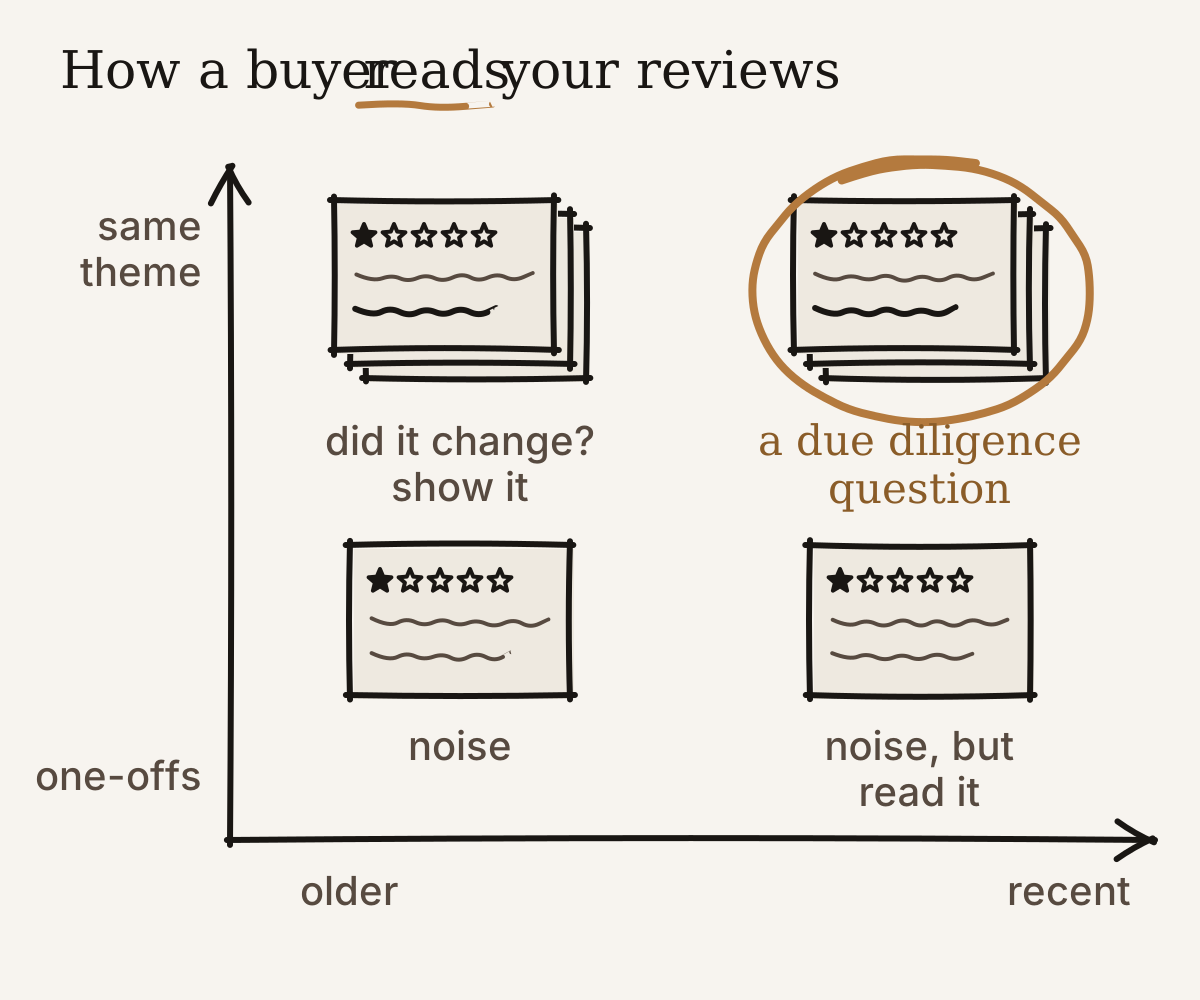
“Everyone knows who writes those. A handful of bitter people on their way out.” For a single review, that’s often fair: one furious voice from years ago is noise. A recent one he reads, then sets aside.
What he does next is sort the reviews by date and by theme. Imagine a logistics firm of about forty people, an invented case. Over eighteen months, five reviews name the same thing: plans changed the night before, overtime that never shows up on the payslip. Together, recent and repeated, they read as a description of how the company works. The buyer brings them to your next meeting, printed out, next to your staff turnover figures.
If the departure figures contradict the reviews, the reviews lose weight. If both agree, the question moves into the buyer’s interviews with your managers and from there into the wider review of your company. Next comes whether the people who matter will stay through the handover. Keeping key employees during a succession starts long before anyone reads a review.
Five stars on request, the bad ones taken down
“I’ll ask the team to post a few good ones. And surely the worst can be removed.” It’s the first fix owners reach for, and it tends to make things worse.
A buyer reads the dates. A burst of glowing reviews posted within a few days of each other looks staged, and a staged page invites more questions than a critical one. Removal rarely helps either. What a deleted review described is still there: in the staff turnover figures, and in what your managers say when the buyer interviews them.
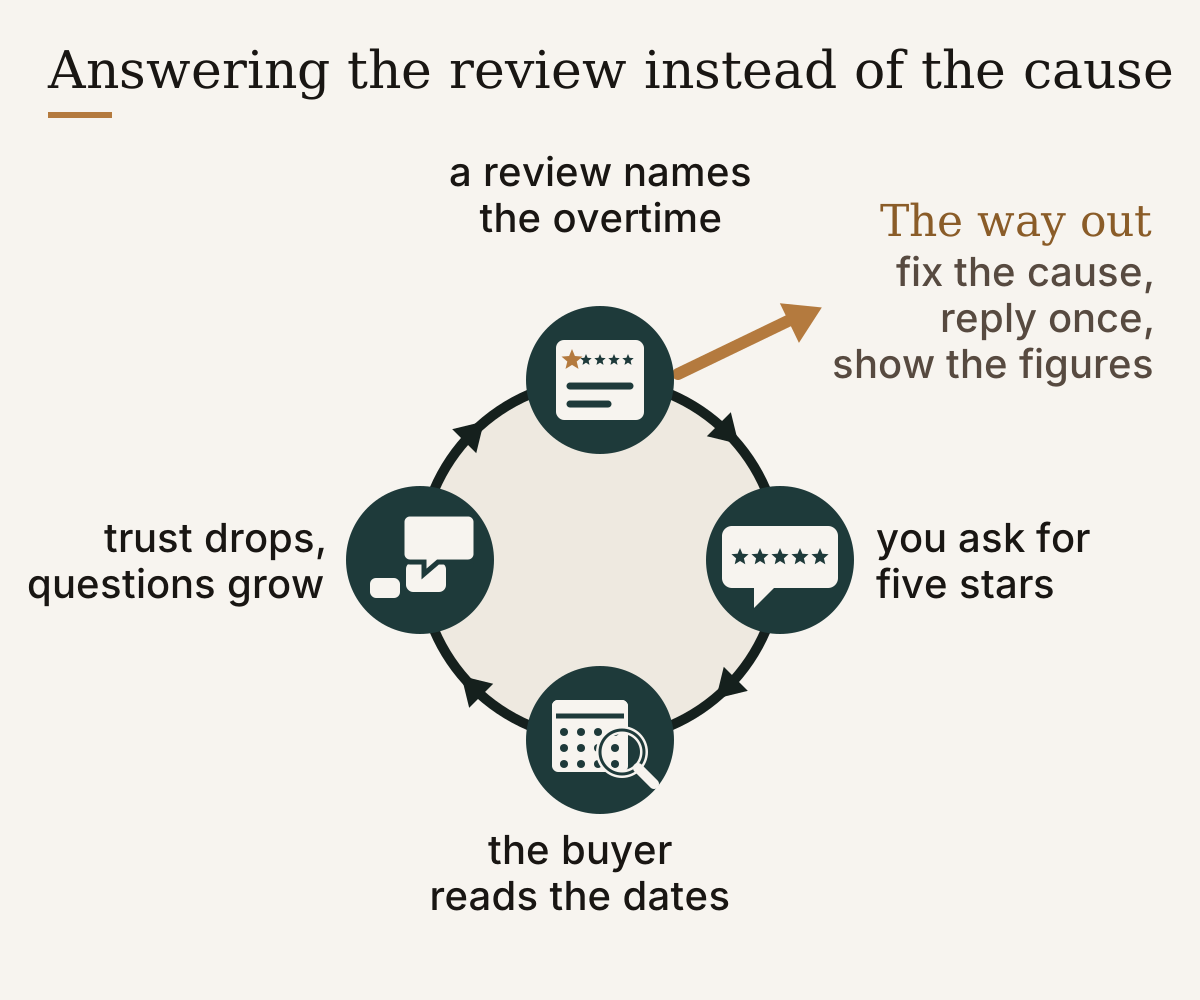
The quieter route works better. Most review platforms let the employer post a public reply. One factual, dated answer, saying what was wrong and what has changed since which month, reads as a sign that someone is managing. A back-and-forth with a former employee reads as the opposite, whoever is right. The reply only holds if the cause has been dealt with: the figures will be checked against it.
It’s about me, and I’m leaving
“Whatever they say about me won’t matter after the sale. I’m the one who’s going.” This myth costs the most, because it misreads what the buyer pays for.
A review that says “everything goes through the boss” describes exactly the owner dependence that buyers price into their offer. Here are your own people saying the company can’t do much without you. The opposite review, “the team runs itself”, is worth money. It may be the most credible evidence of transferability you have, precisely because you didn’t write it.
An empty page says little for a very small company. For one that hires every year, a buyer will wonder why nobody has ever written a word.
What the page will say when a buyer searches your name
This week, open your page and read it the way a buyer would: by date, by theme, and counting how often your name appears. Put what you find next to your staff turnover figures for the same years. Where a complaint keeps coming back, deal with the cause before you touch the wording. Reply once, factually, where a reply helps. Then write the explanation into your sales file before the question is asked. A buyer will also read the reviews posted between now and the day he searches your name. Those are the ones you still have time to change.
End of the article.


