Management buyout: Advantages and disadvantages for the seller whose managers also negotiate the price

A management buyout gives you a buyer who knows the firm. The hidden cost: your managers make the figures your price rests on, so split the roles early.
There’s a small shift I watch happen, mandate after mandate. An owner tells me, with real relief, that the managers are going to take over. A few months later the same owner sits across from me and says the price talks feel strange. He can’t say why. He just knows they do.
So, what does a management buyout (an MBO) give the seller, and what does it cost? The advantage is a buyer who already knows the company. You don’t hunt for a successor or advertise the business, customers and competitors hear nothing until it’s done, the team keeps the people it knows, and due diligence (the buyer’s check of the business) is short, because the buyer knows what they’re buying. The first disadvantage is money: managers rarely have it, so the price is usually financed with bank debt that the company carries and, often, a seller loan (part of the price paid later) repaid over several years. The disadvantage owners underestimate is the roles. For the whole negotiation, your managers are your employees, the people who produce the figures your price is calculated on, and the buyer who wants that price low. An MBO is worth doing if you separate those roles on the day you agree to talk.
That’s where the strange feeling comes from. On Monday morning they take your instructions. On Tuesday they hand you the budget, the forecasts, the order book, the margins by customer. On Wednesday they sit down to negotiate what all that is worth. In a sale to an outsider, those people would be on your side of the table. In a management buyout they’re on the other side, and they still have the office next to yours.
The price of a small or mid-sized company is worked out from its profits, past and expected. The expected part comes from the budget and the forecasts, and your managers write those. A cautious budget isn’t a lie. An order book described as “still uncertain” isn’t a lie either. It’s prudence, and in the year of the sale prudence has a price: it comes off yours, and the buyer is the one who gains.
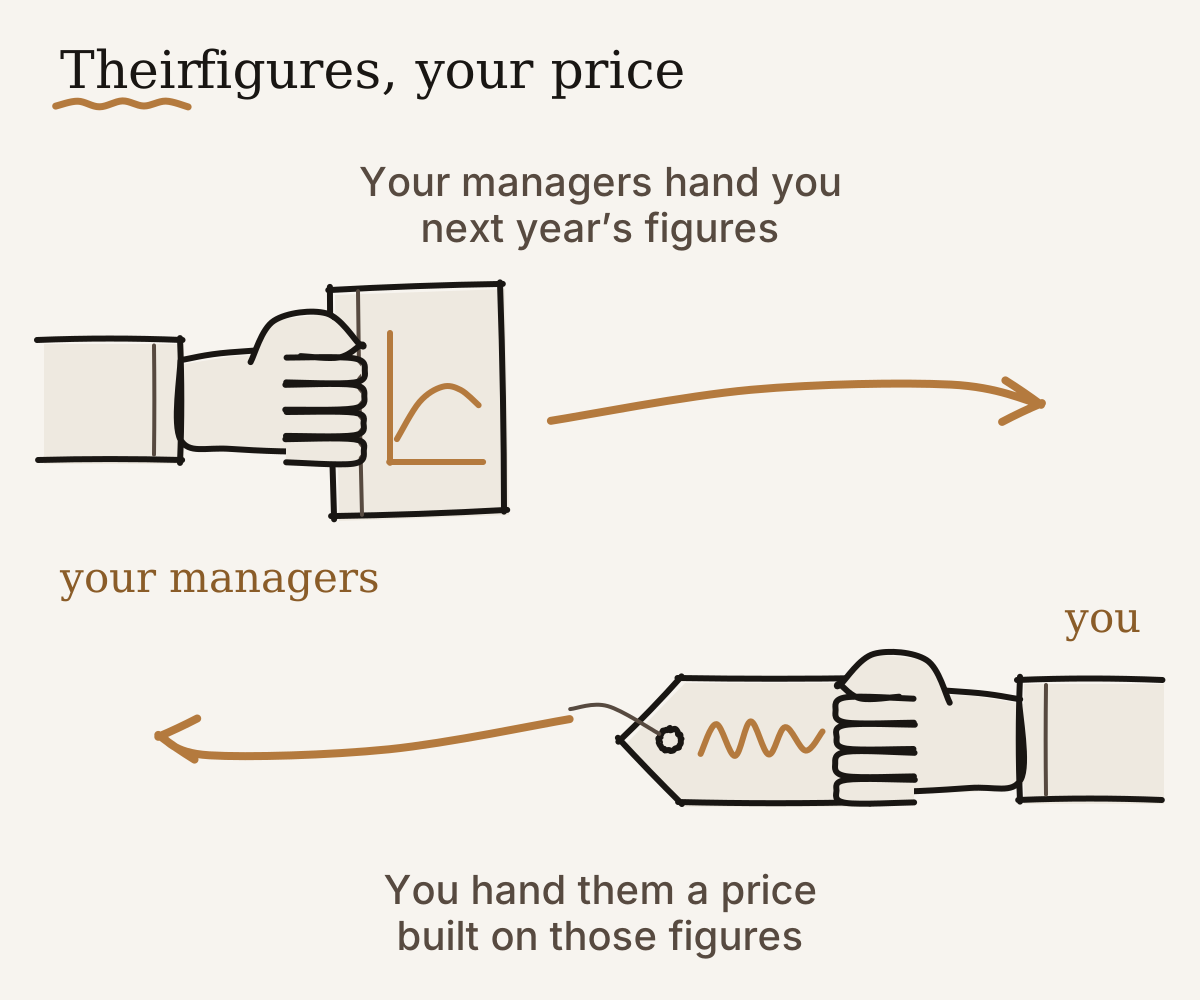
Imagine a precision engineering firm with forty people. It’s a made-up case, not a client. The technical director, the sales director and the head of finance want to buy it together. Every autumn the head of finance prepares next year’s budget, and this year it arrives more cautious than usual. Two large quotes are “not certain yet.” The valuation built on those figures still comes out lower than last year’s.
What surprises sellers most is that the usual imbalance runs backwards. In an ordinary sale, the seller knows more than the buyer. In an MBO the buyer often knows more: which customer is wobbling, how the team really feels, what the order book looks like behind the headline total. So it’s the seller who should have the company examined first, before the managers’ numbers become the only numbers in the room.
I’d keep one line very clear. You decide: whether to sell, to whom, and the price below which you won’t go. You don’t run the negotiation against your own managers, and you don’t ask them for the figures that will be used to value what they’re buying. Those figures are set or produced by a third party, your accountant or an independent valuer, from the closed accounts. Owners who try to do both jobs end up negotiating their own sale on top of running the firm, with the other side reporting to them.
What I see holding
The buyouts I see go through have a few things in common. The seller commissions an independent valuation before the first conversation, based on the last three closed years and not on the current budget. The reference figures are frozen in writing on day one: which year counts, which method, what can be revised and what can’t. Someone negotiates for the seller, an adviser or a neutral party running the process, so the owner can still be the boss on Monday. There’s a written deadline a few months out, after which the company goes to the market. And the fallback is said aloud at the start: no agreement on price, and you look for an outside buyer, while the managers stay your managers.
The deadline matters more here than in any other sale I know. During the talks, the buyers are running the company. A negotiation that drags for a year costs you in price and in trust, and it tends to feed itself.
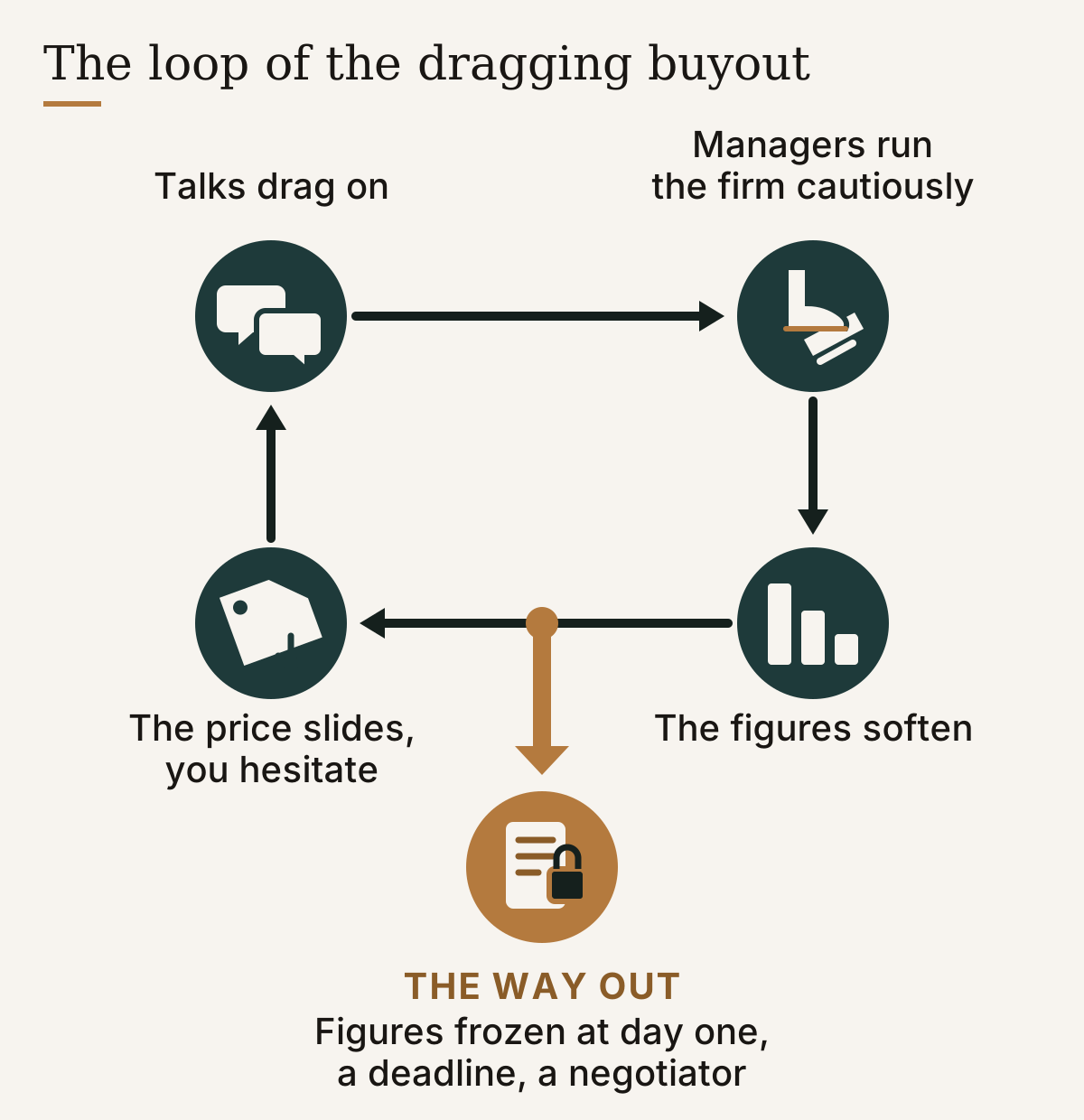
The talks drag on, so the managers, who are also the buyers, run the firm cautiously. The figures soften. The price slides, you hesitate, and the talks drag on a little longer. The way out is decided at the start. The money side, with its bank debt and seller loan, is a separate subject; I’ve written about why a management buyout is rarely the easy option and about what you risk when you lend part of the price.
One last thing I keep noticing. The managers who buy well are the ones nobody ever asked to set the price of what they were buying. When the number came from someone else, they can still have lunch with the old owner a year later.
End of the article.