Why would someone sell a profitable business? The question every buyer asks, and the answer that protects your price

Age, no successor, other plans, wealth tied up in one firm. Buyers fear a hidden problem; one true reason, told the same way each time, holds the price.
In the sales I run, twelve to eighteen months usually pass between the evening an owner decides to sell and the morning the contract is signed. Across those months one question keeps coming back, from the first buyer on the phone to the last lawyer at the table. Why would you sell, if the business makes money?
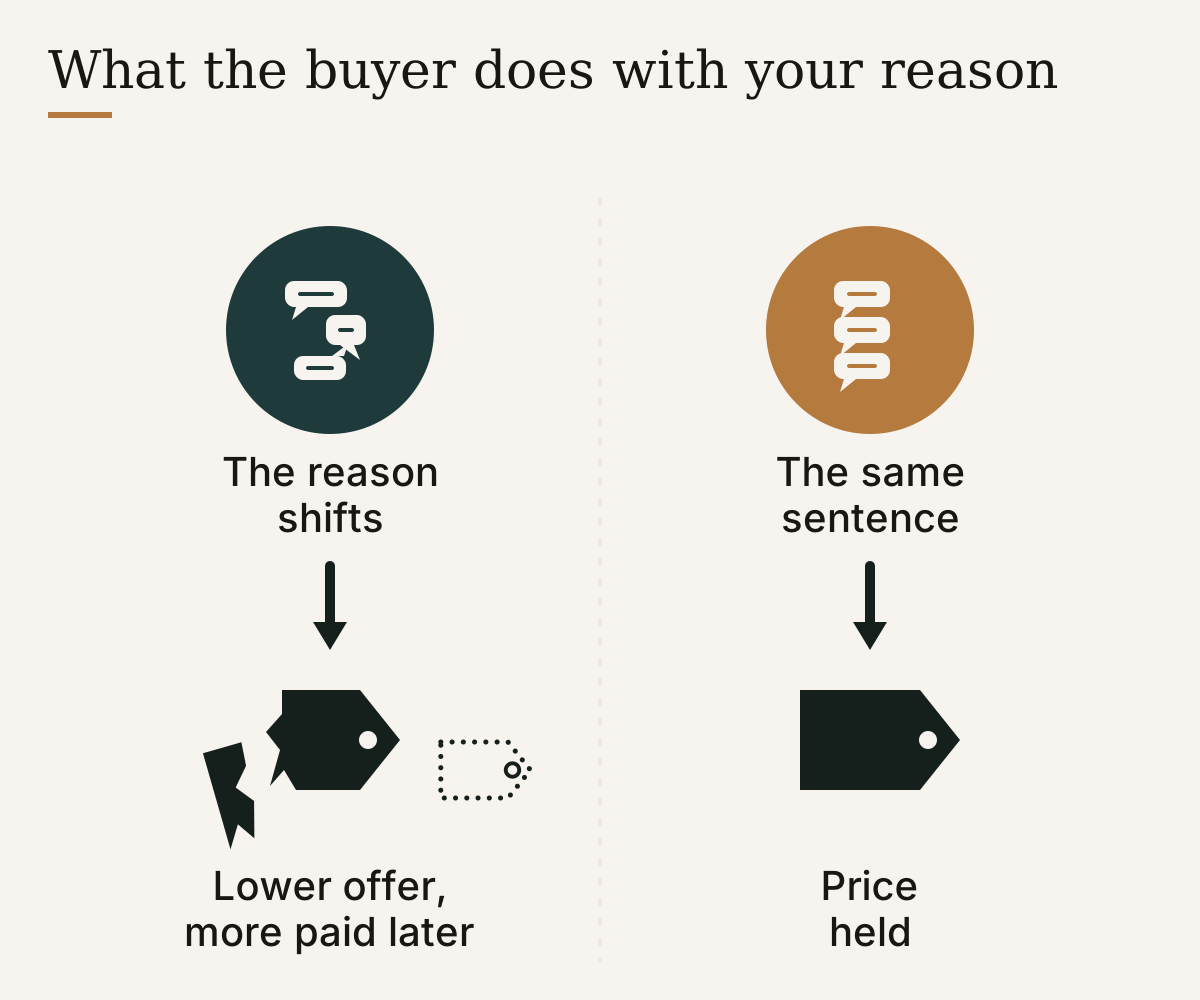
Here’s the answer, for the buyer who wonders and for the owner who has to reply. People sell profitable businesses for reasons that rarely sit in the accounts: age or health, no successor in the family or the team, the wish to do something else, too much of their wealth tied up in one company, or a company that needs more capital than its owner wants to put in. The buyer asks because a profitable business for sale sends him looking for the hidden problem. A vague reason, or one that shifts from meeting to meeting, reads as that problem, and he makes you pay for it: a lower offer, more of the price paid later, more promises in the contract. A true, simple reason, said the same way from the first call to the signing, protects your price.
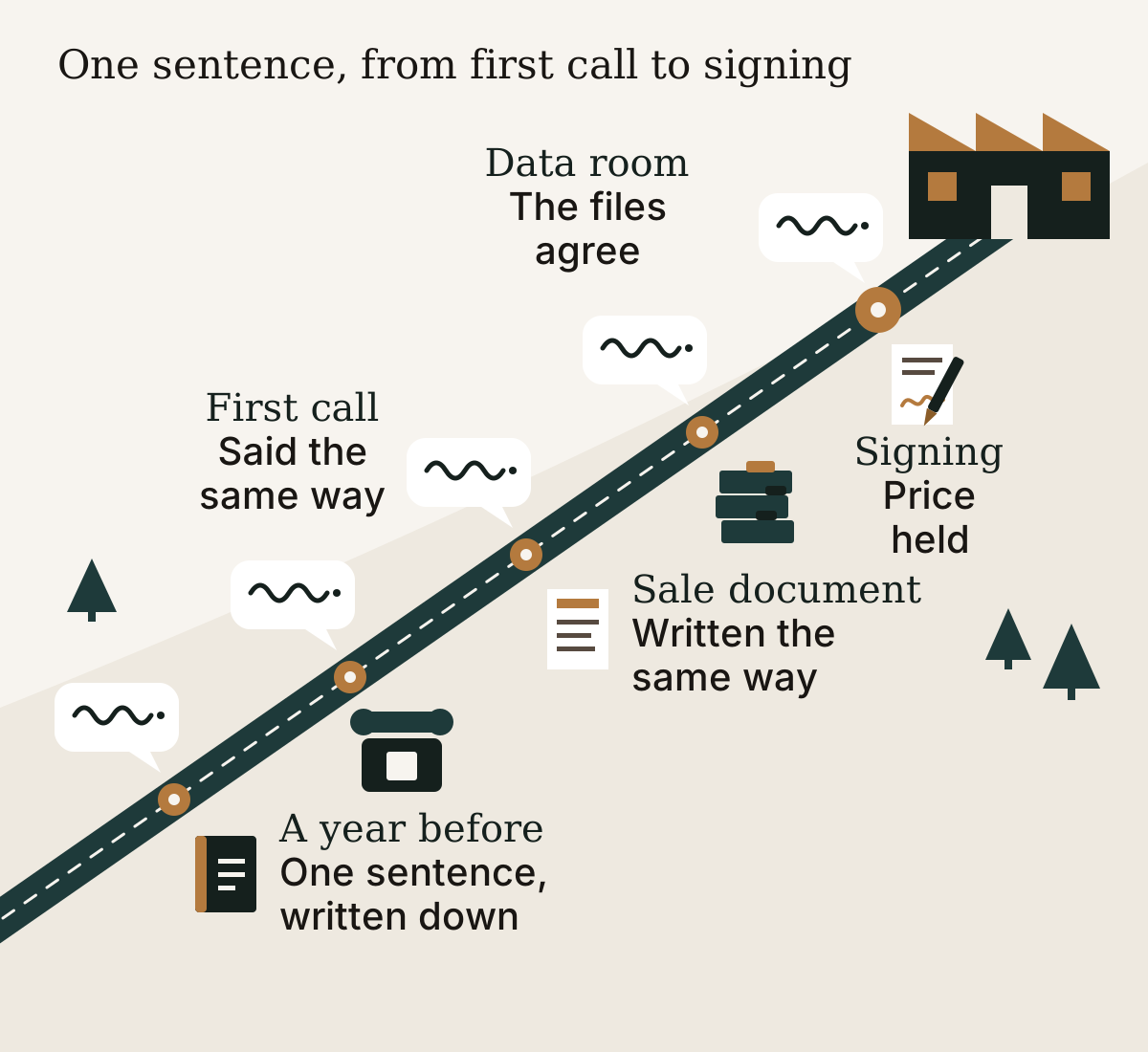
Twelve months before: one sentence, on paper
Start with a pen. Write your reason in a single sentence, the way you’d say it to a stranger at dinner. Then test it. Would your spouse, your accountant and your workshop foreman put it the same way? If one of them would hesitate, the sentence isn’t finished.
Sometimes the honest version contains a problem. You’re worn out, two partners have stopped speaking, or the margin has been sliding for three years. Say it, together with what you’ve done about it. The buyer will find it anyway in the data room (the shared folder of documents), and a problem he digs up himself costs you more than one you hand him. If you’re not yet sure whether tiredness is a reason to sell at all, settle that question first.
Prepare a second answer while the pen is out: what will you do afterwards? Buyers use it to check the first one. An owner who retires with nothing planned makes them wonder. So does one who says he’s leaving but wants to stay three more years. One concrete plan settles it faster than any speech, even if the plan is only a sailing course already paid for next spring.
The sentence earns its keep even if you never sell. Writing it is often how an owner finds out whether he wants to sell in the first place. Starting this early doesn’t mean selling early. It means never having to sell under pressure.
Six months before: the first call and the sale document
Then the market hears about you: a short anonymous profile, a few phone calls, and later the information memorandum (the detailed sale document) for the buyers who stay interested. Your sentence belongs in the first paragraph of that memorandum. It also belongs, word for word and without improvements, in the mouth of the intermediary who approaches buyers for you.
In the first meetings I sit in, the question arrives within about ten minutes. Often the visitor is still looking at the old photograph of the first workshop in the corridor.
Some phrasings lower the offer before a number has been mentioned. “I’m open to offers.” “If the price is right.” “My partners want it.” Or a reason that changes with whoever’s asking. The first two tell the buyer you’re testing the market, so he tests you back. Partners who want out hint at a quarrel he’d inherit. And a reason that adapts to its listener sounds like what it is, a story.
Three months before: the buyer meets you and opens the folders
Now the buyer meets you properly, and his advisers open the data room. Here your reason gets held up against the facts: your age, your plan for who runs things next, your actual role, the timetable you’re asking for. Preparing that file from the seller’s side largely means making the folders and your sentence agree.
Picture three invented sellers. One gives retirement as his reason, at 52, with no plan for Monday morning. Another says there’s no successor, while a 35-year-old deputy who has never been asked sits two doors down the hall. A third cites her health, then asks to stay on for three years. Each reason might be true. Next to its facts, each makes the buyer lower his number.
Your reason also shapes the deal he’ll propose. Retirement usually brings a handover period with you still on site, sometimes a seller loan (part of the price, lent back). A new project brings a non-compete (your promise not to compete). Wanting to spread your wealth points towards selling part of the company now and the rest later. So keep what you say and what you ask for in line. A seller who talks about retiring, then refuses any handover period, has changed his reason without a word. If your reason genuinely changes along the way, because your health worsens or a successor turns up, say so once, with the cause, to everyone who heard the first version.
The last weeks: the offer, the price, the promises
This is where the reason turns into money. When the buyer believed it, the final offer tends to land close to the first price he mentioned. When he doubted it, the doubt shows up in the terms. The price itself drops, or more of it moves into an earn-out, the part paid later and on results. He asks for wider warranties, the written promises you make about the company. Sometimes he adds an escrow, a part of the price held back for a while after the sale is completed. Your lawyer should read those promises line by line.
Hiding a known problem behind a tidy reason won’t shelter you either. A clause that excludes or limits your warranties doesn’t cover a defect you knowingly concealed. In Switzerland and in Germany, for example, the law on sales says so; elsewhere, and for drafting your own warranties, ask your lawyer. The same laws protect you in return: what the buyer knew when he signed, he can’t come back and claim afterwards. That’s why a problem told early costs less than a problem found.
After signing: the reason changes hands
Once the ink is dry, the sentence stops being yours. Your staff and your clients will now hear it from the buyer, usually on a first Monday, near the coffee machine, when the new owner introduces himself. If it’s the version they already heard from you, the handover holds. If it isn’t, people start counting the weeks and quietly polishing their CVs. The months after closing go better when nobody has to compare two stories.
The sellers I’ve seen get the price the buyer first mentioned are nearly always the ones whose reason didn’t move from one meeting to the next. Those who retouch it for each buyer end up negotiating every retouch.
Sources
End of the article.