

Selling a business as a going concern: What it means and what to keep running until you sign
Sold as a going concern, a business is paid for what it earns; slowed or stopped, for what its parts fetch. What to keep running until you sign.
What follows is for the owner who plans to sell in two or three years and wants to be paid for a business that works, not for a shed full of equipment: what to keep running until the day you sign.
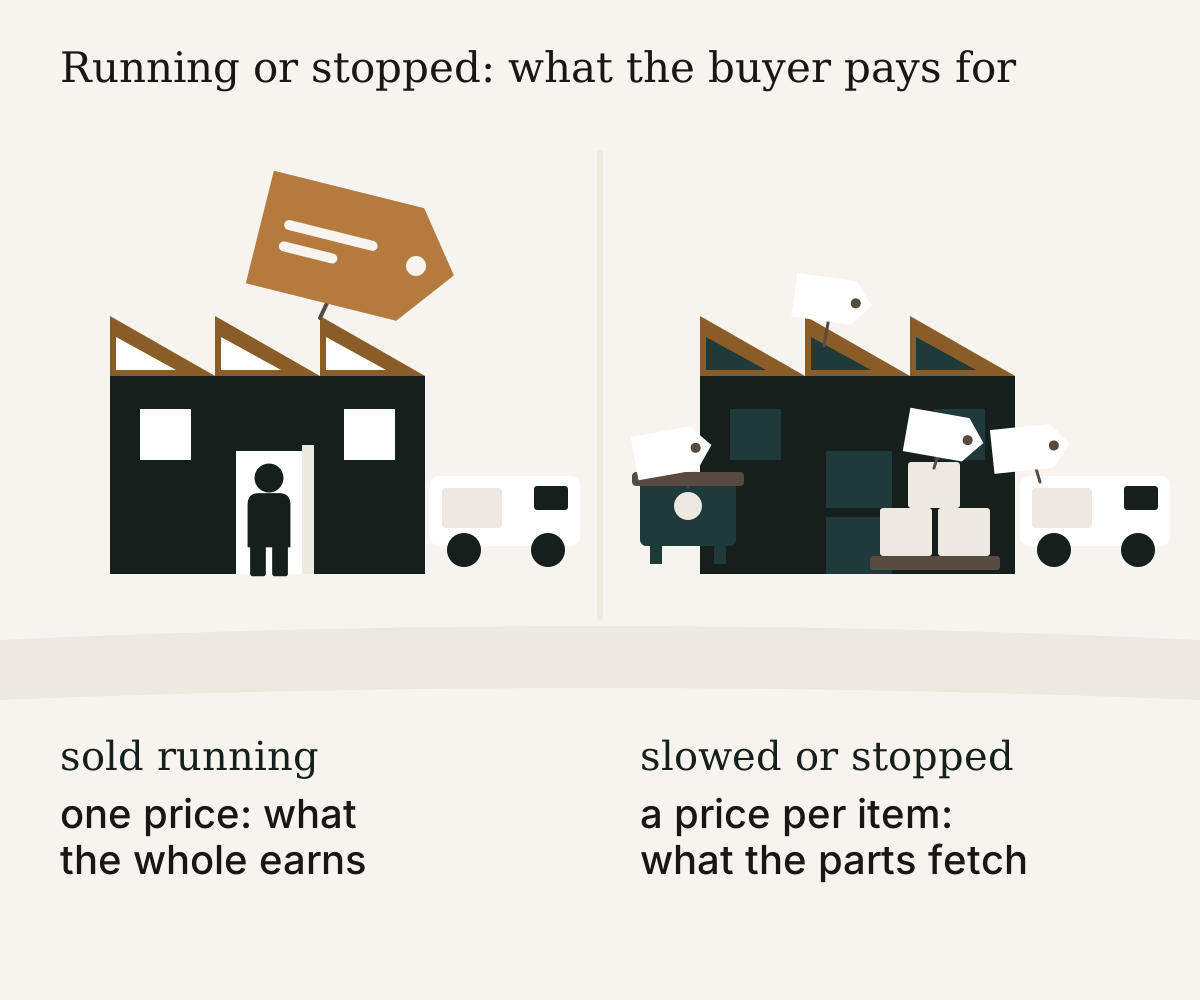
Selling as a going concern means selling the business while it runs. Customers, staff, the order book and the machines change hands together, and the buyer pays for what that whole earns: a multiple of the yearly profit, or the profits of the coming years brought back to today’s money (the formula behind that rests on two assumptions). A business that has slowed or stopped is sold on what its parts fetch. That means the machines, the stock, the building and what customers still owe, minus the debts. It can come out below what the balance sheet shows, because second-hand machines sold in a hurry go cheap.
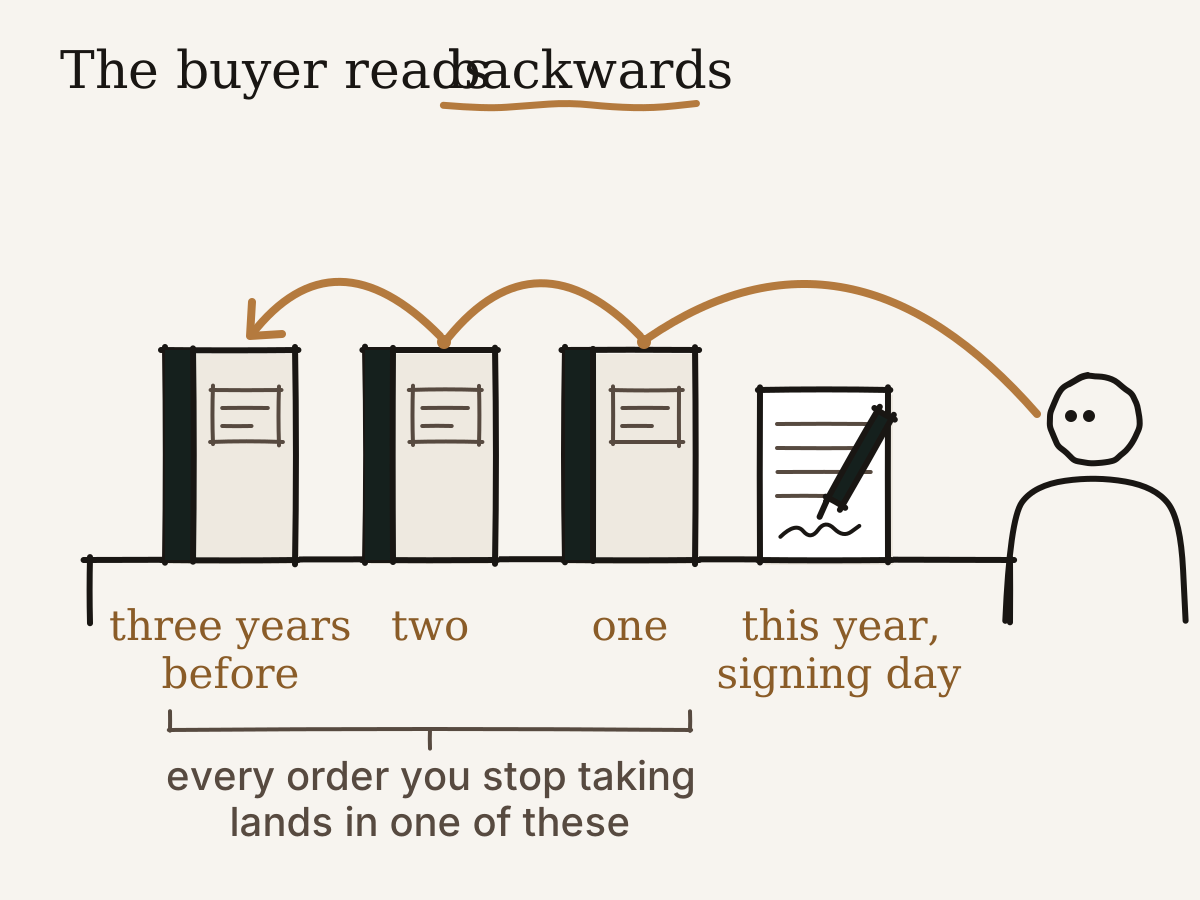
In the files I see, a company that earns a decent living is worth more on its profits than in pieces; when it doesn’t, the price falls back to the pieces. The switch from one basis to the other doesn’t happen on signing day. It happens in the two or three years before, in the figures the buyer reads: the last three sets of accounts and the current year.
The buyer didn’t invent that line. Your own accounts are drawn up as if the business carries on. In Switzerland and Germany, for example, the accounting law says so. In Switzerland, the law names the moment. Once a full or partial closure within twelve months of the year-end is intended or probably inevitable, those parts are booked at what they’d fetch. Wherever you are, ask your accountant what changes in the books once a closure is on the table.
What to keep running until signing day
- Keep taking orders at your normal pace, including jobs delivered after the signing. The order book is the first sign of life a buyer looks at, so say yes to the quote for next spring’s job even if someone else will deliver it.
- Deliver and invoice right to the end. A dip in revenue over the last twelve months is read as a trend. Nobody reading your accounts will hear that it was the summer you finally took it easy.
- Replace the people who leave. A vacant post saves a salary and costs more than one: the buyer sees a team that’s shrinking and puts a price on rebuilding it. If the welder retires in March, hire the next one in April, and hold on to the two or three people the place can’t run without.
- Service and replace machines on their usual cycle. Deferred maintenance gets paid twice. You pay it once at the buyer’s technical inspection, and again in the discount he takes for catching up on the overhaul you kept pushing to next year.
- Keep stock at working level. Emptying the shelves swells the cash for a few months and tells the buyer you’re winding down.
- Finish the projects that pay back before the sale, and don’t start ones that pay back after. A buyer pays for your figures. The half-built new line in the back hall is a promise, and he won’t pay for that.
- Renew the contracts that are running out. The lease, the supplier agreements and the framework contracts with your larger customers shouldn’t fall due in the buyer’s first months. Ask your lawyer whether each one passes to a buyer where you are, and whose consent it needs; contracts that carry revenue forward are part of what he’s paying for.
- Keep the books the way the buyer will read them. No private expenses through the company, no one-off squeeze to dress up one year. The buyer reworks every figure himself, and a year that looks too good makes him suspicious of the others.
- Keep the routines that run without you, and hand over the ones that still depend on you. A buyer who pays for profits wants to know they’ll survive your departure. Ask yourself who approves the Friday payroll when you’re away, and start loosening that dependency on the owner now.
- Stay open on handover day itself. No week’s closure “to do the stocktake”, no restart after the holidays. The keys should change hands on an ordinary working day.
What the buyer reads
A buyer reads backwards. He starts with the current year, then the last three sets of accounts, comparing each line with the one before. Then he carries that line forward.
Imagine a joinery with fifteen people; a case, not a client. Eighteen months before the sale, the owner stops answering the long tenders, the ones that take weeks to price and months to build. He means well: why commit the workshop to jobs he won’t see through? The order book empties by half. When the buyer’s offer arrives, it’s no longer a price on profits. It’s the price of the machines and the stock. Nobody in the workshop decided to sell in pieces, and nothing broke. The figures simply told the buyer the business was already stopping.
In the sales I conduct, the surest way to lose a large share of the price is to start behaving like a seller two years too early. Whatever you stop yourself, the buyer won’t buy back.
Sources
End of the article.


